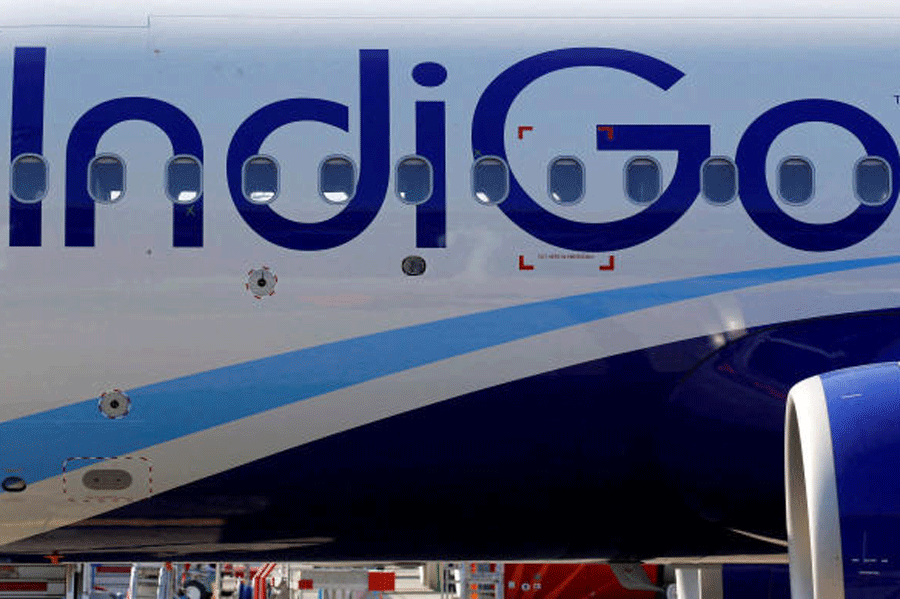
IndiGo cancelled more than 70 flights on Wednesday and faced widespread delays across multiple airports as an acute crew shortage and operational challenges disrupted its nationwide schedule, sources said.
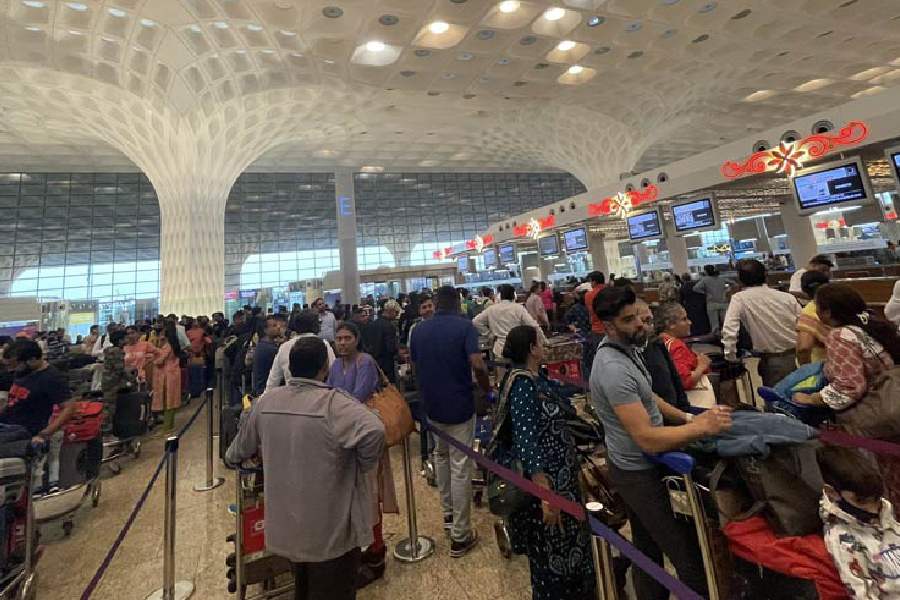
The disruptions affected major airports including Bengaluru, Mumbai and Hyderabad, where passengers reported long delays and cancellations.
According to sources, “IndiGo has been facing acute crew shortage since the implementation of the second phase of the FDTL norms, leading to cancellations and huge delays in its operations across the airports.”
The situation deteriorated mid-week, with a source noting, “The situation turned bad on Tuesday for the airline and the shortage turned worse on Wednesday with scores of flights cancelled and delayed from across airports in the country.”
Scores of flights were delayed as the airline struggled to secure adequate crew.
IndiGo acknowledged the situation, stating, "We have had several unavoidable flight delays and some cancellations in the past few days due to various reasons including technology issues, airport congestion, and operational requirements."
At Hyderabad’s Rajiv Gandhi International Airport (RGIA), chaos unfolded after the carrier cancelled 13 outgoing flights to destinations such as Delhi and Bengaluru, in addition to 18 incoming flights. Nine cancellations had already occurred on Tuesday, airport sources said.
The RGIA management said some delays and cancellations were linked to airline-related issues.
In a post on X, the airport stated that IndiGo flights had been affected “due to airline-related technology and operational issues, resulting in delays and cancellations,” while maintaining that overall airport operations remained normal. Passengers were advised to contact IndiGo for updated flight information.
Frustration simmered among travellers, with several videos circulating on social media showing passengers confronting airline staff.
One user wrote on X, “Deeply unfortunate to see #Ayyappadevotees forced to protest at Hyderabad Airport after @IndiGo6E failed to address hours-long delays. Passengers deserve clarity, and responsible service. Hope the authorities take immediate action.”
Operational data also reflected the worsening situation. IndiGo’s on-time performance at six key domestic airports dropped to 35% on Tuesday, significantly lower than its competitors. Air India recorded 67.2%, Air India Express 79.5%, SpiceJet 82.5% and Akasa Air 73.2%, according to the Civil Aviation Ministry website.
The ongoing challenges coincide with the rollout of the second phase of the revised Flight Duty Time Limitations (FDTL) norms. The norms—mandating 48 hours of weekly rest, extending night duty hours, and reducing permissible night landings from six to two—were implemented in phases after opposition from domestic airlines, including IndiGo. The second phase came into force on November 1.
Airlines had sought staggered implementation, arguing that sudden changes would require additional crew. IndiGo, which operates around 2,100 daily flights including a large number of night operations, appears to be feeling the strain.
Aircraft availability has also been a concern. As of December 2, IndiGo had 416 aircraft in its fleet, of which 366 were operational while 50 remained grounded—up from 47 the previous month, according to Planespotter.com.
Despite the widespread cancellations, the airline reiterated that a combination of factors was responsible for the disruptions. An IndiGo spokesperson restated, "We have had several unavoidable flight delays and some cancellations in the past few days due to various reasons including technology issues, airport congestion, and operational requirements."