
As soon as I joined the PMO, A.N. Verma called Suresh Mathur (then industry ministry secretary), Rakesh Mohan (then industry ministry economic adviser) and me for a discussion. He told us that this was a golden opportunity to get something done in the space of industrial policy reforms since the Prime Minister [P.V. Narasimha Rao] had deliberately kept the industry portfolio to himself. I knew that both Mohan and Verma had laboured hard to bring about changes in industrial policy when V.P. Singh had been Prime Minister and Ajit Singh had been in the ministry of industry. But those attempts had been thwarted because of opposition from within the cabinet.
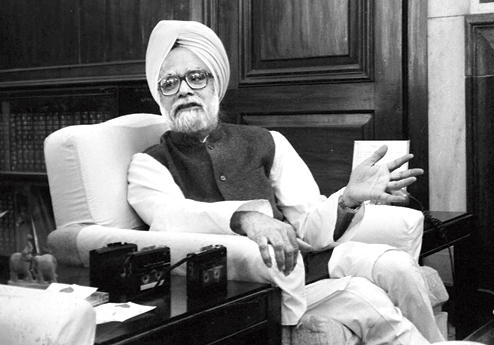
Thereafter, Mathur, Mohan and I met a couple of times. The first draft was prepared by Mohan. By about 7 July 1991 we had finalised what we wanted to sell to the Prime Minister. I had kept the finance minister [Manmohan Singh] in the loop at every stage. In fact, at one point of time, when we were discussing reforms to the anti-monopoly legislation (popularly known as the Monopolies and Restrictive Trade Practices [MRTP] Act), I told him that the minister of state for law, justice and company affairs, Rangarajan Kumaramangalam, or Ranga as we called him, was not terribly happy with what we were suggesting - namely, the plain and simple abolition of clearances for industry under an act that had been made in 1969 when there was concern that licensing had, somewhat paradoxically, led to the concentration of economic power. I had been trying to convince Ranga of the need to be radical regarding MRTP and not just remain incremental. I knew that if he would not get convinced, there was little chance of his senior minister, the old warhorse, Vijaya Bhaskara Reddy, coming on board for this crucial reform measure.

The finance minister then did something that stumped me momentarily. He called Ranga and me to his room and became very emotional. He told his young colleague how he had worked with his father - the redoubtable Communist leader Mohan Kumaramangalam, who later joined Indira Gandhi's cabinet - and how pragmatic and open to new ideas his "good friend Mohan was". For about 10 minutes, Singh reminisced about Ranga's father and told him to consider what he would have done at this crucial juncture of India's history. Ranga came out of the finance minister's chamber telling me, " Yaar, Sardar ne kamaal kar diya. (Singh has taken me by surprise!)" Ranga added, "Let me work on my old man [Vijaya Bhaskara Reddy] now."
Verma asked me to prepare a note, which could be shown to the Prime Minister to get his broad, informal approval before it went to the cabinet. Accordingly, I prepared a five-page note summarising what we were contemplating by way of industrial policy reforms. I added a couple of points on my own based on my earlier efforts of September 1986...
This note went to the Prime Minister, probably around 8 July 1991. As it turned out, the section that I had inserted, namely, on exit policy, got eliminated in the version approved by the Prime Minister because it was considered too politically volatile. Verma told me that I should not be too exuberant and the inclusion of exit policy would only jeopardise the other initiatives. On 9 July, the Prime Minister addressed the CPP (Congress Parliamentary Party) on the eve of the Parliament session and said that the economic revival of the country was the first item on his agenda. He added that his government would, in the next four days, announce a comprehensive and coordinated package of industrial reforms.
When I opened the Hindustan Times on 12 July, I was shocked, to put it mildly. My entire note had been carried with the banner headline "Industrial Licensing to Go".
I knew my goose was cooked and I would definitely be held responsible for the leak. I immediately ran upstairs, carrying the newspaper with me, and barged into Verma's room as soon as he arrived (which was around 9.15am). I displayed the paper and told him that I was not responsible and there had never been any contact between me and the journalist [Kalyani Shankar] whose byline had appeared. I went to the extent of telling the principal secretary that he should immediately order an IB (Intelligence Bureau) probe which would vindicate me completely. Verma heard me out for a couple of minutes, smiled as he always did, and simply said: "Relax, yaar. Khamakhan pareshaan ho rahe ho. Ja ke apna kaam karo. (Relax. You're fretting for no reason! Get back to work.)" I was flummoxed by the nonchalance with which my remonstrance had been dismissed, but decided to let the matter go. Perhaps, there is some truth in the adage that "often the ship of state leaks from the very top"!
*****

2 September 1991, a Monday, began, as always, with my being at my desk in South Block at 8.30am. After about an hour, A.N. Verma called me into his chamber. After exchanging pleasantries, he asked me for an update on what I had been doing, since he had been away for a few days... Verma listened to me patiently and asked for a set of action points for him to follow-up.
After about 10 minutes or thereabouts, the principal secretary coolly dropped a bombshell - that the Prime Minister wanted me to be "transferred" to the Planning Commission. I was shocked beyond words and asked him whether anything was amiss. Verma was at pains to point out that Narasimha Rao had specifically asked that I be designated as officer on special duty to the deputy chairman of the Planning Commission and showed me official communication to that effect. He said that the Prime Minister had praised my contribution and wanted me in the Planning Commission to give shape to the Eighth Five-year Plan which was under preparation. The principal secretary told me repeatedly that he had himself lauded my work on more than one occasion and that the Prime Minister had agreed with his assessment.
I was convinced that I was being sacked. What baffled me completely was that just 48 hours back, the Prime Minister had asked me to attend his meetings with three national industry associations - meetings that, in fact, he had asked me to organise. After the discussions were over, he had not given any indication that he was about to jettison me - asking me, instead, to follow up on the meetings. His decision was (and remains) inexplicable to me. Hence, I sought time from the Prime Minister and he saw me that very day at around 4pm. He told me, in no uncertain terms, that he appreciated my work and what I had done in the initial days of his tenure when things were so grim. He went on to repeat what Verma had already told me - that the main objective of his getting me into the PMO had been achieved, and that he now believed that I could assist Pranab Mukherjee in the Planning Commission.

I kept asking the Prime Minister whether I had done anything to invite his ire and wrath, but he kept denying that he was shunting me out - which I insisted he was. When I persisted, he said that I would continue working with him since he was the chairman of the Planning Commission and that he would depend on me for various issues... His parting words to me were that I should keep sending him notes regularly so that he'd receive unvarnished feedback. I was extremely downbeat but managed to wish him all the best before leaving. A few days earlier, I had hoped to join Narasimha Rao on his maiden foreign visit to Germany as Prime Minister. That was not to be.
A little later, I called on the finance minister, who was visibly taken aback when I informed him of my shift to the Planning Commission. He hoped that this did not portend the Prime Minister's slackening interest in economic reforms. He added that I could meet him any time and that he would continue to count on me. Manmohan Singh can be philosophical at times, and this moment was no exception. His closing words were, "Life is a learning experience," and that I was young enough to take a setback in my stride and move on.
Excerpted from To The Brink and Back: India’s 1991 Story by Jairam Ramesh, with permission from Rupa Publications India