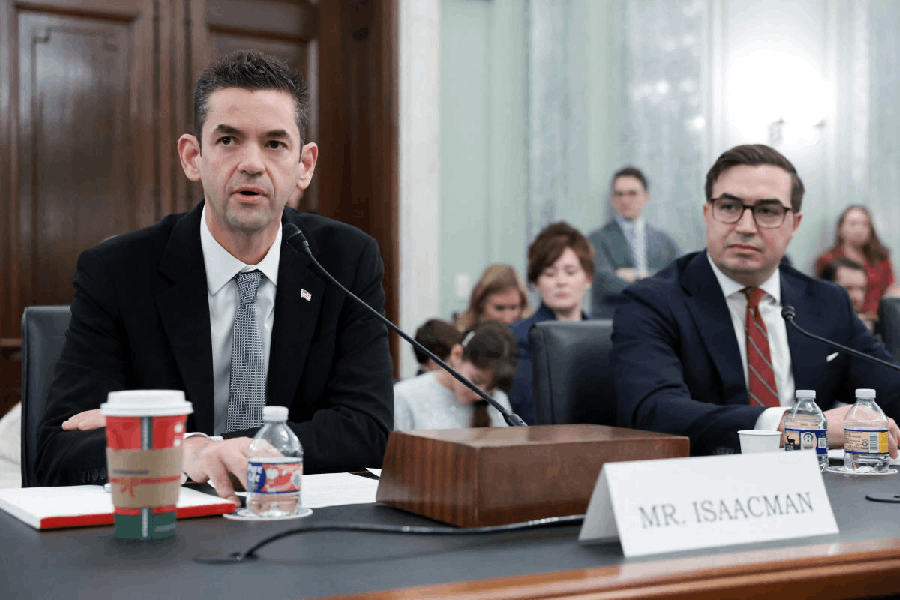
Billionaire private astronaut Jared Isaacman, President Donald Trump's nominee to lead Nasa, on Wednesday touted his plans to put US astronauts back on the moon before China gets there and sought to portray himself as independent from SpaceX CEO Elon Musk as he faced his second Senate confirmation hearing.
Isaacman, an e-commerce mogul who twice flew to orbit on all-private astronaut missions as a customer and collaborator with SpaceX, told senators that falling behind in the moon race with China "could shift the balance of power here on Earth."
"The last time I sat before you, I introduced myself, my qualifications and the challenges and opportunities ahead," Isaacman added. "This time, I am here with a message of urgency." Trump first nominated Isaacman to head the U.S. space agency in December 2024 but withdrew the nomination in May after a falling-out between the Republican president and Musk. Sean Duffy, the head of the U.S. Department of Transportation, was named interim Nasa administrator in July.
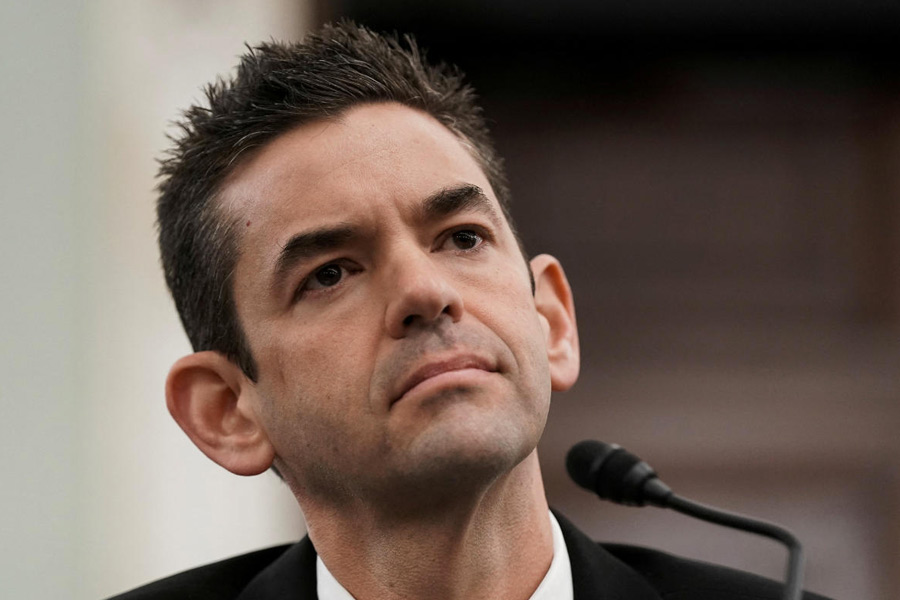
Democratic senators are concerned about Isaacman's closeness to Musk, whose company holds about $15 billion in Nasa contracts and could benefit from certain policies Isaacman has advocated.
Musk advocated for Isaacman's nomination when Trump was elected in 2024. Musk had sought to realign the U.S. space program with a greater focus on Mars during his stint as a close adviser to Trump.
As was the case during his first confirmation hearing in April, Isaacman did not directly answer when pressed whether Musk was in the room when he was offered the nomination by Trump. Isaacman sought to sidestep the question by replying that many people were in the room.
"That actually makes me think that Elon Musk was in the room that day," Democratic Senator Edward Markey told Isaacman.
Isaacman rejected notions that he is a close friend of Musk and that his role would create a conflict of interest. He said he flew to space twice with SpaceX because it was the only company capable of sending astronauts into orbit.
Pressed by Markey to say how much money he personally has spent on SpaceX missions - a number that may top $100 million - Isaacman did not provide an answer.
He did say, "They didn't give me a discount." Isaacman was renominated by Trump in November, two weeks after Duffy said he was inviting other companies to compete with SpaceX for the agency's marquee lunar landing contracting, leading to a public spat between Duffy and Musk over who should be leading the space agency.
Back to the moon
Republican Senator Ted Cruz, chair of the Senate Commerce Committee that oversees Nasa, sought assurances from Isaacman that he would prioritize returning astronauts to the moon under the space agency's Artemis program, a multibillion-dollar effort involving multiple private companies and a centerpiece moon lander from SpaceX.
Isaacman echoed remarks he made in April that Nasa can prioritize the moon and Mars simultaneously, putting greater emphasis on returning to the moon quickly and building a long-term presence - the goal of the Artemis program following the short-lived Apollo missions of the 1960s and 1970s.
Democratic Senator Andy Kim questioned him on Project Athena, Isaacman's 62-page document laying out his vision for Nasa, a draft of which was seen by Reuters. The document includes goals to invest in nuclear propulsion, form a Mars exploration program in the near term and improve Nasa efficiency.
The document lists various space companies including SpaceX, next to which it says on one page "Mars Discovery Base contract." Isaacman said he was the sole author of the document.
If confirmed to the post, Isaacman, 42, would oversee some 14,000 employees and a roughly $25 billion budget that the Trump administration has proposed cutting by 25 per cent for 2026. Nearly 4,000 Nasa employees took buyouts the Trump administration offered in January and April, a roughly 20 per cent reduction of the agency's previous 18,000 headcount.