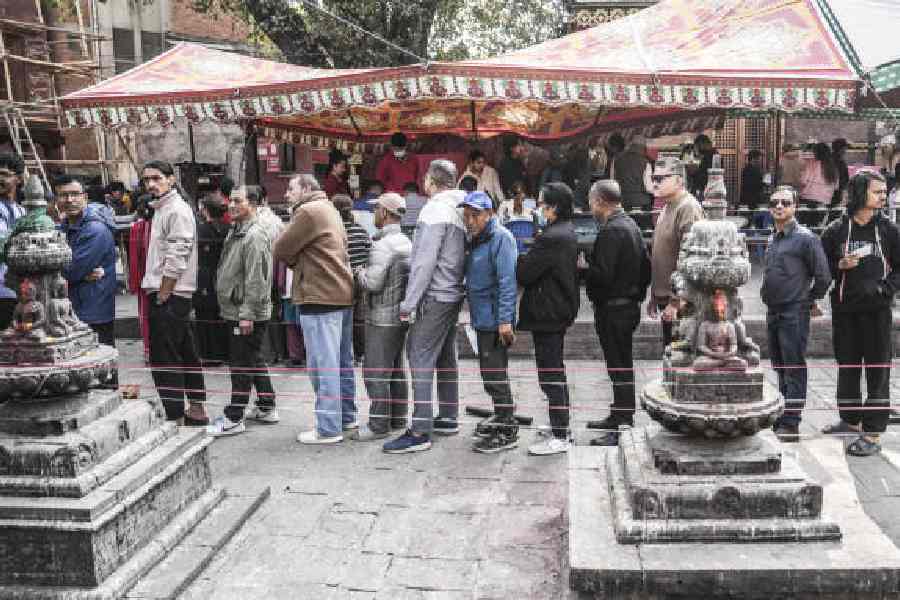
Kunti Maya Shrestha, 73, who works at a government school in Kathmandu Ward 32, says she cast her vote for the bell, the election symbol of the National Independent Party, under both the direct and proportional representation systems.
Shrestha has three Gen Z grandchildren at home. She says she voted for the party to help secure a brighter future for the next generation. On September 8 last year, 18 Gen Z youths lost their lives during the Gen Z movement in front of Nepal’s Parliament.
"I voted for the Rashtriya Swatantra Party to fulfil the dreams of the martyrs who were killed during the Gen Z movement," she said.
Like Shrestha, Gen Z voters, senior citizens and young people from other generations across Nepal participated enthusiastically in the election, driven by hopes for a corruption-free country, equal opportunities and a prosperous future. Many emphasised the need for a new generation of leaders to take office and carry forward the vision of the Gen Z movement.
The interim government formed after the Gen Z movement held elections in 165 constituencies nationwide on March 5, according to the schedule for the House of Representatives election.
In this election, 3,404 candidates from 65 political parties contested under the direct election system. At the same time, 3,424 candidates from 34 political parties registered with the Election Commission for 110 seats under the proportional representation system.
According to the Election Commission of Nepal, there were 10,967 polling stations and 23,112 polling booths across the country.
Election Commission spokesperson Narayan Prasad Bhattarai said voter participation among Gen Z youth was much higher this year compared to previous elections, following the Gen Z movement.
A total of 1,026,754 new voters were added this year, bringing the total number of registered voters in Nepal to 18,903,689. Bhattarai said initial estimates show that about 60 per cent of voters cast their ballots. Vote counting will begin once ballot boxes from 15 remote districts are safely collected.
Nineteen-year-old Angel Nepal, a first-time voter from the Gen Z generation, said: "We expect the new government to ensure equal opportunities and build a country free from corruption."
Political analyst Devraj Dahal said the country's economic situation is worsening and candidates have made many promises. If those promises remain unfulfilled, public frustration could rise.
"To form a legitimate government, elected representatives must reform the system and meet the people's expectations," he said.
After the Gen Z movement, Gen Z leaders proposed 35-year-old former mayor Balendra Shah as Prime Minister, but he declined at the time. After the Election Commission announced the election date, Shah registered his candidacy from Jhapa-5, the home constituency of former Prime Minister and CPN-UML chairman KP Sharma Oli.
This marks the ninth election to Nepal’s House of Representatives in the country’s democratic history. Originally scheduled for November 2027, the election was brought forward after the deaths of 76 youths during the Gen Z movement, which led to the dissolution of the House of Representatives and calls for the resignation of former Prime Minister KP Sharma Oli.