From western Europe to eastern Asia, countries are scouring the globe for natural gas after the war in Iran cut off the Persian Gulf fuel that they relied on to cook dinner, heat homes and generate electricity.
The US, as the world’s biggest gas exporter, will almost certainly benefit from this upheaval, at least in the short term.
But the war with Iran, now entering its second month, is also a reminder that importing gas is a risky proposition that can leave buyers exposed to high prices and shortages during geopolitical strife. That presents a big challenge to the oil and gas industry’s plans to sell more natural gas — and creates an opening for alternatives like renewable energy, coal and nuclear power.
“What you’re seeing with this type of volatility that seems to happen every four or five years, it’s just not good,” Jack Fusco, chief executive of a large US gas exporter Cheniere Energy, said last week at a Houston energy conference, CERAWeek by S&P Global.
This is the second time in recent years that a war has caused natural gas prices to soar in many parts of the world. The last spike followed Russia’s invasion of Ukraine in 2022.
Gas is still a lot less expensive than it was four years ago. But the Iran war is not over.
Analysts say that prices could rise significantly if Qatar, one of the world’s largest gas exporters, is unable to restart gas shipments relatively soon. On the third day of the war, the country stopped preparing gas for export. Its facilities later sustained extensive damage that a state-owned energy company said would take several years to repair.
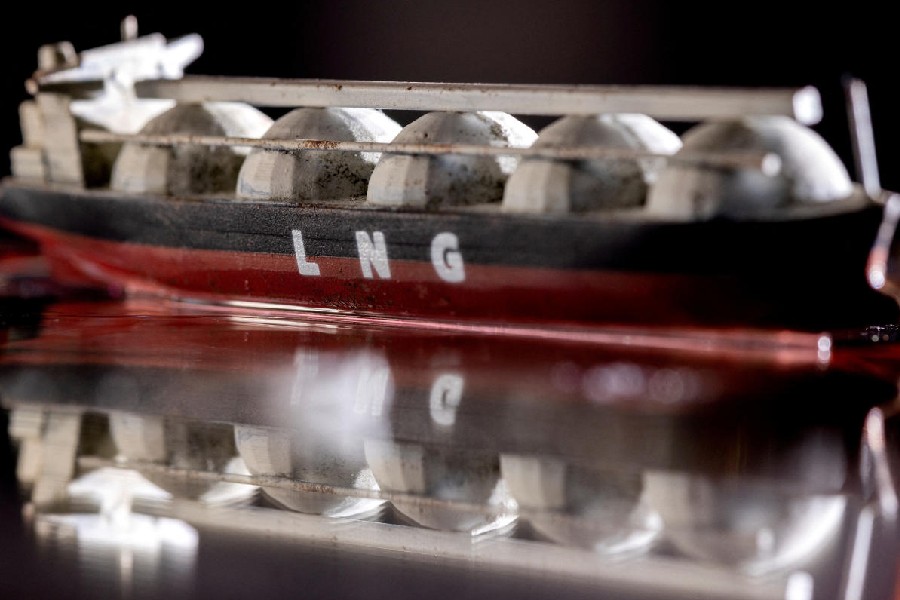
Buying and selling natural gas is not something countries do lightly. Shipping the fuel overseas requires significant, long-term investment. After natural gas is taken out of the ground, exporters have to chill it to negative -162°C to turn it into liquid that can be transported on massive oceangoing tankers. Countries buying that liquefied natural gas, or LNG, need to build import terminals to turn the fuel back into gas and pipelines to get it to utilities, factories and homes.
Having invested in a lot of that expensive kit, some countries now find themselves without a reliable supply of gas.
The loss of Qatar’s supply is so significant because the country ordinarily sells about 20 per cent of the world’s LNG. Other exporters don’t have enough extra capacity to quickly make up for all of that.
Already, officials in Japan, Bangladesh and Thailand, which typically buy gas from Qatar, have taken steps to burn more coal to produce electricity. South Korea, meantime, is urging residents to conserve energy, including by taking shorter showers.
At the same time, buyers are competing for cargoes of LNG produced outside of the Persian Gulf. That had many American companies riding high last week at the conference in Houston. Many executives expect that they will be able to build more export terminals and charge higher prices. New gas projects in places like Canada or Argentina could also advance as importers look to diversify.
“US producers are positioned to be enormous winners,” said Meg Gentle, who previously led a Houston-based LNG developer.
But there can be too much of a good thing. The longer the war disrupts the global energy trade, the more likely it is that importing countries will try to insulate themselves from future shocks by developing energy domestically or taking steps to conserve. Europe now uses an estimated 16 per cent less natural gas than it did in 2021, the year before Russia invaded Ukraine, according to the International Energy Agency.
“The credibility of LNG and gas imports really has taken a hit,” said Ira Joseph, a senior research associate at Columbia University’s Centre on Global Energy Policy. “Because of Russia first and now Qatar.”
Higher gas prices also make alternatives more attractive. Take Asia, which the IEA was expecting to help drive a 9 per cent expansion in global gas demand by 2030, fed partly by a nearly 50 percent expansion in global LNG supply. Growth could slow if countries switch to other energy sources because they cannot secure enough LNG or can no longer afford it.
Last week, Goldman Sachs raised its forecast LNG prices in Asia by 15 per cent for the second half of the year. By 2028, the investment bank said, LNG is likely to be around 57 per cent more expensive in Asia than it had expected before the war. Goldman made similar changes to its natural gas price forecasts for Europe.
“Everyone will ask questions,” said Brendan Duval, chief executive of Glenfarne, which is developing natural-gas export terminals in the US. “Like if you’re in India,” he said, “they’re very price sensitive, so are they going to go, ‘All right, let’s not get too exposed to LNG because this could happen every three years?’”
“But,” Duval added, “everyone’s got short memories.”
Energy executives who are not in the business of selling LNG said importers would have a strong reason to consider other options.
“If you’re a country that doesn’t have fossil fuels, you’re relying on imports, you’re going to look to protect yourself,” said John Ketchum, chief executive of NextEra Energy, which owns and operates renewable energy projects as well as nuclear and gas-fired power plants in the United States. “One of the ways you can protect yourself is with renewables and storage — or nuclear.”
New York Times News Service