The new Bengal government’s detect-detain-deport policy got off the ground on Sunday with three women and six children herded into the state’s first “holding centre” in Malda and a man deported from Murshidabad to Bangladesh.
Malda and Murshidabad are Muslim-majority districts — the only two in the state — and both share borders with Bangladesh.
BJP-ruled Bengal’s first holding or detention centre for illegal immigrants — on the lines of neighouring Assam — came up just a day after the state administration told the districts to set up such centres.
A team from the Gazole police station in Malda on Sunday apprehended the group of women and children who had allegedly crossed into India from Bangladesh and were staying in the Pandua area, police sources said.
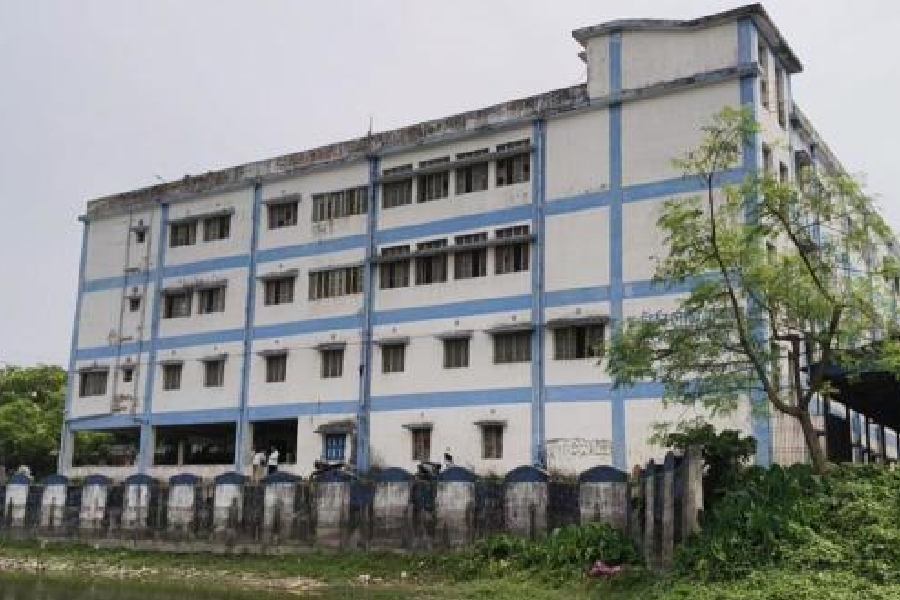
They were brought the same day to an unused government building, built under the “Karmateertha” project of the erstwhile Mamata Banerjee administration, in the Chandan Park area of Englishbazar.
“None of them had the appropriate identity proofs. They had been staying in makeshift shelters in Pandua for some time,” a police source said.
Twelve police personnel have been deployed at the holding centre, and CCTV cameras have been installed. Three civic volunteers and two cooks have been posted there.
The building, built to boost the merchandising of products made by self-help groups, had remained unused, sources said. They said it had now been turned into a holding centre.
“It can accommodate around 500 people,” an official said.
As the news of the detentions spread on Monday, curious residents of the area gathered near the building to try and catch a glimpse of the detainees.
The police and the administration are in touch with the BSF to facilitate the deportation of the nine detainees, sources said.
In Murshidabad, police had on Friday detained a man said to have crossed over illegally from the Chapai-Nawabganj district of Bangladesh.
He was apprehended in Lalgola, about 45km from district headquarters Behrampore, and kept at the Padma Bhavan, the state irrigation department’s rest house in Lalgola, for two days.
On Sunday, the BSF, acting in coordination with the Border Guard Bangladesh, deported him to the neighbouring country, a source said.
So far, the practice — under the law of the land — has been to produce suspected illegals before a court, to be sent to correctional homes and deported only after the courts declare them as foreigners. In Assam, the suspects are brought before foreigners’ tribunals.
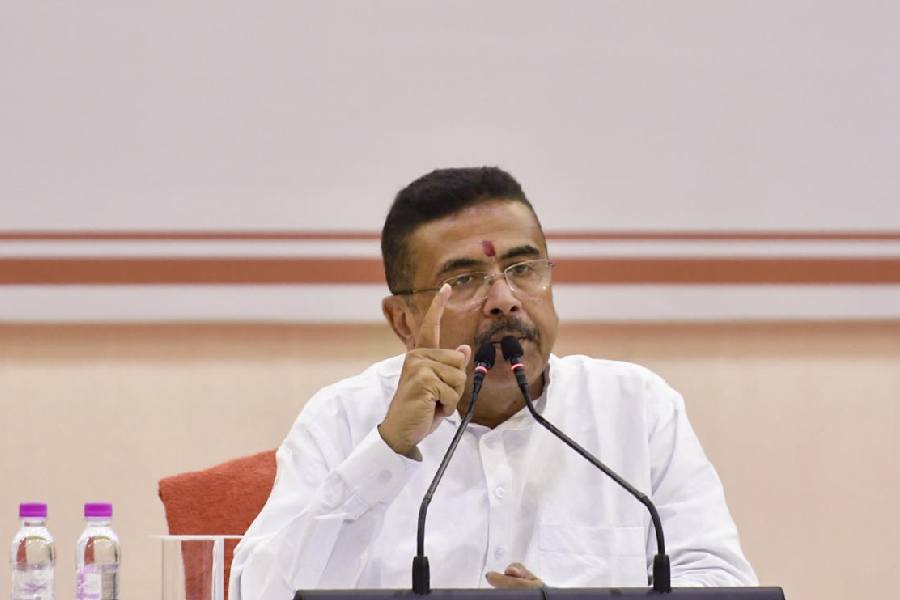
Chief minister Suvendu Adhikari had at an event last week said that illegal immigrants detained by the Bengal police would be handed over to the BSF for deportation to Bangladesh.
He had added that only those outside the purview of the Citizenship (Amendment) Act – that is, Muslims among the illegal immigrants — would be deported.
The mechanism adopted by the Suvendu government is in accordance with a year-old Union home ministry directive on handling illegal Bangladeshi and Rohingya immigrants that the erstwhile Trinamool administration had desisted from implementing.
Under the plan, suspected illegal immigrants will be kept in the holding centres for up to 30 days while their antecedents are verified.
The district magistrates will decide on their citizenship. If deemed to be foreigners, they will be pushed back by the BSF.
Khagen Murmu, BJP Lok Sabha member from Malda Uttar, lauded the opening of the holding centre.
“This is necessary for the security of our country and the state. Bengal has become a corridor for infiltrators; they should be detected and deported,” he said.
Trinamool leaders flagged concerns about the possible harassment of genuine Indian citizens.
“We don’t have any problem if the government apprehends illegal Bangladeshis, but no Indian citizen should face harassment because of this exercise,” said Krishnendu Narayan Choudhury, a senior Trinamool leader in Malda.