There is a pattern to how ingredients are consumed over time. Building on this insight, Samsung has unveiled FoodNote, a feature that tracks commonly used ingredients inside the refrigerator and offers recipe recommendations, helping users restock items in advance.
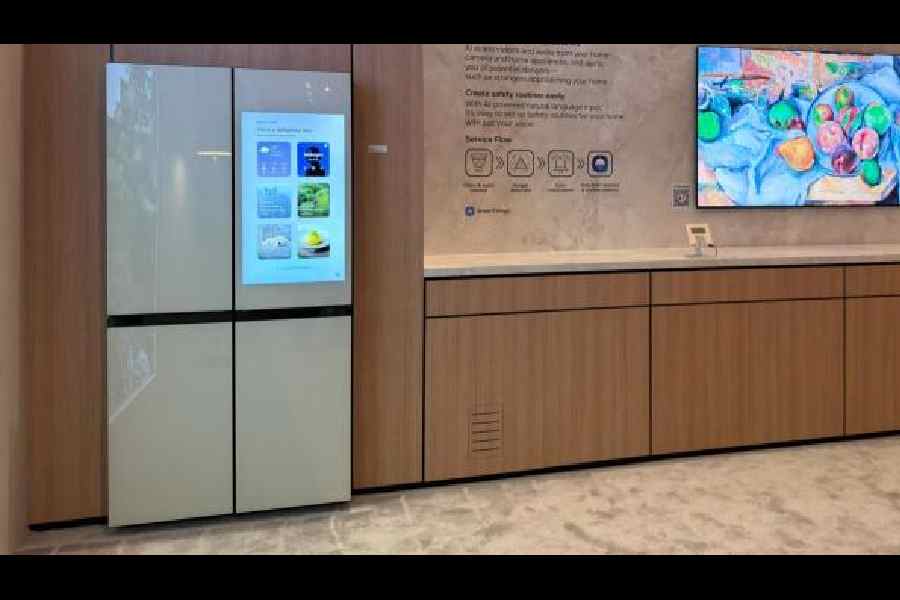
Until recently, we did not fully appreciate how central the refrigerator is to modern living. Samsung’s rethinking of the appliance has resulted in Family Hub, an AI-enabled device that goes far beyond simple cooling. Cameras inside the refrigerator keep track of what is taken out and what is put back in, with all data remaining private to the user. Now, with an upgrade to AI Vision built on Google Gemini, the refrigerator takes another step towards an AI-driven future.
AI Vision overcomes earlier limitations in recognising food items. For instance, if you place zucchini and cucumbers together, the system can accurately track what is being used from the refrigerator. It seamlessly monitors what goes in and out, making meal planning and food management simpler than ever. Family Hub has already won 10 CES Innovation Awards, and Samsung’s AI-enabled refrigerators have received the honour for the past three years.
Until a few weeks ago, such refrigerators could only identify a limited number of items, largely restricted to packaged foods. The addition of Gemini changes that. By syncing inventory data from the refrigerator with the Samsung Food service, recipes are automatically generated. If users own compatible Samsung ovens with touchscreens, the refrigerator can even send the recipe directly to the oven, keeping devices in sync throughout the cooking process.
Through a gamified feature called What’s for Today?, select refrigerators provide recipe suggestions based on what is already inside the fridge, alongside occasional random recommendations. Once selected, the recipes appear in SmartThings Food, where users receive step-by-step instructions to get started instantly.
The refrigerator’s role does not end there. It can now display additional widgets on its cover screen through a feature Samsung calls Now Brief. Using voice recognition, the upgraded Bixby shows personalised information for each family member. This makes it easier to access individual calendars, health metrics or even a personal Spotify playlist, rather than those of others in the household.
Samsung’s AI push extends well beyond the kitchen. In the laundry room, the Bespoke AI Laundry Combo eliminates the need to transfer loads between machines, addressing a long-standing household pain point. This year’s model adds a faster Super Speed cycle and improved drying performance.
Meanwhile, the new Bespoke AI AirDresser tackles another everyday challenge. With Auto Wrinkle Care, it uses powerful air and steam jets to smooth out creases — users simply hang a shirt and wait, easing the pressure of busy mornings.
Cleaning, too, gets an AI upgrade. The Bespoke AI Jet Bot Steam Ultra, powered by a Qualcomm Dragonwing processor, uses an Active Stereo 3D Sensor to recognise liquids such as coffee, juice and even transparent spills like water. Its camera aids navigation and also allows the robot vacuum to function as a home-monitoring device, alerting users to pets or suspicious activity when they are away.
At the centre of this ecosystem is Bixby, Samsung’s voice assistant, designed to understand and control Samsung devices more deeply than any third-party alternative. It is this level of connectivity and integration that underpins Samsung’s holistic AI strategy. As a result, the company’s Bespoke AI appliances have once again been recognised with a CES Innovation Award.
“The vision of our AI appliances is to become a true home companion,” said Hyoung Min Park, head of customer experience, DA Business, Samsung Electronics, speaking to t2. “These appliances are not just devices that perform functions. They are designed to understand users’ lives and living environments, reducing the time, effort and money spent on everyday household chores.”