|
I wish there was an adhesive the surgeon could use on my belly instead of the stitches,” moans 35-year-old Amita Sen, who recently underwent a Caesarean section. People nowadays seem to be less scared of the surgeon’s scalpel than they are of the stitches. Scientists, too, have been tinkering with the idea of a bio-adhesive that would help both doctors and patients. Apart from healing incisions, they would find great use in almost every industry.
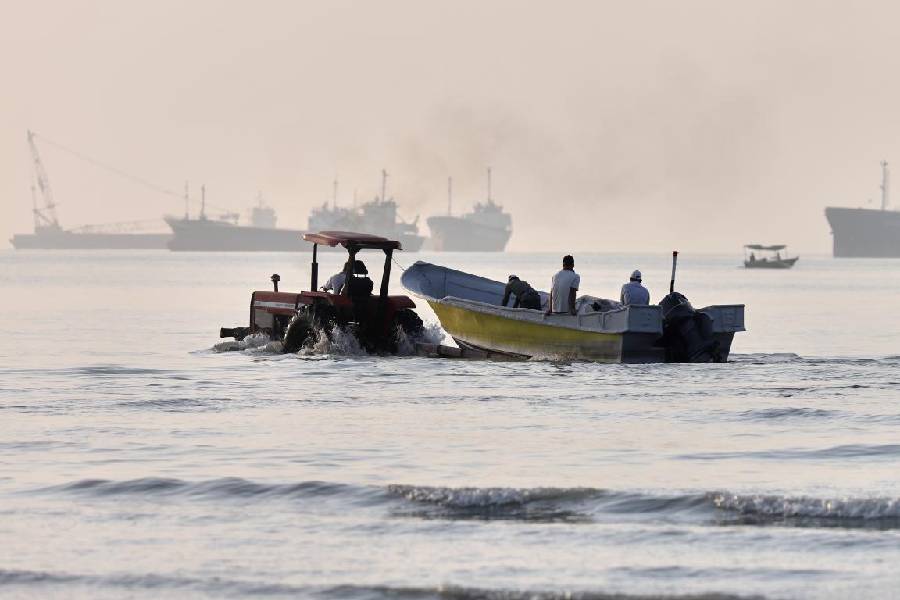
Help seems to be at hand from an unlikely quarter. Bacterial films sticking to the bottom of ships, marine pipelines and cables often pose a nuisance. They damage the vessels and other stuff, and governments and industries spend more than $5.7 billion every year to prevent this “bio-fouling” of under sea materials. The bio-fouling of ships increases fuel consumption. According to researchers, ships the world over consume about 300 million tonnes of fuel annually. Constant anti fouling measures are taken to keep them afloat efficiently. If they are not cleaned regularly, their fuel consumption would shoot up by another 120 million tonnes. The global market for anti bio-fouling coating for ships is a stupendous $700 billion per annum.
What makes this microbial film stick to the base of ships, scientists wonder.
Caulobacter crescentus is the bacterium that initiates bio-fouling. This water dwelling microbe is harmless to humans and can survive in very nutrient-poor conditions. The attachment of C. crescentus cells to a surface is so powerful that even strong jets of water cannot wash them away.
Fired with the possibility of finding a super glue, Peter H. Tsang, Guanglai Li, L. Ben Freund and Jay X. Tang of the department of physics at Brown University, Providence, Rhode Island, and Yves V. Brun of the department of biology at Indiana University, Bloomington, US, set to work on C. crescentus.
The adhesive made by this bacteria is the strongest biological adhesive ever measured, writes Ujjal Kumar Sur of the Atomic and Molecular Sciences, Academia Sinica, Taipei, Taiwan, recently in Current Science.
Calculating the strength of the tiny bacteria was quite a daunting task. Tsang and the others developed a micro manipulation method by which they were able to measure forces in terms of tens of nano newtons (nN) to tens of micro newtons (µN) under an Atomic Force Microscope (AFM). This microscope has very high resolution that can be measured in terms of fractions of a nanometre.
Some creatures lead really interesting lives. The single celled C. crescentus is dimorphic — meaning, it journeys through life in two forms. The first avatar is that of a swimmer, exploring the oceans in a swarm. Then, when it finds a suitable substrate, it remains fixed to it. One end of the cell is extended like a pole with a cup-like holdfast at its distal end (the end farthest from the centre). The holdfast has an adhesive that sticks the cell body to the substrate, making it virtually impossible to dislodge.
Using various techniques, the researchers tried loosening the bacteria from the surface on which they had been cultivated, but the holdfast would simply not give away. The bacterial cell either broke from the stalk or from the joint of the stalk and the holdfast.
Tsang and his associates found the substance that imparted the holdfast its strength — a group of polysaccharides called N-acetylglucosamine (GlcNac). The stuff lost its stickiness when treated with lysozyme (a group of enzymes). This is because GlcNac gets dissolved in lysozyme.
“Once again, we find that Nature’s reliance on natural selection over a long period of time has resulted in a material — an adhesive, in this case — with remarkable properties. Our paper describes a means of establishing the adhesive properties of the material. The greater task is of understanding the reasons for these properties so that materials with equivalent adhesive strength can be synthesised,” says L.B. Freund, a co-researcher of Tsang.
Fascinated by the natural, reusable adhesives on the feet of arthropods and other vertebrates like lizards, Abhijit Majumdar, Animagsu Ghatak and Ashutosh Sharma of the Indian Institute of Technology, Kanpur, developed a novel micro fluidic adhesive by generating several layers with air or oil-filled micro channels. These adhesive surfaces are reusable and are about 30 times stronger than those currently available. Their findings were published in Science Magazine in October last year, and several other journals including Nature.
The super glues in the offing may not be able to mend broken hearts but will surely bring about a technological revolution.