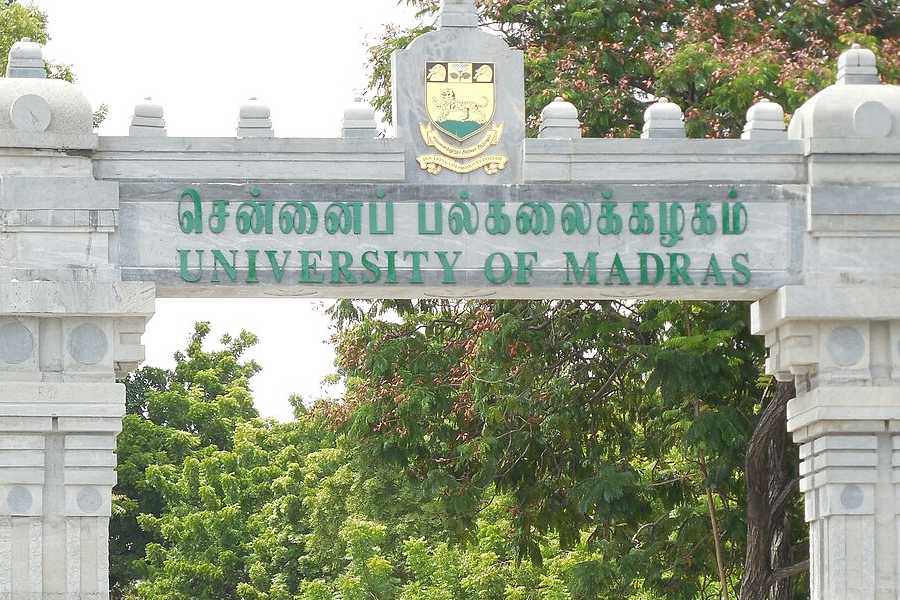
The University of Madras is under fire after its Special Syndicate cleared a decision to tap into the institution’s corpus fund to pay pending retirement dues, an action education activists say strikes at the core of what a public-funded university stands for.
The Students' Parents and Citizens' Collective for Social Struggle Tamil Nadu (SPCSS-TN) has accused the administration of abandoning its financial responsibility and breaking assurances given to the court.
P. B. Prince Gajendra Babu, General Secretary of SPCSS-TN, said in a statement on Monday, "The University of Madras is not asking for any alms from the government. What happened in the Special Syndicate is a total betrayal of trust."

Babu said the university’s refusal to seek state support is indefensible, especially when using student-linked revenue becomes the default fallback.
He also hit out at the Syndicate’s structure, accusing ex-officio members of steering decisions away from the elected representatives.
"The ex-officio members influence the decision-making process within the Syndicate, which defeats the very purpose of the democratically elected syndicate," he said.
According to SPCSS-TN, the financial strain created by the move will not stay hidden for long. Students will be the first to feel the pressure.
"How will the university raise funds to strengthen the corpus? Who will bear the future recurring expenses? It will ultimately lead to the university raising the fee," Babu said, pointing to the already steep charges for examinations and evaluation.
The consequences, he warned, go beyond numbers.
"If the expense of the university is to be met with fee collection, then it is a commercial activity and the university loses the character of the Public Funded Institution," he stated.
Babu framed the decision as part of a larger shift in higher education policy.
"This is precisely what the NEP 2020 aims for. The University is allowed to get trapped and become an entity where the norm will be 'pay and study'. This is social injustice," he remarked.
He reminded the government of its accountability to citizens, especially when institutions built with public money face erosion.
"Protecting and strengthening the public funded institutions is the duty of the government. If the elected government fails the people, who have ultimate sovereignty with them, have every right to question the government and struggle to safeguard the public-funded institutions," he said.