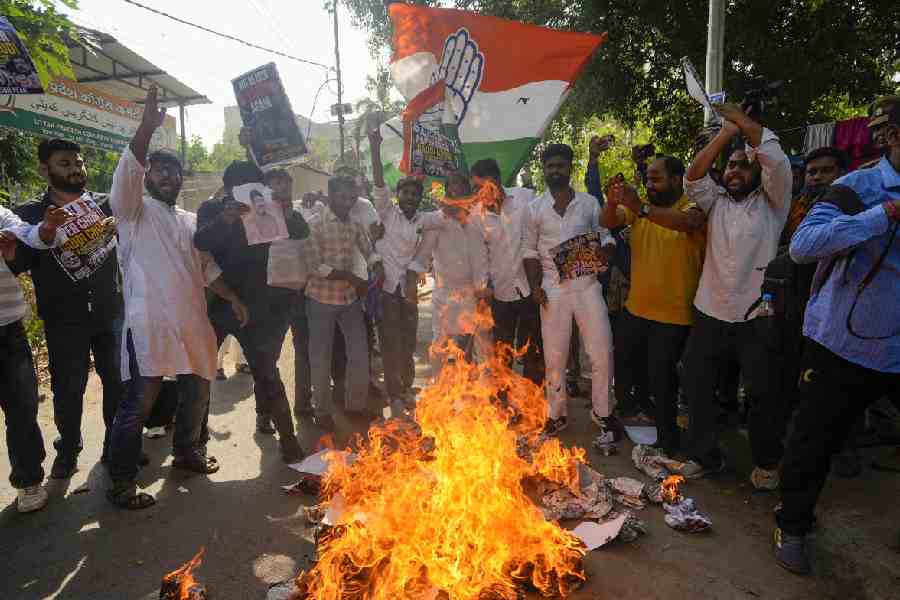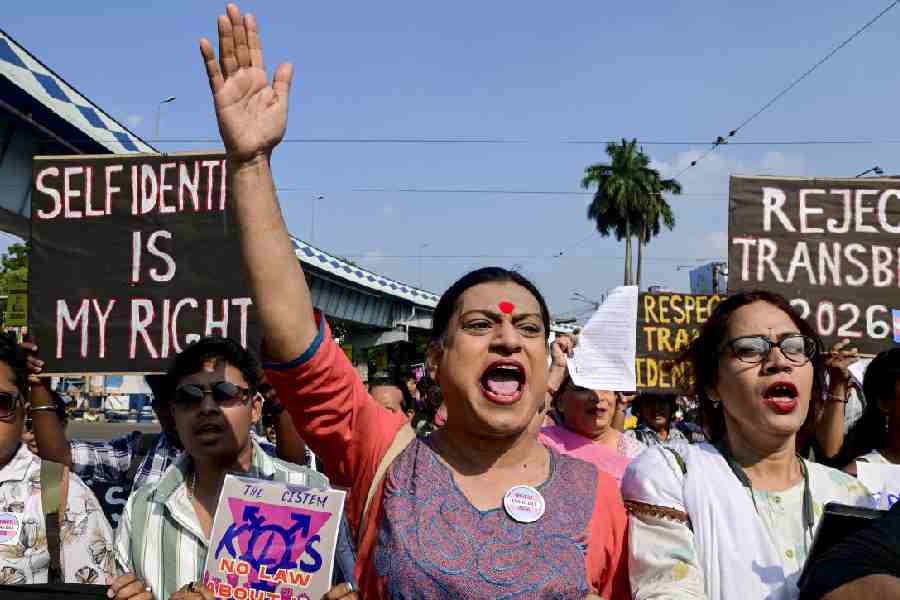
Mahua Seth, founder of The Rainbow Room and member of Sweekar, a support group for parents of LGBTQIA+ individuals, says that she has been flooded with calls and messages from panic-stricken parents and members of the transgender community since early March.
This is because the controversial Transgender Persons (Protection of Rights) Amendment Act, 2026 has introduced unclear definitions, medical gatekeeping, and criminalisation of key support networks for transgender people.
These changes aim to impose stricter certification processes and limit previously protected self-identification rights, making the main argument a concern over reduced rights and increased barriers for the transgender community.
The Act has drawn criticism from the LGBTQIA+ community, queer collectives, student groups and gender sensitisation groups. Opposition parties and even government panel members have spoken up against the Act.
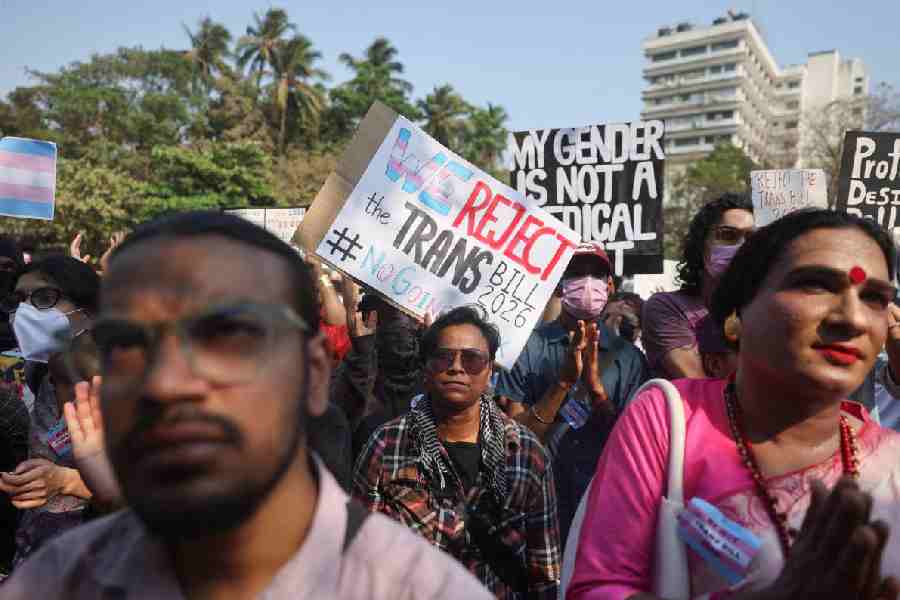
While the government claims the new law increases access to welfare and strengthens the legal framework, critics argue that it erases non-binary, gender-fluid, and other transgender identities, threatening their existence and rights.
“These swooping changes are downright horrific, retrograde, and violate every fundamental human right,” Seth tells The Telegraph Online.
This has caused deep anguish, casting a cloud of despair not only over transgender, non-binary, and queer individuals, but also their parents, chosen families, and friends.
Uncertainty about Transgender ID card
One of the major challenges introduced by the Act is the potential restriction on access to the Transgender ID card, which is crucial for legal identity and documentation.
This certificate of identity is the official gender recognition of transgender individuals. It also provides them with access to government welfare schemes. Post-amendment, the process now mandates approval by a medical board. The district magistrate can seek assistance from medical experts in issuing ID cards.
The move has instilled fear among parents, with Nilanjan Majumdar, father of a transmasculine person, worried about the validity of his child’s existing identity card.
“It is like a bulldozer bulldozing the lives and dreams of lakhs of trans-queer children, including my own,” he says.
“I do not know what this will mean for my child, who is currently living in a gender-neutral hostel while pursuing his master’s degree at one of the top colleges in India. Would he be thrown out of the hostel now? Would his Transgender ID card still be valid?”
The data on the National Portal for Transgender Persons, Ministry of Social Justice and Empowerment, shows that more than 32,000 transgender (TG) ID cards have been issued under the 2019 Transgender Persons (Protection of Rights) Act as of early 2026, before the amendment took effect.
The ambiguity over what fate awaits the existing identity documents is a cause of concern among activists and legal experts.
“What we are missing is that the transgender identity and, by extension, the Transgender ID card, is not merely a document used to access ‘special benefits’, targeted welfare schemes or reservations,” Prithviraj Nath, founder director of Bridge India, a non-profit working on LGBTQ+ rights and inclusion," says.
“It is, in essence, an identity card and is crucial in establishing that a trans person is a valid citizen of the country.”
Transgender is an umbrella term
The amendment limits the definition of a transgender person to specific traditional socio-cultural groups such as Hijras, Jogtis and Kinnars, as well as intersex individuals and those who have undergone forced mutilation or castration.
A primary survey conducted by Bridge India in 2023–24 across seven states in eastern and northeastern India, including Assam, Arunachal Pradesh, Manipur, Nagaland, Odisha, Jharkhand and West Bengal, had over 900 LGBTQIA+ respondents. Of these, 415 identified within the broader transgender umbrella. Only 30 identified as Hijra, one of the socio-cultural identities recognised under the Transgender Persons (Protection of Rights) Amendment Act, 2026.
The remaining 385 respondents identified across a diverse range of gender identities, including trans men, trans women, genderfluid, non-binary, gender non-conforming and queer. The new Act risks denying these individuals legal recognition in their self-identified gender and may even exclude them from full citizenship rights.
Parents flag mental health risks
Majumdar, who is also a therapist, highlights the psychological distress of gender dysphoria. He raises concerns about the Act’s potential impact on the mental health of transgender individuals. He talks about the distress experienced by individuals who are forced to fit into the gender binary.
“I am scared that this amendment will make them feel lost, suicidal or push them to self-harm and substance abuse. They may even feel forced to join the sociocultural identities mentioned to express their gender, which is as fundamental a right as the air we breathe in,” Majumdar says.
Kaustubh Mukherjee, father of a transfeminine child, says he has always been concerned about his child’s future.
“Like a bolt from the blue, this Transgender Persons (Protection of Rights) Amendment Act, 2026, turning into law, has pushed my child and many such boys and girls towards uncertainty,” Mukherjee says.
“For people like us who think in terms of a binary understanding of gender, it is not possible to truly understand the pain these children feel. Because of the mismatch between mind and body, they are as if imprisoned for life,” he adds.
Indrani Chakraborty, mother of another transgender child, is outraged.
“As a parent, I understand the vulnerability of transgender individuals,” she says.
“After a long struggle, the NALSA judgement came with great relief for transgender individuals, giving them their identity and a hope to live with dignity. And now it's snatched away! The amendment is very dehumanising and against basic human rights. They are simple humans and deserve all the basic human rights. The amendment should have focused on education, livelihood, social stigma, health, and other serious issues they face.”
Doctor flags ‘public health concern’
Retired Air Cmde Dr Sanjay Sharma, founding director and CEO of the nonprofit Association for Transgender Health in India, warns that the amendment could disrupt access to gender-affirming care and create confusion within the healthcare system.
“The lack of clear instructions from the health ministry and National Medical Council has disrupted the delivery of lifesaving gender-affirming care for the vulnerable population,” Sharma tells The Telegraph Online.
Gender-affirming care can be lifesaving because it can reduce the psychological distress among the transgender individuals by aligning medical care with their gender identity.
Sharma says the introduction of punitive provisions in the Act has created an atmosphere of fear of penalisation and prosecution among the healthcare providers. He says these changes are pushing individuals away from regulated public healthcare towards unregulated private practitioners, increasing the risk of unsafe practices and self-medication.
“The doctors are now caught up in an ethical dilemma wherein following the directions given in the Act forces them to go against the professional code of conduct and indulge in malpractice by not adhering to scientifically sound International standards of care and global best practices for the delivery of life-saving care,” he says.
He calls on the Union Ministry of Health and Family Welfare and the NMC to treat the situation as a public health emergency and issue clear guidelines, set up crisis response systems, ensure mental health support to transgender individuals and provide legal protection to healthcare providers.