The cabinet on Friday approved a proposal to conduct the census in two phases — house listing between April and September next year and enumeration from February 2027.
The cabinet, chaired by Prime Minister Narendra Modi, approved an expenditure of ₹11,718 crore for the exercise to be carried out by 30 lakh enumerators.
The census will collate, among other things, caste data and will give individuals the option to self-enumerate themselves through a web portal.
“The respondents can choose not to reveal their
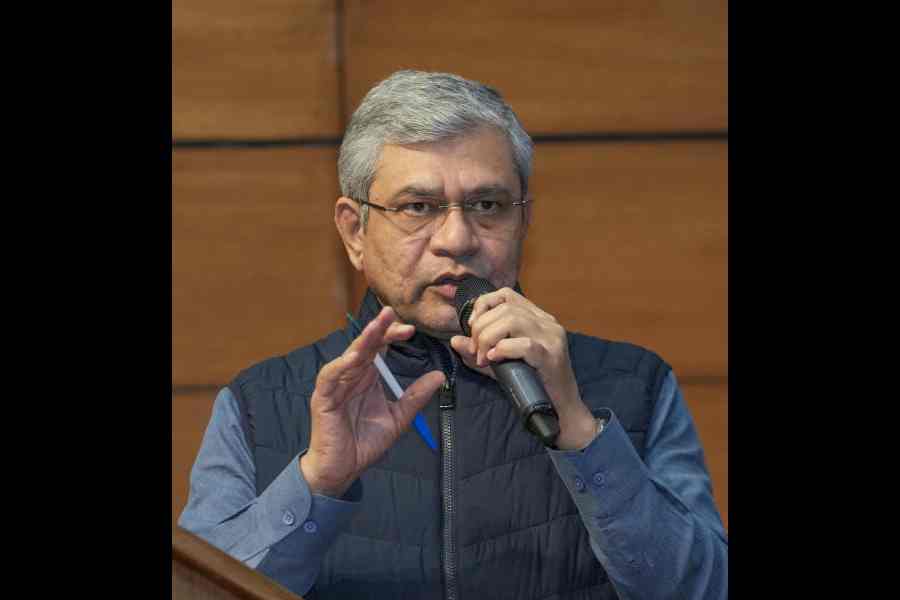
caste details,” information and broadcasting minister Ashwini Vaishnav told reporters here.
The minister said the census would be managed through the dedicated
Census Management and Monitoring System portal and the data would be collected through mobile apps.
“Use of an app for data collection and the central portal for monitoring purposes will ensure better quality data,” Vaishnaw said.
Data dissemination will be much better and user-friendly so that all queries on required parameters for policy-making will be available at the click of a button, he said.
This is the first time caste has been introduced in the decadal population census. In 2012, the UPA government
had conducted a special Socio-Economic Caste Census (SECC). The NDA government later released the economic data but not the caste statistics, citing inaccuracies such as mix-ups in surnames, gotras and castes.
A retired government official said the SECC did not follow a top-down design of questions to rule out inclusion of surnames and gotras in the caste data.
“Ideally, the enumerators should have asked the people to suggest the exact caste from the list of castes in the questionnaire. Instead, they asked the people to tell their caste. Many people do not have clarity. The caste is often different from surnames and gotras. The enumerators recorded whatever they were told. It created confusion in segregating the caste details from the data of caste, gotra and surname,” the retired official said.
The NDA government set up a committee to analyse the data, but the caste data could not be separated.
Asked how the questions will be designed this time to avoid such confusion, Vaishnav said the detailed questionnaire would be made available before the enumeration starts.
The minister said the enumerators, usually government teachers appointed by the states, will carry out the field work in addition to their regular duties and emphasised
detailed data sharing down to the smallest local levels (village/ ward).
Census is the biggest source of primary data in villages, towns and wards, providing micro-level indicators on parameters such as housing condition, amenities and assets, demography, religion, SC/ST categories, literacy and economic activity.