|
| Binod Pradhan |
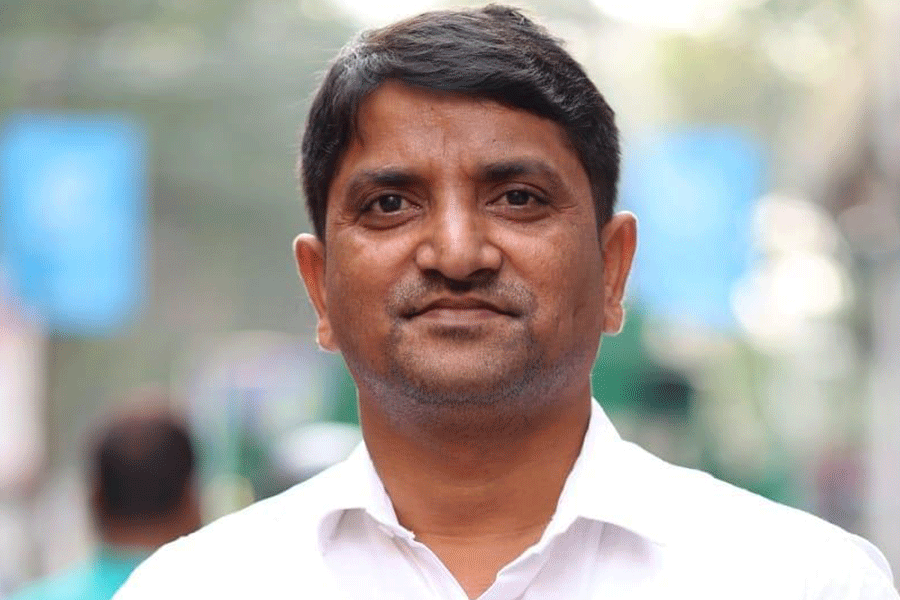
Kalimpong-born Binod Pradhan is the man who looked through the camera in visual delights such as Devdas and Delhi-6 and now you can see his fave foreign films on UTV World Movies starting tonight. A t2 chat..
What are the films you have chosen for UTV World Movies’ 50 Movies to See Before You Die slot?
The Blair Witch Project (to be shown on January 28, 8.30pm) is a pseudo realistic film and shows how scary reality can be. It is as if someone is trying to find out everything through video camera footage. It opened up a new genre. The Shawshank Redemption (beaming tonight, 8.30pm) is the classiest film I have seen dealing with human values from the position of the distressed. It shows how men, caught amid the squalor of a prison, can seek out hope and rise to the occasion.
You’ve worked with three of the most charismatic filmmakers in Bollywood — Rakeysh Omprakash Mehra, Vidhu Vinod Chopra and Sanjay Leela Bhansali. How different was the experience with each?
I started off with Vinod Chopra (Khamosh). He wants visuals of the highest calibre. He involved me right from the scripting stage and always listened to my suggestions. I entered Bhansali’s film (Devdas) a little late, so there was no scope of early involvement. He does not compromise with his vision. His producer Bharat Shah ran into some problems, which affected the schedule. But he did not let that rush me. Rakeysh (Rang De Basanti, Delhi-6) is the one who gives me the longest leash. Often I had to take decisions that no cinematographer has to take.
After so many big projects would you still rate Devdas as your biggest?
In terms of project budget, scale or production values, it will surely be the biggest. But my favourite films have been Parinda, Devdas, Rang De Basanti and Delhi-6, not in that order. Devdas and Delhi-6 had large sets. For Devdas, just the logistics of getting things done and adding aesthetic values on such a scale was a challenge by itself. For Delhi-6, we planned the film to be off-road. We were trying to get out of the glamour world. So the visuals were to be less colourful, more shaky….
You have shot all around the country — Kashmir for Mission Kashmir, Himachal Pradesh for 1942: A Love Story and Kareeb, Mumbai for Parinda, Delhi for Delhi-6 and Rang De Basanti… Which city do you like best for filming?
It’s Kalimpong, my hometown. I have shot some Nepali movies there. But if you take Kalimpong out as an option, it would be Dalhousie, where we went for 1942. I am a mountain person, you see?
With technology making progress in leaps and bounds, is it becoming a competition for cinematography? The likes of Subrata Mitra could produce beautiful images without cutting edge technology...
Ultimately you are telling a story though pictures. So technology will never be a competition. It will be an additional palette in the filmmaker’s hands. I was highly affected by Subrata Mitra in Pather Panchali. But as with music, things have moved on with cinematography. One has to see Avatar to see what can be achieved. 3D is more accessible now, 3D TV is also coming. What is important is the mind’s vision. The vision has to be translated on screen — using technology in case it helps improve the aesthetics of the vision.
You are working on a Telugu film now. Do you miss working in the hills of Bengal?
I am waiting for an opportunity to work near home. I hear Aparna Sen shot recently in Siliguri and I thought, “Shit, why didn’t she call me?”