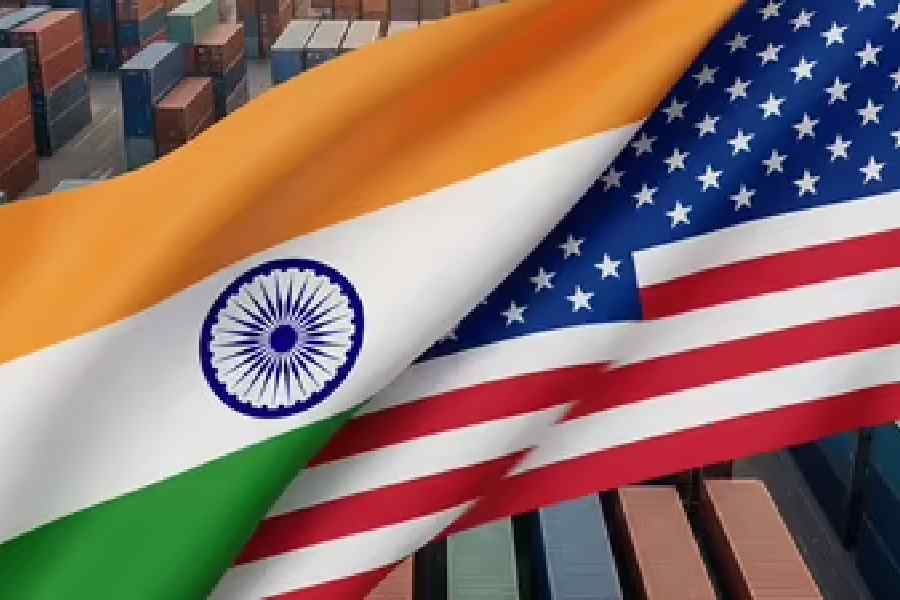
US President Donald Trump signalled that he could impose a fresh tariff on Indian rice in a sign that the ongoing bilateral trade negotiation between the two countries could drag on.
In a roundtable in the White House on Monday with representatives of the agriculture sector and key members of his cabinet, including treasury secretary Scott Bessent and agriculture secretary Brooke Rollins, Trump remarked that India should not be “dumping” rice into the US, before adding that he will “take care” of it, while stressing that tariffs will solve the “problem” easily.
India already faces one of the highest tariffs (50 per cent) in the world, impacting half of its merchandise exports to the US. Even as senior government officials of the Modi government had expressed hope that a trade deal can be achieved by the month end, Trump’s comment only added to the uncertainties around the timing.
‘So easy’
Sitting next to Trump, Meryl Kennedy, who runs her family’s agribusiness Kennedy Rice Mill in Republican dominated Louisiana, told Trump that rice producers in the southern part of the country are “really struggling’ and that other nations are “dumping” rice into the US.
Asked by Trump which countries are dumping rice into America, Kennedy replied, “India, and Thailand; even China into Puerto Rico.”
She said that tariffs imposed by the Trump administration are working, “but we need to double down”, to which Trump said, “You want more, I understand”.
He then turned to Bessent asking why India is allowed to do that and if it has an exemption on rice.
When the treasury secretary informed that India does not have an exemption, Trump replied, “But they shouldn’t be dumping... They can’t do that.”
Claiming that the previous administration did not protect the US chip and car industry by tariff, Trump said, “It’s the same thing with rice. It’ll be good, will get it solved very quickly... Just give us the names of the countries. Tariffs, again. It solves the problem in two minutes,” the president said.
Kennedy then said that they have “bought” the largest brands at retail, too, so they have an incentive to subsidise their products. When Trump asked, “Who did that?” she said, “Indians”.
“We’ll take care of it. It’s so easy,” Trump said. The President also announced $12 billion in federal aid for farmers.
Marginal impact
India is the largest producer of rice — 150 million tonnes -- and has a 28 per cent share of the global market. It is also the top exporter, with a 30.3 per cent share of global exports in 2024–2025, Indian Rice Exporters Federation (IREF) data shows.
However, India exported only about 2.34 lakh tonnes of rice to the US in FY25, less than 5 per cent of its total global basmati rice exports of 52.4 lakh tonnes, with West Asia being the dominant destination.
The value of rice export to the US stood at $392 million last fiscal, accounting for 3 per cent of its global rice exports. India already faces 53 per cent tariffs in the US market, Global Trade Research Initiative said, adding that 86 per cent of Indian shipments are premium basmati. In contrast, Pakistan’s basmati export stood at 80,000 tonne last year
Bengal, a major rice producer in India, has so far remained relatively unscathed from the tariff given the state is an exporter of parboiled rice which has a negligible market in the US.
Indian exporters on Tuesday said the price realised by them in the US remained steady despite tariffs. The additional cost burden on account of tariff is being passed on to the consumers by the retailers, they added, responding to the on-camera parleys at the White House.