Book: SHEHER MEIN GAON: CULTURE, CONFLICT AND CHANGE IN THE URBAN VILLAGES OF DELHI
Author: Ekta Chauhan
Published by: Vintage
Price: Rs 399
For long, Indian urban scholarship worked with an unspoken assumption that the ‘urban’ was modern, rational, and progressive, a space where caste, conservative traditions and patriarchy would eventually dissolve under the weight of development-led modernity. Ekta Chauhan’s Sheher Mein Gaon is a persuasive disruption of that myth. Turning her attention to Delhi’s “urban villages”, Chauhan argues that these spaces do not simply transition from village to city. They evolve into hybrid, contested terrains where old social orders and new urban aspirations coexist, collide and constantly renegotiate each other.
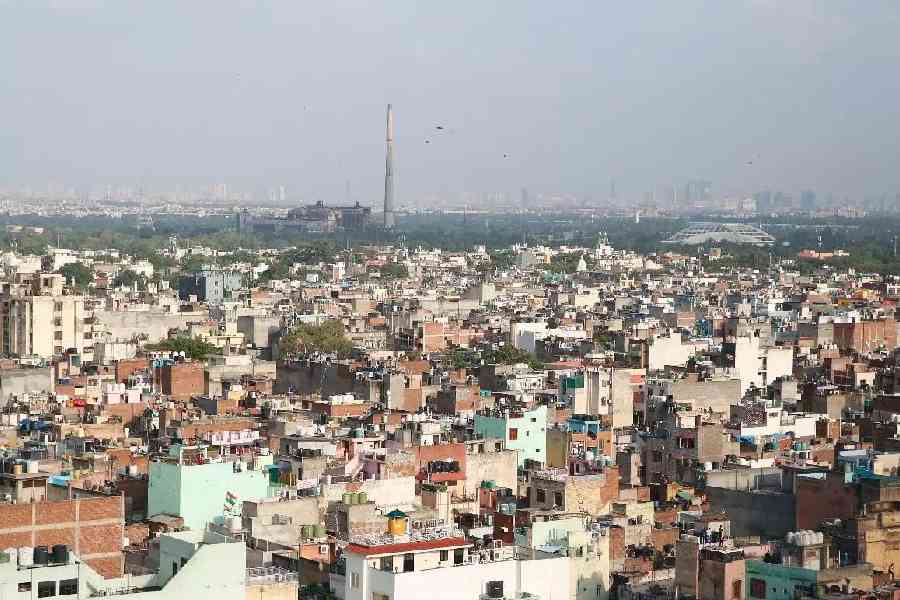
Urban villages, in Chauhan’s account, are neither residues of a disappearing past nor fully absorbed fragments of the metropolis. They are living laboratories where the contradictions of Indian urbanisation become visible. State-led land acquisition and real estate expansion have turned these villages into zones of intense speculation and economic opportunity but also of insecurity, conflict and partial displacement. The same village gali that houses start-ups, boutique cafés and rentals continues to enforce caste endogamy, gendered seclusion and kinship-based surveillance.
One of the book’s strongest interventions lies in contesting the liberal expectation that urbanity erases social markers. She shows instead that caste, religion and gender, the notions and associated biases attached to “insider-outsider”, are not only retained but also actively recalibrated in the urban. Identity here is both strategic and elastic, mobilised to claim compensation, land rights, social status or political patronage. The urban village becomes a vantage point to understand the power that flows from ‘culture’ — not as a static hierarchy but as a fluid negotiation amidst rapid spatial and economic change.
There has been a dearth of focused scholarship on these “villages within cities”. This book takes a hopeful step to fill this significant intellectual gap by treating urban villages not as anomalies but as theoretical sites that challenge the binaries of rural/urban, tradition/modernity, inside/outside. It pushes us to abandon lazy cartographies of the city and recognise that the urban in India is porous, unfinished and fundamentally contested.
Chauhan does not gloss over the absence of women’s voices in her material. She writes that for most of her fieldwork, she was either explicitly denied “permission” by men to speak to the women of their households or the women themselves refused to speak. This silence is not merely a methodological hurdle — it is data in itself. It reveals, with stunning clarity, the continued control men exercise over women’s movement, speech and narrative even inside spaces now wired into global capital. In the book’s final chapter, Chauhan returns to this gendered terrain more directly through the lens of a crisis of masculinity under urbanisation by gesturing to how loss of land-based authority and moral anxiety are producing new forms of gendered assertion.
Sheher Mein Gaon succeeds because it neither romanticises the rural past nor mourns its erosion; it does not treat the urban as an uncomplicated site of progress either. In doing so, the book shifts our gaze away from Lutyens’ Delhi toward the messy, breathing spaces that actually produce urban life.