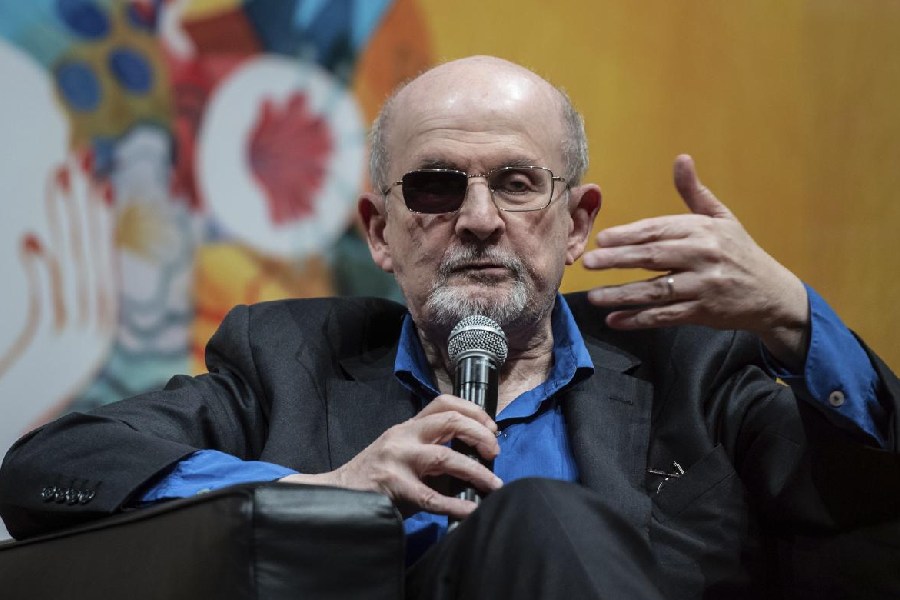
Celebrated author Salman Rushdie has raised concerns about what he called attacks on free speech and rising Hindu nationalism in India under Prime Minister Narendra Modi.
Rushdie, in a recent interview with Bloomberg, said he was worried about the portrayal of Muslims and what he described as pressure on India’s writers, journalists and academics.
“I feel very worried about it,” Rushdie said in the interview. “I have lots of friends in India. Everybody is extremely concerned with the attack on the freedoms of journalists, writers, intellectuals, professors, etc.”
He said that there appeared to be an attempt to reframe the country’s identity:
"There seems to be a desire to rewrite the history of the country; essentially to say Hindus are good, Muslims bad — the thing V.S. Naipaul once called a ‘wounded civilisation,’ the idea that India is a Hindu civilisation wounded by the arrival of Muslims. That project has a lot of energy behind it," Rushdie said.
Speaking about the warnings he voiced decades ago, he said: “I think, you know, if you're a writer, if you're paying attention then sometimes you see things coming, you know, and I think that's what I was doing, I was paying attention.”
Since the publication of The Satanic Verses in 1988, Rushdie has lived under the shadow of a fatwa issued by Iran. The threats resurfaced violently in August 2022 when he was attacked just before delivering a lecture in western New York.
The assailant, 27-year-old Hadi Matar, was later convicted of attempted murder and assault and sentenced to 25 years in prison.
India banned the import of Rushdie's novel The Satanic Verses on October, 1988, under a customs order issued by the finance ministry during Rajiv Gandhi's government, citing potential backlash from Muslim communities who viewed the book as blasphemous.
The Delhi High Court effectively lifted the 37-year import ban on November 5, 2024.