The European Union moved to tighten the screws on Russia’s war economy on Thursday, widening sanctions against the shipping network that keeps Moscow’s oil flowing despite Western restrictions.
The bloc imposed penalties on 41 additional vessels linked to Russia’s shadow fleet, pushing the total number of sanctioned ships to nearly 600. The vessels are now barred from EU ports and cut off from a broad range of maritime services, the EU Council said in Brussels on Thursday.
It is the latest step under the EU’s 19th sanctions package since Russia invaded Ukraine. Yet the measures underline a blunt reality: sanctions have not stopped Russian oil exports.
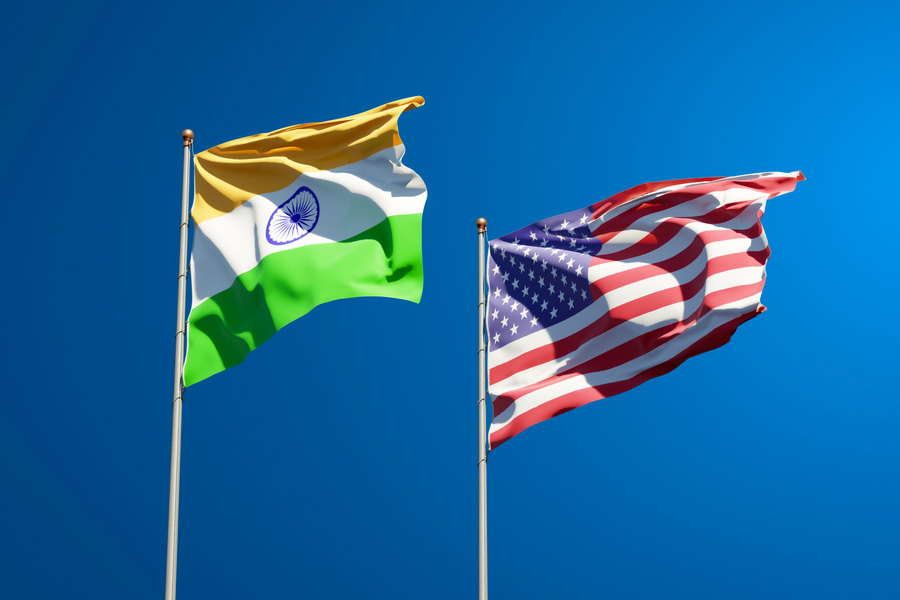
Moscow continues to sell millions of barrels to India and China, largely through a shadow fleet operating outside Western shipping, insurance and regulatory systems.
Earlier this week, the EU sanctioned Russian oil traders Murtaza Lakhani and Etibar Eyyub for enabling Moscow to sidestep Western restrictions on crude exports that help fund the war.
The Kremlin said on Thursday that Russia was preparing for contact with the United States to get details about US talks with European powers and Ukraine on a possible peace settlement to end the conflict.
When asked about media reports about a meeting in Miami, Kremlin spokesman Dmitry Peskov told reporters that contacts were planned with the United States.
"We are indeed preparing certain contacts with our American counterparts in order to receive information about the results of the work that the Americans have done with the Europeans and with Ukraine," Peskov said.
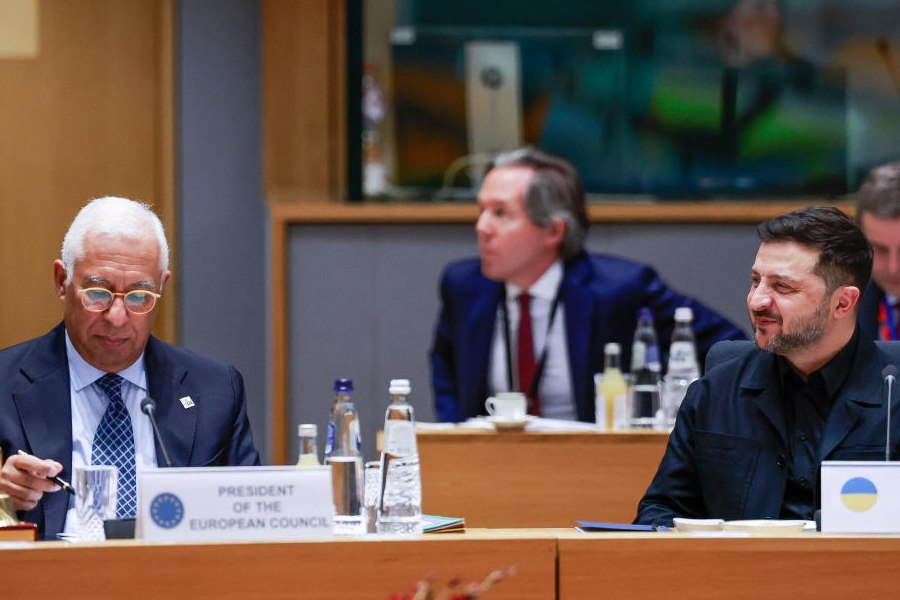
In Brussels, EU leaders arrived for a summit dominated by one unresolved question: how to pay for Ukraine’s war effort as the conflict grinds on. French President Emmanuel Macron said Europe would reach a common line.
“Several options have been put forward by the European Commission and important discussions have been initiated on how to use these assets held by the Russians. What I mean here is that we must bring everyone together. We will find a position,” Macron told reporters.
At the centre of the debate are frozen Russian assets, mostly held in a Belgian clearing house.
The European Commission wants to use them to secure a large loan for Kyiv. Belgium has warned of legal and financial risks.
Russia's central bank said on Thursday that it will sue European banks in a Russian court over attempts to use frozen Russian assets to finance Ukraine.
EU foreign policy chief Kaja Kallas said the bloc had addressed Belgium’s concerns. “So I hope that we get this over the finishing line,” she said. “We can't afford to fail, we have to show that we are strong. So I hope that we get the deal on Ukraine financing over the finishing line.”
Still, cracks remain. Sweden’s Prime Minister said there was no agreement yet. “I hope that we can find technical solutions that convince Belgium to support this,” he said, adding, “The solution in our view is to use frozen Russian assets.”
Slovenian Prime Minister Robert Golob said his country would back any move that could help end the war but would stand with Belgium.
“Frozen Russian assets are the strongest tool available to the European Union to pursue that goal,” he said, adding that Slovenia would not support any solution Belgium rejects.
Estonia’s Prime Minister framed the issue as one of principle. “Reasons to use frozen Russian assets are principle that aggressor has to pay, and Ukraine needs knowledge Europe is behind them,” she said.
Greece’s Prime Minister urged action. “Greece favours a reparation loan for Ukraine, we should not leave Brussels without a solution,” he said.
Latvia’s Prime Minister stressed the signal it would send. “Important to show decisiveness today about Ukraine,” he said.
European Council President Antonio Costa raised the stakes further. “We will never leave the council without a final decision to ensure the financial needs of Ukraine,” he told reporters, referring to funding for 2026–2027.
Finland’s Prime Minister dismissed half-measures. “We have no other options but to use frozen Russian assets for Ukraine reparations loan,” he said.
Hungary stood apart. Prime Minister Viktor Orban said the plan to use frozen Russian assets was blocked. Arriving at the summit, he said the idea was “dead” due to a blocking minority and rejected the use of a common EU loan to finance Ukraine.
Lithuania’s President called for resolve. “We must make Russia feel the cost of its aggression. We have to make a decision on the reparations loan,” he said.
President Volodymyr Zelenskiy warned against delay, saying that if Russia does not agree to stop the war soon, Ukraine will need strengthening.
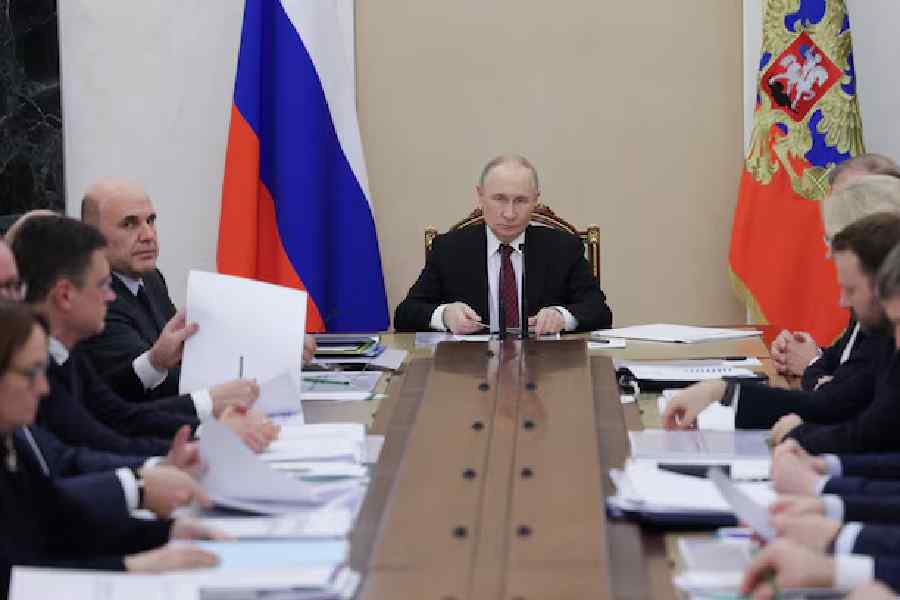
Russian President Vladimir Putin on Wednesday criticised European leaders harshly, calling them "swine". He said Russia would take more land in Ukraine by force if Kyiv and European politicians did not engage over US proposals for a peace settlement.