The surviving suspect in the mass shooting at Bondi Beach in Sydney, Australia, was charged on Wednesday with murder, terrorism and causing grievous bodily harm with intent to murder, the police said.
The shooting at a beachside Hanukkah celebration on Sunday left 15 people dead, including a 10-year-old girl and a Holocaust survivor who was a grandfather of 11. Two gunmen, who the police said were father and son, were shot by officers; one died at the scene, and the other was taken to a hospital. The authorities said the men appeared to have been motivated by Islamic State-inspired antisemitism.
The younger suspect, 24, had been in a coma until Tuesday afternoon, according to Mal Lanyon, the police commissioner for the state of New South Wales. The suspect remains hospitalised under police guard, according to the police. He had a bail hearing through a video link on Wednesday and no bail was requested, according to a charge sheet from the court.
The man, identified in the charge sheet as Naveed Akram, faces 59 charges in all, including displaying a symbol of a terrorist organisation and placing explosives with the intent to cause harm. Officials previously said that two black Islamic State flags and improvised explosive devices had been found in the vehicle that the gunmen drove to the site of the shooting.
A police official had previously identified the other suspect as 50-year-old Sajid Akram.
The authorities in Australia said that they were investigating a trip taken by the pair last month to the southern Philippines, where Islamist militant groups have been active in the past, including some with ties to the Islamic State.
On Wednesday, the National Security Council in the Philippines said in a statement that the country had found "no validated report or confirmation that the individuals involved in the Bondi Beach incident received any form of training in the Philippines".
The formal charges were announced as the first funerals for the victims of Australia’s worst mass killing in three decades began on Wednesday.
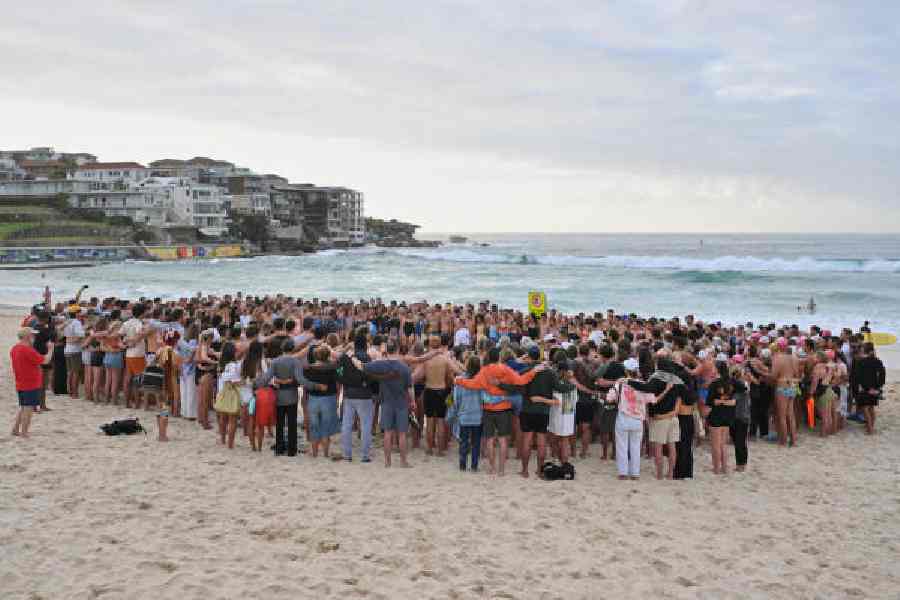
Throngs of mourners gathered for the funeral of Rabbi Eli Schlanger, one of the main organisers of the beachside Hanukkah celebration.
His father-in-law, Rabbi Yehoram Ulman, said the attackers’ aim would have been for Jews to hide in fear, but Schlanger would have urged them to do the opposite.
“‘Let’s take off our mezuzas, take off our yarmulkes, never go to Bondi Beach again because that’s where it happened.’ But that’s not the answer,” he said in his eulogy. “Eli lived and breathed this idea: We can never ever allow them not only to succeed, but every time they try something, become greater and stronger.”
Two other funerals were scheduled on Wednesday for other members of Bondi’s tight-knit Jewish community. The youngest victim, identified only by her first name, Matilda, at her family’s request, was expected to be laid to rest on Thursday.
Dozens of other people were injured in the shooting, 20 of whom were still hospitalised as of Wednesday. Two police officers who responded to the attack were among the wounded, including a 22-year-old probationary officer who was just four months into the job and who lost his vision in one eye, according to the New South Wales police.
As streams of mourners continued to visit the site of the shooting on Wednesday to pay their respects, some levelled harsh criticism at the government of Prime Minister Anthony Albanese, accusing him of not doing enough in response to warnings that dangerous antisemitism was on the rise in the country.
New York Times News Service