The Boy Who Never Left Home
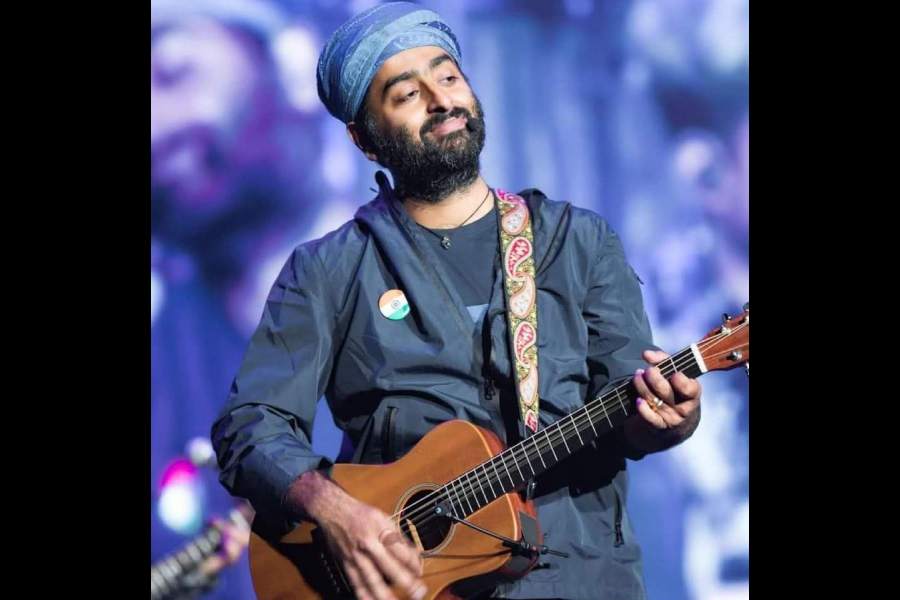
On January 27, 2026, when Arijit Singh, 38, announced his retirement from playback singing, the news sent seismic waves through India. Social media eddied with all kinds of theories. After all, this is Arijit Singh, the most-followed singer on Spotify — he has 17,46,05,324 followers. Taylor Swift is only in second place. Diljit Dosanjh has 3,86,00,000 followers.
According to news reports from 2025, Arijit’s fee for a two-hour performance is ₹14 crore. Show tickets can be as high as ₹80,000 and in some cases, such as a show in Pune, premium lounge tickets reportedly sold for ₹16 lakh. In 2025, when Arijit announced that he would play at London’s Tottenham Hotspur Stadium, a 63,000-seat venue, The Guardian ran a piece titled ‘Once-in-a-generation artist’ Arijit Singh to be first Indian musician to headline UK stadium. In the article, south Asian BBC presenter Nihal Arthanayake was quoted as saying, “He (Arijit) is doing this to show the sheer power of him as an artist…”
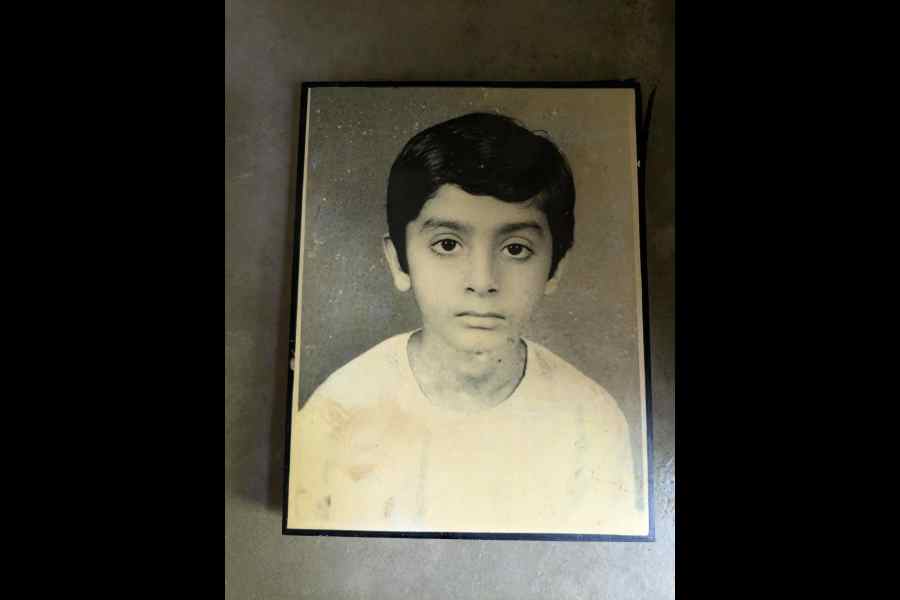
Arjit Singh as a six-year-old
Anyway, almost immediately after the announcement of Arijit’s retirement, visuals surfaced of Bollywood actor Aamir Khan’s “quiet visit” to Jiaganj, a small town in Murshidabad. In the videos that went viral, Khan was seen flying a kite on the terrace of Arijit’s house. If Arijit won’t go to the Mountain, the Mountain(s) will go to Arijit, even fly kites if need be, the visuals seemed to suggest.
Jiaganj is where Arijit was born, where he grew up, the place from where he springboarded into success and stardom. Jiaganj is where Arijit and his family continue to live and call home. In India and perhaps the world over, success — if not always celebrity — and its factories are always out there.
When Keats was writing “What little town by river or sea shore,/Or mountain-built with peaceful citadel,/ Is emptied of this folk, this pious morn?” he may well have been describing places once teeming with genius. Only Arijit never left home.
Alamgir Hossain and Prasun Chaudhuri of The Telegraph did not go to Jiaganj to interview Arijit Singh. They went to see the place and its denizens, gauge their reaction to having a celebrity living in their midst, breathing the same air, as well as to all that reflected fame. What they learnt is something like this — if Arijit has normalised celebrity, so has Jiaganj. If anything, Jiaganj deserves a few extra kilos of kudos.
7am. Onboard Hazarduari Express
The train from Calcutta to Berhampore Court is packed with sales managers, teachers, government officials and college students. At Barrackpore, a horde of hawkers board. They are peddling thick slices of bread and boiled eggs, kochuri-shingara, luchi-torkari... The tea and snacks loosen tongues. The boisterous car salesman sitting next to me starts to talk about his primary buyers — farmers in the hinterland. I tell him about my immediate mission, and he gets visibly excited. He and his wife are die-hard Arijit Singh fans. He says, “We were courting when his hit Tum Hi Ho was released in 2013.”
A man in a corner seat jumps into the conversation. He owns an electronic shop in Jiaganj not far from Arijit’s house — Jiaganj is 25 kilometres from Berhampore. He says, “You won’t be able to meet him. He avoids the media now.” A college student, who was until then glued to her phone, suddenly speaks up in support of the singer’s decision to protect his privacy in her flute-thin voice. And then, she starts to hum “Agar tum saath ho...” pointedly. At 10.10am, the train pulls into Berhampore.
11.30am. Off to Jiaganj
A 45-minute car ride from Berhampore via Lalbagh and Hazarduari Palace. These days, Jiaganj is a great tourist draw. Everyone wants to catch a glimpse of Arijit’s house by the Bhagirathi and lunch at Heshel, a restaurant run by the singer’s father.
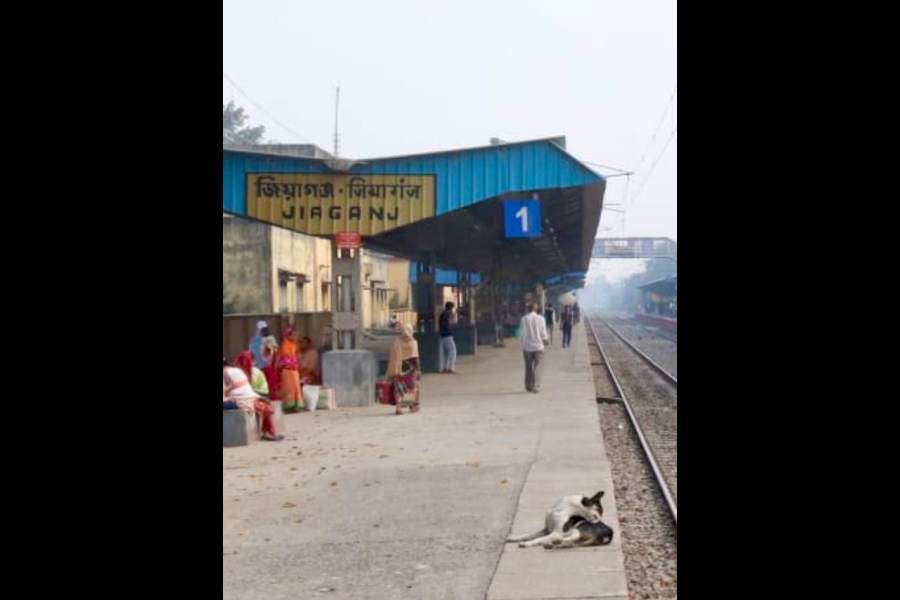
Jiaganj station
Our car stutters past the tourist hub, all the totos and ekka garis, and from there onto country roads, past mango orchards, fields of mustard, turmeric and potato. As we approach Jiaganj, the roads get narrower. The small town is full of old Jain temples, havelis of Marwari traders and smartphone shops.
12.30pm. Sibtala ferry ghat
The Bhagirathi looks more like a wide canal here. The motorised country boat ferries passengers and their two-wheelers to Azimganj, which is Jiaganj’s twin on the other side. The otherwise nondescript ghat has a USP — a flight of steps adjacent to it leads to Arijit’s house. Yes, the same house Aamir Khan visited recently.
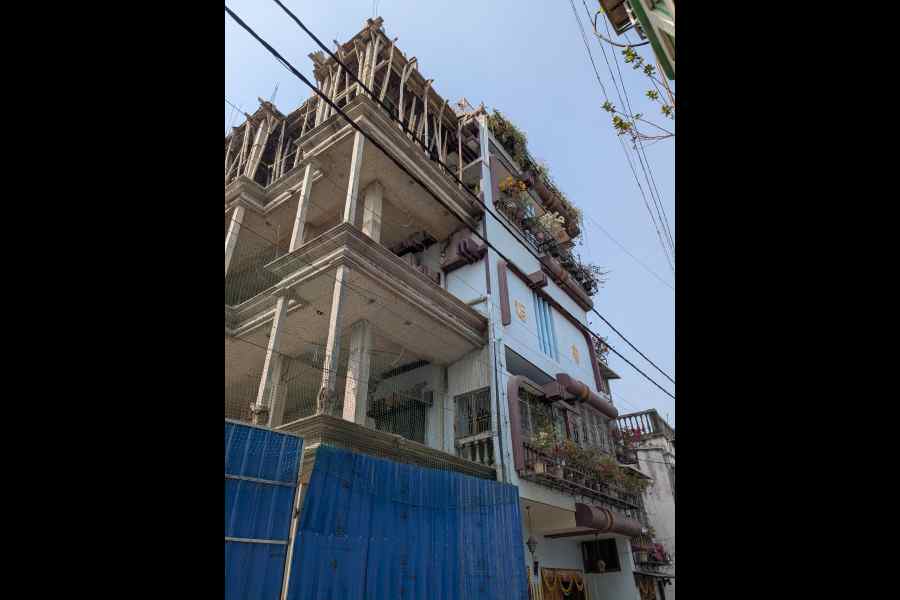
Arijit Singh's home at Jiaganj
The three-storey house is undergoing what looks like some major reconstruction and extension work. Its outer wall has two Sikh holy symbols — Panj Kakaar and Ek Onkar — on it. Arijit’s father, Surinder Kakka Singh, lives close by. The house where Singh Sr lives is the one where Arijit and younger sister Amrita grew up. The Telegraph’s first exclusive interview with Ariit and his parents happened in 2013 in this house. His mother Aditi, born in a Bengali family, passed away in 2021 when the pandemic was on its last legs. The old house is locked and the new house is heavily guarded.
1pm. A teashop
This was Arijit’s evening adda spot not long ago. Haridasi Das and her son Sanjoy “Bultey” Das run the shop. “I saw Shomu grow up,” says Haridasi. Shomu is Arijit’s nickname. “Shomu learnt to swim here, his father taught him,” she continues. It seems Arijit still rides his scooter through the lanes and bylanes near his home at night. Some at the teashop say they have seen sahibs riding pillion. Those would be, going by social media videos, British pop singer-songwriter Ed Sheeran, Dutch music producer Martin Garrix, to name just two. Garrix recorded Angels for Each Other in Arijit’s studio, which was set up a stone’s throw from his residence four years ago.
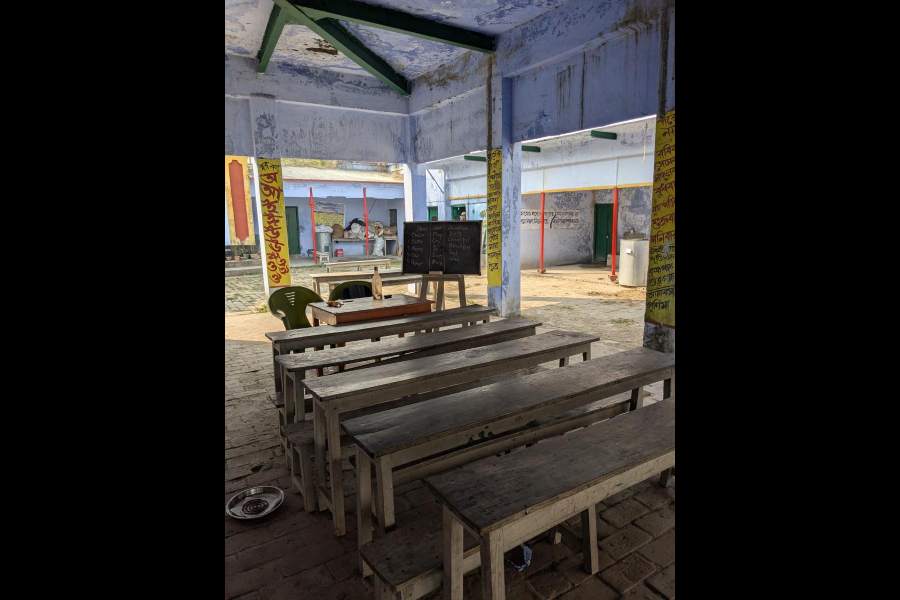
The primary school that Arijit Singh attended
Following Bultey’s directions when we reach the place, it too turns out to be heavily guarded. On our way back, we meet one of Arijit’s childhood friends who’d rather we didn’t identify him. He says, “Shomu has apartments and offices in Mumbai but prefers to live here. His sons — Jul and Ali — study in a local CBSE school. Shomu wants to give more time to Tatwamasi-led projects.”
Tatwamasi is a charitable organisation Arijit has set up. Its projects include developing existing schools, and also building a hospital, a music academy and a sports complex for children — all of it in Jiaganj.
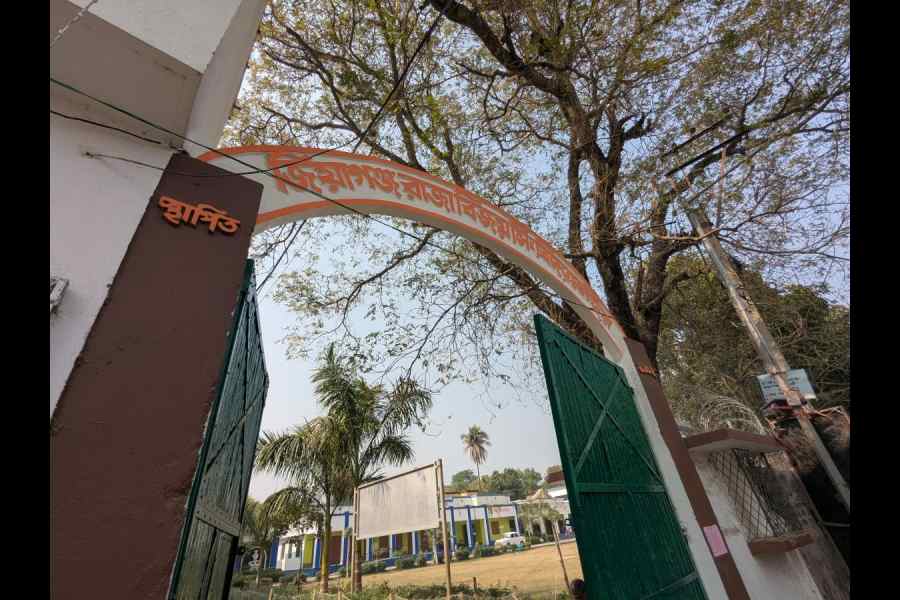
The school Arijit Singh went to
2.30pm. Heshel
Tourists are busy clicking selfies at the gate. Students are offered subsidised meals — ₹30 for a thali — at this eatery. We take our seats in another part of the restaurant where traditional Bengali fare — shukto, alu posto, daaler borar jhol, maachher jhol — is served in utensils made of bell metal.
The Sikh gentleman at the cash counter is Raju Singh, Arijit’s cousin. In the background, there’s a pen sketch of the singer. It was gifted by a fan. “Shomu doesn’t get time to visit the restaurant,” says Raju. “Uncle too rarely comes by.”
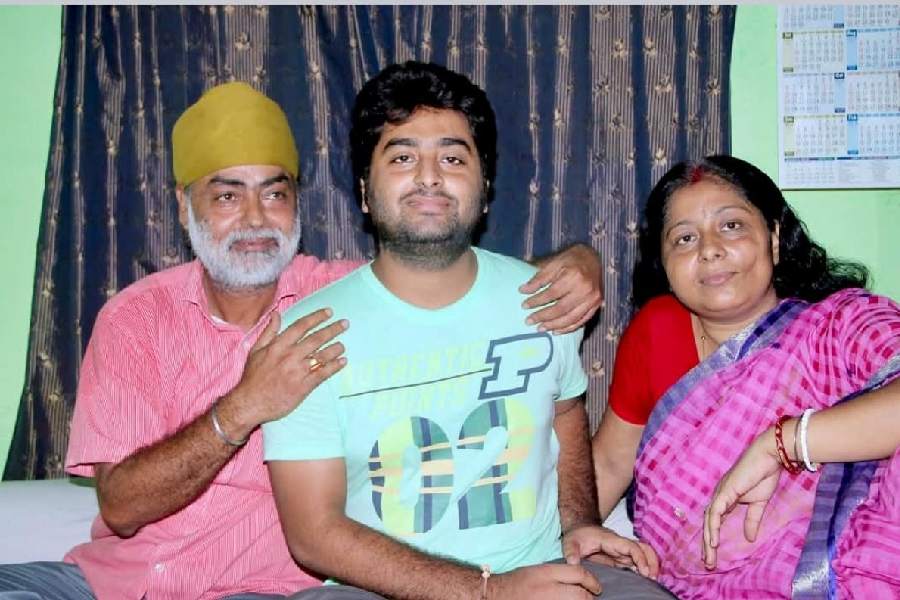
Arijit Singh with his parents
3pm. Raja Bijay Singh Vidyamandir
The century-old school has been freshly painted white and blue. It owes its well-kept lawns and newly-restored building to its most famous alumnus. Arijit studied here from classes V to X. Assistant headmaster Dipankar Bhattacharya tells us that Arijit is now the president of the school’s governing body. Bhattacharya says, “He has developed the school ground into a sports complex and named it Aditi Institution of Sports, after his mother. The Cricket Association of Bengal holds junior league matches here and school students receive training in cricket and football here. Renowned coaches visit. Arijit has chalked out plans to restore the school auditorium and set up an English medium section.”
Bhattacharya often visits Arijit’s house and has also been to his recording studio when the singer was rehearsing the song Ghar Kab Aaoge for Border 2. Bhattacharya wants us to know that whenever he visits Arijit’s house, he sits on the couch, while the singer sits on the floor. Arijit’s teacher Sumita Lahiri says, “When he visits the school, he makes it a point not to sit on any teacher’s chair in the staff room.”
4pm. Aditi Institute of Sports
These expansive grounds would have been swallowed by land sharks. Instead, they stand transformed into a full-fledged sports complex, courtesy Arijit Singh. It has cricket practice nets and pitches. Footballers and badminton players are also trained here. Some teenage boys are doing warm-up exercises. They are students of Class IX. One of them says, “Arijit Sir often meets us. He sometimes comes to play badminton at night.”
5pm. Gurukul or the House of Hazaris
Arijit first set foot in the 400-year-old Hazari Bari of Debipur with his mother and maternal grandmother Bharati Roy when he was seven years old. He was trained in Indian classical vocal by Rajendra Prasad Hazari and his younger brother Dhirendra Prasad taught him how to play the tabla. The youngest Hazari brother Birendra Prasad trained the boy in light classical, Rabindrasangeet and modern songs. None of them is alive today. Rajendra Prasad’s wife Kalpana meets us in the courtyard. “He was perhaps my husband’s brightest student,” she says and will have us know that Arijit often visits what is quite literally his gurukul. When Birendra Prasad died last year, Arijit followed the hearse van to the crematorium on foot.
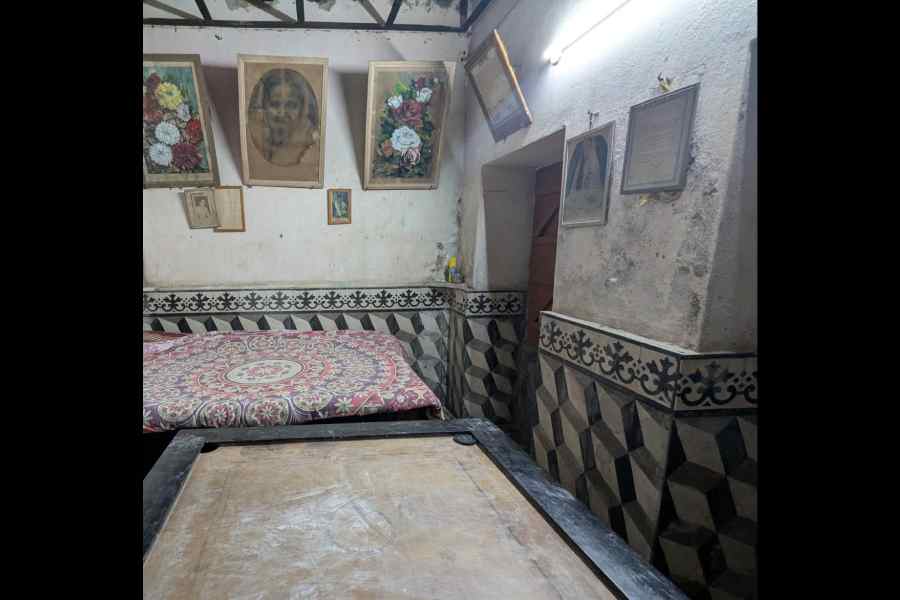
The riyaaz room at Arijit Singh's Gurukul
11am. Sripat Singh College
Before heading for the college, we stop at the house of Sumit Banerjee, who taught Bengali at Sripat Singh College, where Arijit was once a student. Banerjee ran into his old student some months ago at Sibtala Ghat. Arijit touched his feet as usual and the two exchanged pleasantries. It is Banerjee who asks us to seek out Prasenjit Nanda, who is head of the department of philosophy at the college. Says Nanda, “After his Plus Two exams, Arijit didn’t have time to attend regular classes; he was making his foray into Bollywood around then. So he decided to get a graduate degree in philosophy from a private university. He requested me to tutor him late at night whenever he was in Jiaganj.” Nanda recalls coordinating the shooting of Arijit’s Bengali film Sa on the college premises. Some years ago when Nanda went to Arijit’s house, the security didn’t allow him in. When Arijit came to know, he met his teacher and apologised profusely. Says Nanda, “Then he took my phone and saved his private number. But he requested me not to share it with anyone else.” Nanda never has.
12 noon. Mamabari
Arijit spent a good part of his childhood in the house built by his maternal grandfather Gopal Chandra Roy. His didima Bharati was a major influence. Arijit’s maternal uncle Pijush brings out a laminated photograph of six-yearold Shomu. Pijush and his son Rupnarayan lead us to Kamalekamini Oboitanik Prathamik Vidyalaya. The school is beside a temple and a jute godown; there are no classrooms, only a pillared hall. A young teacher tells us with enthusiasm that recently an attendance register from the early 1990s was discovered with an Arijit Singh listed in it. The singer was a student here.
1.30pm. Ferry to Azimganj
We meet Surinder Singh quite by chance. We are at Sibtala Ghat when we spy an elderly Sikh man riding a scooter towards the ferry and follow him on a hunch. We introduce ourselves and ask him what it feels like to be the father of the most popular singer in India. He replies in Bengali, “Moja lagey. I feel amused. People ask me ‘what is your son doing’, ‘what is his next project’.” Arijit shot to fame in 2013; that was 13 years ago and since then much has changed for the family and also Arijit. The 65-year-old stares at the flowing water the next several minutes. Once we reach the other side, we walk with him for a bit. How did the family come to settle down in Jiaganj? Singh Sr says, “Our ancestral home was near Lahore. After Partition, my father and his three brothers migrated to Lalgola. They were cloth merchants and somehow ended up in Jiaganj and found their home by the river.” Other relations settled down in the area now known as Panjabipara. The community established a gurdwara. Arijit used to accompany his mother to the gurdwara to sing kirtan on special occasions. Before he drives away, Singh Sr adds, “This is such a peaceful place. Even my son couldn’t live in Mumbai and had to return. Ei maatir emoni taan.”