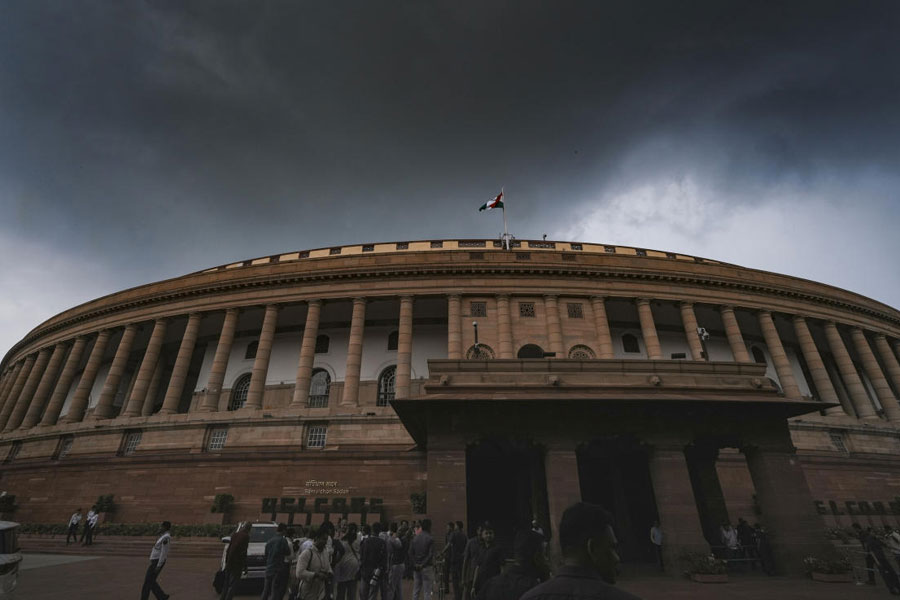
Parliament on Thursday passed the Sustainable Harnessing and Advancement of Nuclear Energy for Transforming India (SHANTI) Bill, opening India’s tightly controlled nuclear power sector to private and foreign participation despite strong opposition protests in the Rajya Sabha.
The legislation, which replaces the Atomic Energy Act, 1962 and the Civil Liability for Nuclear Damage Act, 2010, allows private companies to obtain licences to operate nuclear power plants, while foreign firms may participate through partnerships with Indian entities.
The government says the Bill is aimed at expanding nuclear capacity nearly tenfold to 100 gigawatts by 2047 under its Viksit Bharat programme.
India’s nuclear power plants, currently owned and operated by the state-run Nuclear Power Corporation of India, have a total capacity of 8.8 gigawatts. Reuters reported last year that the government was exploring plans to attract about $26 billion in investment from domestic firms such as Tata Power, Adani Power and Reliance Industries.
Opposition parties mounted a sustained attack on the Bill, warning that it weakened safeguards and prioritised private profit over public interest.
Congress MP Jairam Ramesh accused the BJP of prioritising optics over substance in policymaking.
Ramesh said the BJP “first discovers an acronym and then builds an Act or policy around it”, mocking what he called an obsession with branding flagship schemes at the cost of robust legislation and serious parliamentary scrutiny.
Speaking during the debate, Ramesh recalled the political battle over the 2008 Indo-US civil nuclear agreement, which he said had been most strongly opposed by the BJP.
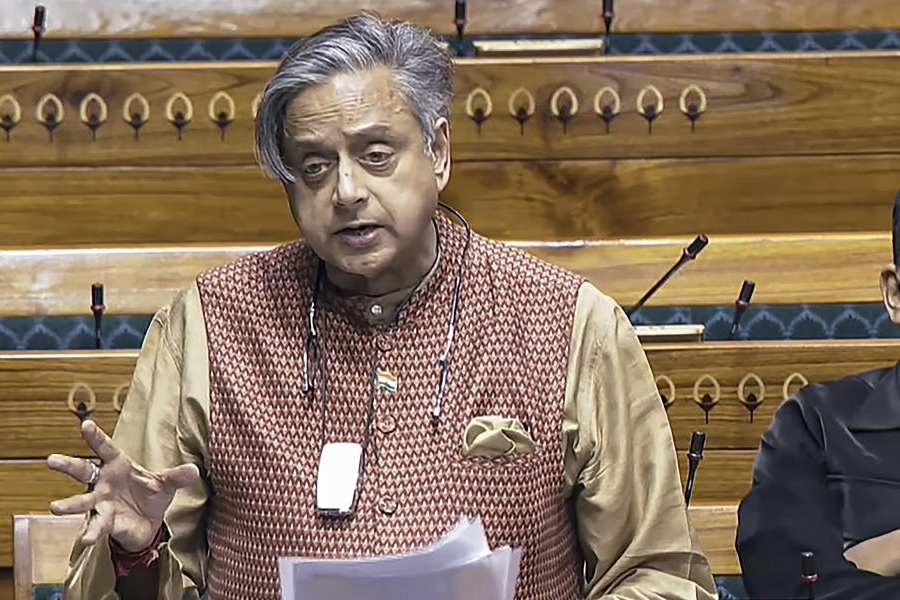
Ramesh referred to a 52-page BJP document from August 2008 titled Why BJP Is Opposing the Indo–US Nuclear Deal, noting that it argued there was “no great future in nuclear energy”.
“But the 2008 agreement between India and the US opened many doors, and one of its outcomes is this Bill. This Bill has become possible because of that 2008 agreement, which you opposed,” he said.
Ramesh said the bill rested on three pillars. Private sector participation, nuclear liability under the Civil Liability for Nuclear Damage framework, and the Atomic Energy Regulatory Board.
On regulation, he said granting statutory status to the Atomic Energy Regulatory Board was a positive step, recalling that a similar attempt through the Nuclear Safety Regulatory Authority Bill of 2011 had failed to become law.
His criticism was reserved for the proposed changes to nuclear liability. Ramesh cited speeches made in Parliament in August 2010 by then BJP leaders Arun Jaitley and Jaswant Singh during the passage of the Civil Liability for Nuclear Damage Act.
“The amendment you have brought to the Civil Liability for Nuclear Damage Act, 2010 is completely contrary to what Arun Jaitley and Jaswant Singh had said,” he added.
“So tell us — why are you amending it? Why are you denying Arun Jaitley’s contribution? Why are you ignoring Jaswant Singh? Leave Congress aside, this was your own contribution. The 2010 law you are amending was your law. You are experts in taking U-turns,” Ramesh said.
“Why are you doing this? What is the compulsion? Is it to strengthen relations with the US? Or are private companies forcing you to amend it? Please take the House into confidence. Why are you bringing this amendment after 15 years?,” asked the Congress leader.
Ramesh also challenged the government’s vision of expanding nuclear capacity from about 8 or 9 gigawatts today to 100 gigawatts under the Viksit Bharat programme, alleging that the Bill was designed primarily to benefit private companies.
“My direct allegation is that this Bill is meant only for private sector companies — to increase their role,” he said, urging the government to standardise and scale up India’s indigenous 700 MW reactors instead of importing technology from abroad.
He warned against a “vendor-driven Bill” and drew parallels with the now-repealed farm laws, which he said had also been driven by private sector interests.
Ramesh also invoked the three-phase nuclear programme envisioned by Homi Bhabha, the architect of India’s nuclear strategy, to argue for a sharper focus on indigenous resources.
“Homi Bhabha, the architect of India’s nuclear programme. He said there should be three phases: uranium in the first phase, plutonium and thorium in the second, and thorium and uranium in the third. Today, we have mastered the first phase. The second phase has been delayed. The fast breeder reactor has not yet been commissioned. But India has about 25 per cent of the world’s thorium reserves. We are uranium-deficient but thorium-rich,” Ramesh said.
Raising the question of how India should utilise its thorium reserves, he referred to writings by former Atomic Energy Commission chairman Anil Kakodkar.
“How should we use thorium? I want to draw the Minister’s attention to articles written by Dr Anil Kakodkar. He says the time has come to use thorium even in the first phase and leapfrog directly to the third phase, because our ultimate goal is to use thorium, not imported uranium. Uranium will always have to be imported,” Ramesh said.
He acknowledged that the 2008 Indo-US nuclear agreement had enabled India to import uranium from countries such as France and Kazakhstan, but stressed that this could not be the basis of long-term energy security.
“The 2008 agreement allowed us to import uranium from France, Kazakhstan, and others, which is good. But for true energy security, we must rely on thorium,” he said.
Ramesh said the country’s thorium reserves were concentrated in areas such as the Travancore beach sands of Kerala.
“India has vast thorium reserves, especially in Kerala’s Travancore beach sands and monazite. That is why Indian Rare Earths was set up in 1950. Minister sir, listen to our experts, not foreign private companies. Do not ignore our scientists,” he said.
Trinamool Congress MP Sagarika Ghose called the SHANTI Bill “fundamentally dangerous”.
“This Bill brings neither Shanti nor security… This Bill is not reform, it is recklessness. This Bill is not for the public, it’s for profit,” she said, warning that it marked the end of seven decades of state exclusivity over nuclear power.
Ghose argued that the Bill shifted liability and recourse towards contractual arrangements, potentially insulating suppliers and weakening victims’ ability to seek redress.
DMK MP P. Wilson called the legislation a “nuclear bomb which threatens the country’s peace and security”.
Several MPs from BJD, YSRCP and other parties demanded that the Bill be sent to a Select Committee or Joint Parliamentary Committee for further scrutiny.
Junior minister for atomic energy Jitendra Singh asserted that no compromise would be made on safeguards.
He said nuclear power was a reliable 24x7 energy source and essential for meeting India’s clean energy goals.
Singh said the government aimed to raise nuclear power’s share to at least 10 percent of total generation by 2047 through a nuclear energy mission that included private participation with safeguards.