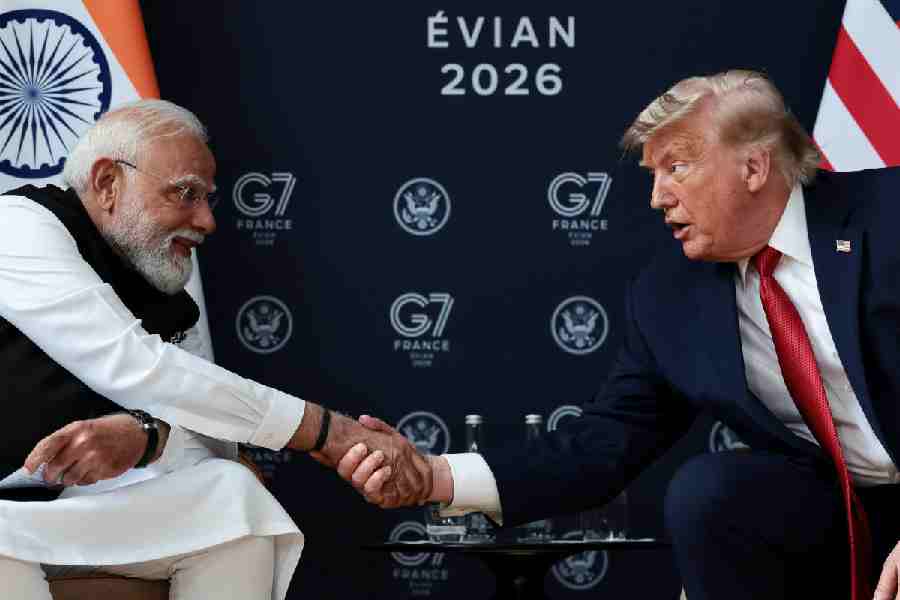
Could there finally be light at the end of the India-US trade tunnel? That question loomed large as long-delayed negotiations reopened in New Delhi on Wednesday, just hours after an unexpected burst of optimism from Washington.
Speaking before the Senate Appropriations Subcommittee a day earlier, US Trade Representative Jamieson Greer said India had put forward some of the “best offers we’ve ever received as a country.”
For talks long mired in stalemate, it was a marked shift in tone. India, he said, remained “a very difficult nut to crack,” but he added: “They’ve been quite forward leaning.”
Indian Commerce Minister Piyush Goyal, speaking separately on Wednesday, echoed that cautiously positive mood. “Many dots have been connected,” he said, adding that negotiations were “progressing well.”
At the heart of the standoff is the long contentious sector of agriculture. Washington wants greater access for US “row crops”: corn, soybeans, wheat and cotton which are produced in vast quantities across the American Midwest. India has stoutly resisted, acutely aware of potential political backlash on farm issues.
“There’s resistance in India to certain row crops,” Greer said. “But the types of offers they’ve been talking to us about have been the best we’ve ever received. That’s a viable alternative market.”
For the Trump administration, expanding agricultural exports is key to its broader strategy of diversifying away from China, cutting trade deficits and securing reliable outlets for America’s crop surpluses.
This week’s Delhi meetings bring together US Deputy Trade Representative Rick Switzer, chief negotiator Brendan Lynch, and India’s Commerce Secretary Rajesh Agrawal and Foreign Secretary Vikram Misri. Their immediate goal is modest but key: clinch Phase One of a bilateral trade pact before year-end.
A breakthrough would allow Washington to begin rolling back the punishing 50 per cent tariffs on Indian goods which are a combination of a 25 per cent levy targeting Indian exports and another 25 per cent, it is said, tied directly to New Delhi’s continued purchase of discounted Russian oil.
Privately the Indian government believes that the additional 25 per cent has little to do with Russian oil but it is an additional levy to get Delhi to be reasonable. A ‘persuasion’ tax that, from all accounts, is working.
Indian negotiators had braced for turbulence after President Donald Trump threatened fresh duties on Indian rice, accusing New Delhi of “dumping.” But Greer quickly downplayed the threat, telling senators the US administration’s real priority was securing stable market access, not escalating the tariff war. India, he stressed, was offering more than any previous administration had managed to secure.
Greer also said discussions were “fairly far advanced” on zero-tariff commitments for civil aviation parts, provided India offers matching access. Washington is further pushing India to import more US ethanol, part of a wider drive to expand global markets for American biofuels.
According to MEA spokesperson Randhir Jaiswal, Wednesday’s talks also covered digital trade, emerging technology cooperation and supply-chain diversification, areas where both countries see strategic alignment and a shared desire to reduce dependence on China.
Indian officials insist they are not negotiating from a position of weakness. Goyal has repeatedly said India will engage constructively but “not at the cost of farmers or small industry.” New Delhi has also made clear it wants reciprocal investment and supply-chain partnerships, not one-way concessions, and it will not abandon Russian crude, which it views as essential to energy security.
Both sides say they want progress, and after months of drift, Greer’s upbeat tone has injected a degree of momentum. But the road to a deal remains uncertain, with sensitive farm access, tariff politics and Trump’s unpredictability all potential spoilers.