More than 50 per cent of Nepal tea samples tested by the authorities failed to meet the food safety parameters laid down by India’s food regulator, court documents showed, sharpening the argument by Indian tea producers who have long campaigned for stricter compliance on imports from the Himalayan neighbours.
An affidavit filed by the Tea Board in Calcutta High Court disclosed that 22 out of 43 samples drawn for checking adherence to Food Safety and Standard Authority of India (FSSAI) in FY25 failed the tests. The document, reviewed by The Telegraph, showed that a total of 27,570 kilograms of tea were destroyed for failing to meet the standard set by the Board, which regulates the tea industry in India.
The volume of tea disposed of due to poor quality, however, pales in comparison with the quantity of Nepalese teas entered in a year — Nepal exported 15.95 million kg of tea to India in FY25.
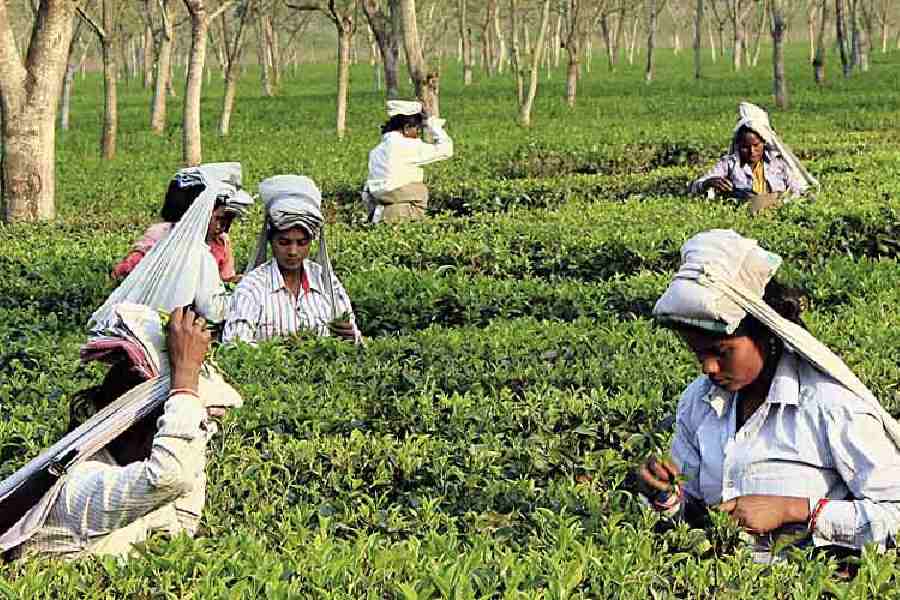
The orthodox variety of Nepal tea competes with Darjeeling tea, while the CTC variety competes with tea produced mainly in the Dooars and Terai. Being cheaper, Nepalese tea has been accused of depressing prices in the market. Moreover, the unscrupulous trade practice of mixing Nepal tea with Darjeeling, a GI-protected farm produce, is abundant.
Complex monitoring
To monitor the quality of tea from Nepal, the government of India has restricted its flow through three land ports, Jogbani, Raxaul and Panitanki.
Moreover, it was decided in a joint meeting of the FSSAI, Customs and the Tea Board under the aegis of the ministry of commerce on September 19, 2023, that Customs would conduct 100 per cent testing on the Nepal tea consignment and share the test results with the Tea Board every month.
However, the court paper shows that Customs have been falling short of conducting 100 per cent testing of Nepal teas and also sharing the same with the Board, which wants to put up the results in the public domain for greater transparency.
While the responsibility of maintaining food safety is in the domain of the FSSAI, Customs comes into the picture at the point of import if no FSSAI office representative is present. Customs officials work as ‘authorised officers’ who are entrusted with clearing the Nepal tea consignment after being satisfied with all parameters.
Minutes of the meeting, part of the affidavit, showed that FSSAI representatives on March 20, 2024, said it was getting the copy of lab test reports from Pantanki but needed additional information, such as whether all required parameters are being tested following the prescribed protocol.
Customs response
Contacted by this newspaper, a senior Customs official from Calcutta said that all the extant requirements under the Customs Act and other allied acts are strictly adhered to.
Sampling is done according to the prescribed guidelines. Only the samples that pass the required criterion are allowed. Post clearance, if adulteration is done, the same would not be in the ambit of the Customs’ ambit and needs to be checked by the authorities concerned,” the official said.
Panitanki, which is close to Siliguri, accounts for 92 per cent of imports to India. Samples drawn by Customs are sent to the Export Inspection Agency, under the commerce ministry in Calcutta. None of the samples drawn between FY22-24 from Panitanki failed tests, while only three samples failed in Jogbani.
Industry view
The Customs data appear to suggest adulterations are taking place after crossing the border when the Tea Board is drawing the samples. The tea industry argued that, given that the Board is the regulator, it needs to step up testing more, given that it is empowered to do so under the present rules and regulations.
“When the failure ratio has consistently been so high, why has the Tea Board drawn only 43 samples during 2024-25 in the backdrop of an annual import of 16 million kg from Nepal; 43 samples pertain to barely 50000 kg of tea,” asked Sanjay Choudhary, who owns a tea estate in Darjeeling, and a party in the Calcutta HC case.
Bijoy Gopal Chakraborty, president of the Confederation of Indian Small Tea Growers’ Association (CISTA), concurred. “The main market of Nepal CTC tea is Siliguri. Small growers are the worst affected because Nepal creates an oversupply situation, depressing prices for our crop. It has been our long-standing demand that Nepal tea should be checked with all FSSAI parameters, and there should be a duty on it too,” Chakraborty said.
The Tea Board did not comment.