Also Read
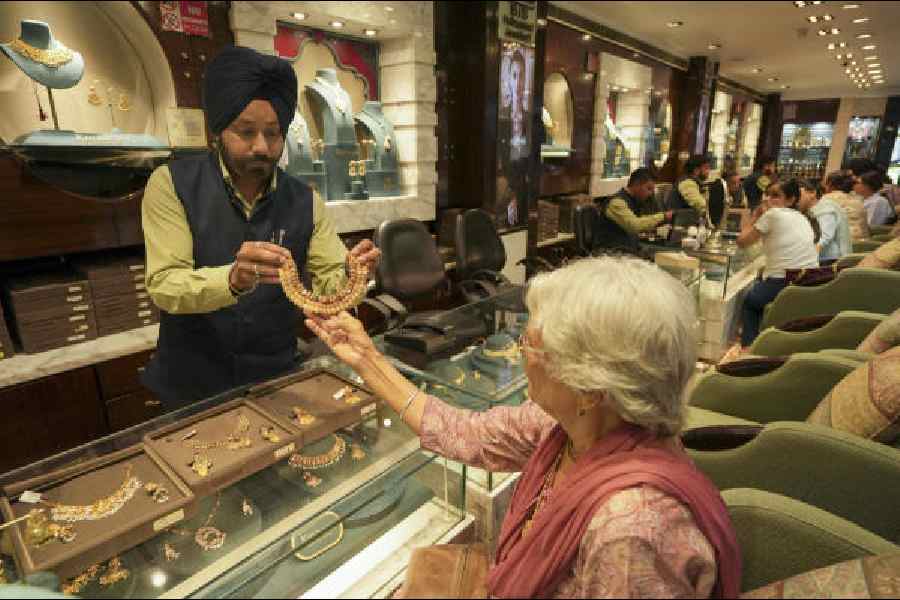
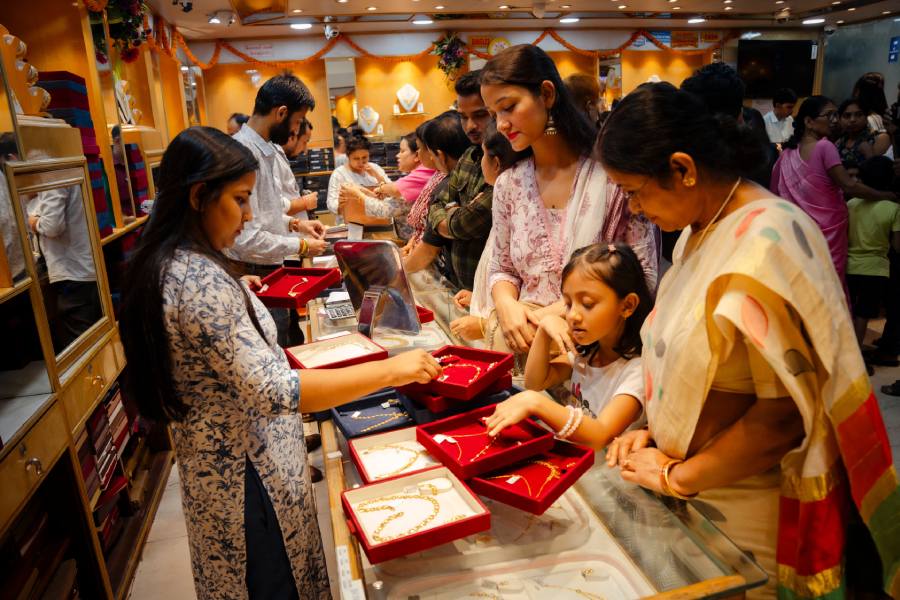
Under the bright showroom lights of Noida’s Sector 18 and the narrow, centuries-old lanes of Dariba Kalan in Old Delhi, the gold trade is learning to live with a new kind of uncertainty: not just fluctuating prices but a public appeal from Prime Minister Narendra Modi asking Indians to stop buying gold for a year.
Within days of the prime minister’s austerity call, the Centre increased import duties on gold and silver, pushing domestic prices sharply upward and deepening fears among traders already grappling with weak footfall and volatile international markets.
“Customer footfall was already low, and after the statement of our prime minister it has decreased even further,” said Anubhav Jindal of Jagmohan Lal & Sons Jewellers in New Delhi’s Chandni Chowk. “People follow whatever the prime minister says. The entire sales cycle is disrupted.”
Across the National Capital Region’s jewellery hubs, traders described a market increasingly driven by hesitation.
“Out of every 10 people coming in, nine are here to sell rather than buy,” third-generation jeweller Manvesh Raj Khanna said at Chandni Jewellers. “The customer’s mindset is in total confusion.”
The sudden duty hike pushed prices higher almost overnight. While exact retail rates fluctuate daily, most jewellers said consumers were reacting to the speed of the spike.
“It is the sudden jolt that has frightened people,” said Ankur Khanna, partner at Rajnarayan & Sons, whose family has been in the business for four generations. “If prices had risen gradually, customers may not have reacted this sharply.”
Like many others in the trade, Khanna believes the burden will ultimately land on buyers. “The customer has to bear it,” he said. “Whether it is duty, GST, or inflation, it eventually comes from the consumer’s pocket.”
Even large, branded chains are uneasy.
“Those who need gold for weddings and functions will still buy it,” said Shivani Kashyap, store manager at Mia by Titan’s Tanishq in Noida. “But when people hear that they should not buy gold even for weddings, it influences mindsets.”
She pointed to Akshaya Tritiya, one of India’s biggest gold-buying festivals, when stores still saw strong business despite elevated prices.
“People buy gold according to their capacity,” she said. “He should have said people should buy according to their budget.”
At Senco Gold & Diamonds, Amitesh Upadhyay estimated that business had already fallen by 15 to 20 percent over recent months, driven largely by the Iran-Israel conflict and rising prices.
“The upper class will continue to buy gold,” he said. “But the lower and middle classes are under pressure. And when the prime minister says something like this, people feel they are supporting the country if they stop buying.”
Others argued that the market slowdown cannot be blamed entirely on Modi’s statement.
Vivek Mehra of Bhagwan Das & Sons, a jewellery house dating back to 1865, said summer months are traditionally weak for sales and changing fashion trends are pushing consumers toward lighter, more wearable designs.
“The younger generation prefers delicate jewellery and lower caratage,” Mehra said. “People now want jewellery they can wear every day.”
Still, traders acknowledge a visible shift away from heavy gold purchases. Customers are increasingly recycling old ornaments, buying gold-plated jewelry or moving toward silver and lower-carat products.
Several trade insiders said artificial jewellery demand had also risen sharply among middle-class buyers priced out of the gold market.
The government’s broader concern lies in India’s import bill.
India remains one of the world’s largest consumers of gold, importing hundreds of tonnes annually. Gold is deeply tied to Indian weddings, festivals, and household savings, but it is also a major drain on foreign exchange reserves.
The Reserve Bank of India’s gold reserves have continued to rise gradually in recent years, even as policymakers worry about the country’s appetite for imported bullion.
Yet for traders, the contradiction is difficult to ignore.
“The government tells customers not to buy gold,” Jindal said, “but banks themselves are buying bullion. What message are we supposed to understand from this?”
Showrooms are still open. Weddings are still happening. Families are still stepping into stores beneath chandeliers and mirrored walls. But beneath the sparkle something has shifted, many jewellers said.
“Gold is not just an investment in India,” said Manish Verma of the Dariba Vyapar Mandal. “It is tradition, emotion, security, and social identity. People may delay buying for a hobby or investment. But for weddings? They will always come.”