Also Read
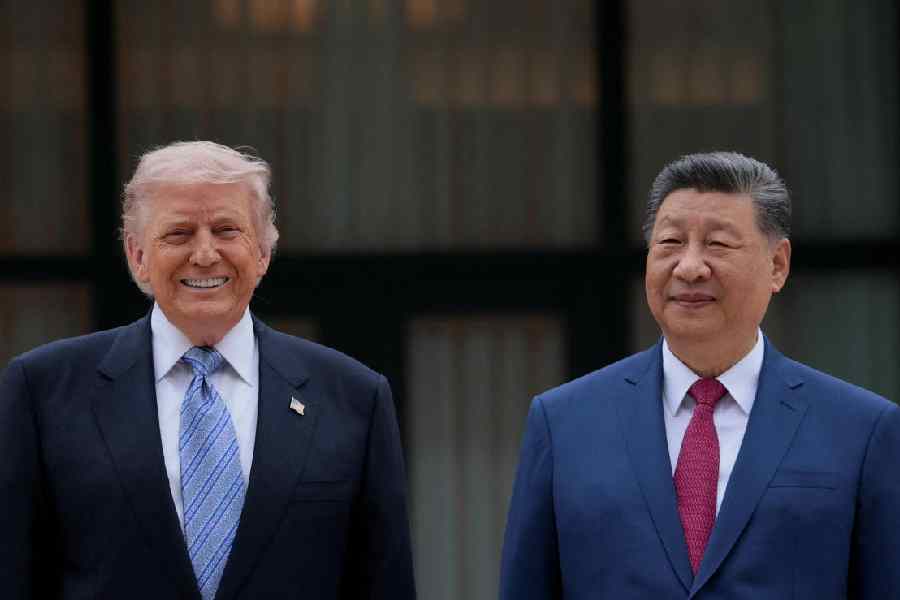
After talks on trade, Taiwan and Iran, Chinese President Xi Jinping showed off the centuries-old trees in Beijing’s walled-off Zhongnanhai compound, where he strolled with US President Donald Trump in the concluding hours of their summit.
A former imperial garden that now houses the offices of the ruling Communist Party and the state council, or China's cabinet, the compound is adjacent to the capital's famed landmark of the Forbidden City and off Tiananmen Square.
A hot mic captured the leaders' remarks, in which Trump expressed surprise that some of the trees were 1,000 years old.
"Let me tell you, all the trees on this side are over 200 to 300 years old," Xi said through an interpreter, as he gestured towards some towering trunks. "Over there, there are some more than 400 years old."
Trump replied, "They live that long?"
Xi added, "There are also 1,000-year-old trees in other places."
Trump asked Xi if other foreign leaders were also received in the compound.
"Very rarely," Xi responded. "At first, we usually didn’t hold diplomatic events here. Even after we started having some, it’s still extremely rare. For example, Putin has been here."
Then he invited Trump to touch a 280-year-old tree.
"Good. I like it," Trump replied.
The moment offered a rare glimpse of informal interactions between heads of states.
In September, a hot mic captured Xi and Russian President Vladimir Putin discussing organ transplants and the possibility that humans could live to the age of 150, as they walked towards Tiananmen Square to watch Beijing's military parade.
Trump says US, China agree on Iran
Trump said his patience with Iran is running out and he had agreed in talks with Xi that the Islamic republic cannot be allowed to have a nuclear weapon and must re-open the Strait of Hormuz.
"We’ve settled a lot of different problems that other people wouldn’t have been able to solve," Trump said on Friday after he met Xi in Beijing on the second day of talks.
Iran effectively shut the strait to most shipping traffic in response to US-Israeli attacks which began on February 28, causing an unprecedented disruption to global energy supplies. China is close to Iran and the main buyer of its oil.
The US paused its attacks on Iran last month but began a blockade of the country's ports. Talks aimed at ending the conflict have stalled with Iran refusing to end its nuclear programme or relinquish its stockpile of enriched uranium.
Tehran denies it intends to build a nuclear weapon.
Xi did not comment on his discussions with Trump about Iran, although China's foreign ministry issued a blunt statement outlining Beijing's frustration with the Iran war.
"This conflict, which should never have happened, has no reason to continue," the ministry said.
Trump said of Iran in an interview aired on Thursday night on Fox News' Hannity programme: "I am not going to be much more patient. They should make a deal."
On the key issue of Iran's hidden stockpile of enriched uranium, Trump suggested it only needed to be secured by the US for public relations purposes.
"I don't think it's necessary except from a public relations standpoint," Trump said in the interview.
"I just feel better if I got it, actually. But it's, I think, it's more for public relations than it is for anything else."
After talks between Trump and Xi on Thursday, the White House said the leaders had agreed that the strait should be open and that Xi made clear China's opposition to the militarisation of the waterway and any effort to charge a toll for its use, as Iran has threatened to do.
Trump said Xi also promised not to send Iran military equipment. "He said he’s not going to give military equipment, that’s a big statement," Trump said on Hannity.
Xi also expressed interest in purchasing more American oil to reduce China's future dependence on the strait, the White House readout of the talks said.