Summary
Birla Institute of Technology (BIT) Mesra marked a significant milestone in the fields of artificial intelligence, climate science, and geospatial research with the inauguration of AI-HYDA 2026, a Faculty Development Programme (FDP).
Organised by the Department of Quantitative Economics and Data Science (QEDS), the programme is being conducted in collaboration with the E&ICT Academy, NIT Patna, with support from the Ministry of Electronics and Information Technology (MeitY), Government of India.
Birla Institute of Technology (BIT) Mesra marked a significant milestone in the fields of artificial intelligence, climate science, and geospatial research with the inauguration of AI-HYDA 2026, a Faculty Development Programme (FDP) on Artificial Intelligence for Hyperspectral Data Analytics. Organised by the Department of Quantitative Economics and Data Science (QEDS), the programme is being conducted in collaboration with the E&ICT Academy, NIT Patna, with support from the Ministry of Electronics and Information Technology (MeitY), Government of India.
The inaugural session, held on June 8, 2026, also witnessed the launch of HimClimX (Himalayan Climate Explorer), an advanced AI-powered climate intelligence and visualisation platform developed under the Himalayan Climate Research Initiative at the Applied Data Science Lab of QEDS, BIT Mesra. Designed to strengthen climate research and decision-making, the platform integrates more than a century of climate records across Himalayan elevation zones and offers sophisticated tools for climate trend analysis, anomaly detection, spatial visualisation, impact assessment, and AI-driven forecasting.
HimClimX has been developed by Mr. Neeraj K. Maurya, Mr. Navneet Kumar, and Mr. Bhola Mahto, showcasing the department’s commitment to research-led innovation and technology development. The launch highlighted BIT Mesra’s growing role in applying advanced data science and artificial intelligence to address environmental and sustainability challenges.
The programme was conducted under the leadership of Professor Indranil Manna, Vice Chancellor of BIT Mesra. The inaugural session was graced by Dr. Anup Kumar Das, Scientist SG and Head of Division at the Space Applications Centre (SAC), ISRO Ahmedabad, who attended as the Chief Guest. Other distinguished attendees included Professor Ashoke Sharan, Dean of Faculty Affairs; Professor Raju Poddar, Dean of Research, Innovation and Entrepreneurship; Prof. Vandana Bhattacharjee, Head of QEDS; Dr. Manish K. Pandey, Coordinator of AI-HYDA 2026; and Dr. Ratnesh Mishra and Mr. Abhay Kumar, Co-Coordinators of the programme.
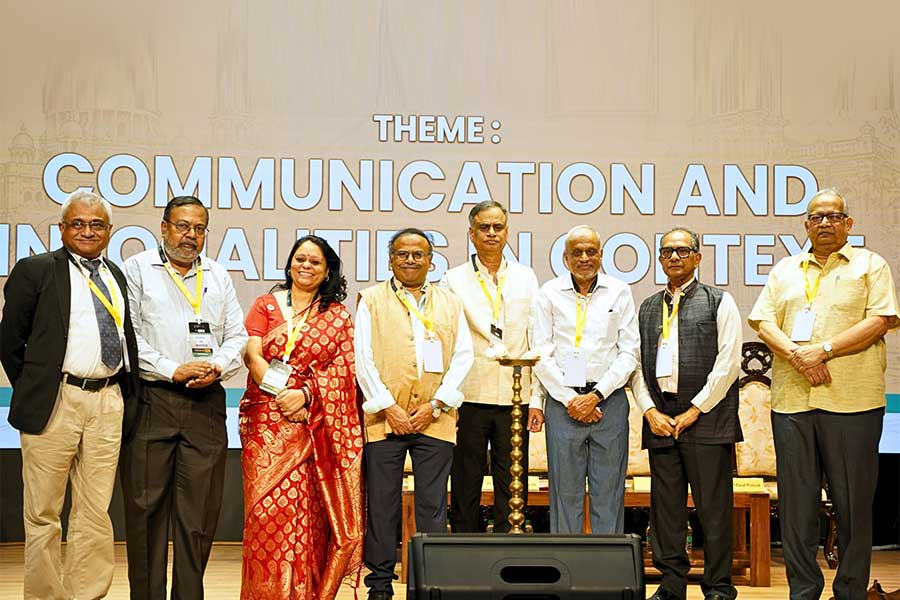
The event commenced with the traditional lighting of the ceremonial lamp followed by the BIT Prayer. Welcoming participants, Professor Vandana Bhattacharjee spoke about the increasing significance of artificial intelligence and data-driven methodologies in addressing scientific, environmental, and societal issues. Dr. Manish K. Pandey then presented an overview of AI-HYDA 2026, outlining its objectives, thematic focus, and capacity-building opportunities in hyperspectral data analytics.
Addressing the gathering, Professor Ashoke Sharan reflected on BIT Mesra’s legacy of academic excellence and innovation, while Professor Raju Poddar emphasised the importance of interdisciplinary research ecosystems in tackling pressing global concerns such as climate change and sustainable development.
Delivering the keynote address, Dr. Anup Kumar Das highlighted emerging developments in Earth observation and geospatial analytics, with special emphasis on the NISAR (NASA-ISRO Synthetic Aperture Radar) mission. He noted that the advanced radar imaging capabilities of the joint NASA-ISRO mission would significantly enhance high-resolution monitoring of glaciers, forests, agricultural systems, ecosystems, and natural hazards.
“The future of Earth observation lies not only in acquiring high-quality satellite data but also in developing the analytical capabilities to interpret it effectively. With emerging missions such as NISAR set to expand our understanding of environmental processes, there is a growing need for researchers and educators who can combine remote sensing, geospatial science, and artificial intelligence to generate meaningful societal impact,” he said.
The inaugural day also featured a series of technical sessions led by renowned experts. Professor P. K. Garg of IIT Roorkee delivered an insightful lecture on hyperspectral imaging, discussing its applications, opportunities, and emerging challenges. Dr. Dileep K. Singh from the Department of Physics, BIT Mesra, conducted a session on the electromagnetic spectrum and sensor technologies, helping participants build a strong conceptual understanding of remote sensing and data acquisition systems.
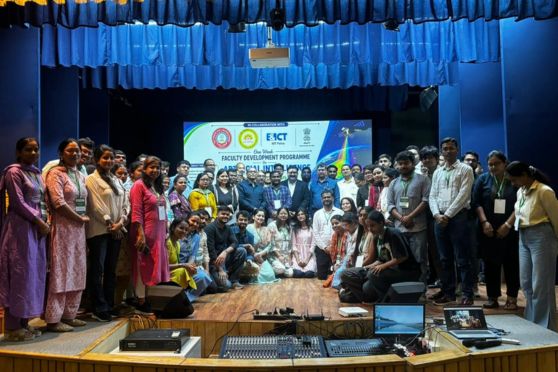
AI-HYDA 2026 has attracted nearly 90 participants, including faculty members, researchers, and scholars from institutions across the country. The inaugural session concluded with a vote of thanks delivered by Mr. Abhay Kumar, while Ms. Riya Pandey and Mr. Parth Suryadhwaj successfully hosted the programme.
By bringing together experts in artificial intelligence, hyperspectral analytics, climate intelligence, remote sensing, and geospatial technologies, AI-HYDA 2026 is expected to serve as a major platform for knowledge exchange, innovation, and interdisciplinary collaboration. The launch of HimClimX further strengthens BIT Mesra’s commitment to developing cutting-edge solutions for environmental sustainability and climate resilience, while fostering meaningful partnerships among academicians, scientists, and young researchers working at the intersection of data science and Earth systems research.
Last updated on 11 Jun 2026