Also Read
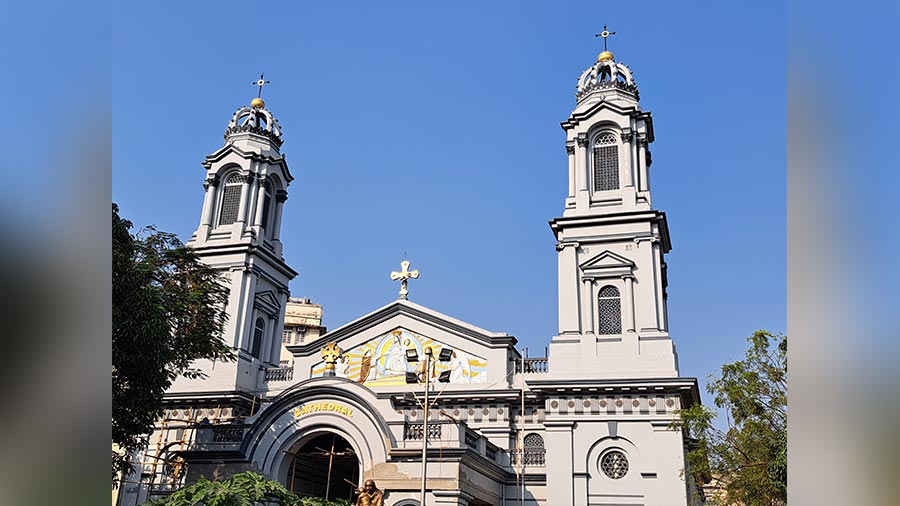
On 4 January, the Cathedral of the Most Holy Rosary in Murghihata, Burrabazar, became more than a place of worship. Its open-air premises transformed into a shared table under the evening sky, where food, history and culture came together over a carefully curated five-course meal. The gathering marked the first edition of ‘Eating with Bengal’ by Amar Khamar, a food-centric cultural experience that explored how Portuguese influence shaped Bengal’s culinary identity.
Often bypassed and overlooked by St Paul’s Cathedral, the Rosary stands as one of Kolkata’s oldest markers of European presence. Built on land once associated with Job Charnock and first established as a humble chapel in the late 17th century, the church has witnessed destruction, rebuilding and transitions between Portuguese, British and Jesuit custodianship. Its layered past mirrored the theme of the evening — coexistence and cultural confluence.
Father Franklin Menezes, parish priest of the Cathedral of the Most Holy Rosary, set the context by reminding guests of the church’s overlooked presence in the city’s imagination.
At the heart of the evening was a menu that traced the journey of ingredients and techniques between Portugal and Bengal. The opening course, Sopa de Feijão, a comforting bean soup cooked with Carolino rice, highlighted a grain central to Portuguese kitchens. Batata e Pimenta followed, reimagining Bengal’s many potato preparations like kham alu, badami alu and ranga alu on roasted pepper, Bandel cheese spread and pipul oil, acknowledging how the potato itself arrived in India through colonial trade routes.
The Bifana sandwich offered a bold bridge between continents. Sliced pork layered with in-house kasundi, pickled onions and charred bell peppers was tucked into a pão-ruti and toasted with Midnapore ghee. Arroz de Frango brought the meal closer to home, pairing aromatic tulaipanji atap rice from North Dinajpur with Kalman-style sausages and crisp seared chicken.
Dessert carried a regional memory. Chhanar Payesh made with liquid khejur gur from South 24 Parganas was served alongside luchis and a Christmas cake sourced from Mirpur village in East Midnapore, a place where Portuguese ancestry still survives through community and custom.
Historian Jayanta Sengupta spoke about food as evidence of migration and exchange. “India’s food culture has never been self-contained. It has borrowed generously and proudly. Potatoes and chillies, so essential to our plates today, came through the Portuguese from the New World.”
Sujoy Chatterjee, founder of Amar Khamar and co-curator of the evening, framed the event as a beginning. “This is about origins and destinations, and what happens in between. We want to celebrate Bengal’s many colours through food, history and shared conversations,” he said.