Also Read
Falling in line is not a Bengali trait, protesting is; historically.
There are situations when a Bengali would not mind standing in queue: Wim Wenders at Nandan, an East Bengal-Mohun Bagan match, the food kiosks at the annual book fair. But queuing up becomes a task completely incompatible with the Bengali mind when they are told to do so by an authority.
That would appear to be the case with the protests about the ongoing special intensive revision (SIR) of the electoral rolls. The situation in none of the other 11 states and Union Territories – where the Election Commission exercise is on – is anywhere close to what has unravelled in Bengal for over a month.
Take out the political noise enveloping the most crucial and enormous electoral exercise to have happened in the entire country in over two decades and the residue is Bengal’s antipathy towards any idea that is enforced.
In his poem Aitihasik (Historic), the late Sukanta Bhattacharya had lamented: “Line-e darano obbhesh koroni kono din [You never practised standing in line].”
“As long as the booth-level officers were going door-to-door, there were no complaints of harassment. Bengalis did not have a problem. All hell broke loose after summons were issued. Bengalis do not like to be summoned, be made to stand in line,” political analyst Subhamay Maitra told The Telegraph Online.
Maitra was referring to the educated upper, upper-middle class and middle-class Bengali, the “Bhadrolok”.
The Bhadrolok does not like being told what to do, even if the class emerged entwined around subservience to the British rulers.
Sociologist Sukanya Sarbadhikary said while the culture of protest was not unique to the Bengali in the pre-Independence days, in the decades since it has become an identity marker.
“The history of the culture of protest is a shared trait. What is unique to Bengal, possibly, is the people here have a confidence in their ability to protest, to resist authority. In that resistance they find a sense of security. Though the parties that have been in power in Bengal have always been very strong, but the idea of protest, of resistance, was never abandoned by the people here,” she told The Telegraph Online.
She cited the example of Jawaharlal Nehru University, which has had a long history of protests against state repression.
“When we were students in JNU, protests were considered usual. That is no longer the case. I know of people who live outside Bengal taking pride in the protests over the RG Kar case. That resistance was being talked about in the drawing rooms. The sense of pride was spontaneous that people here can still take to the streets,” she said.
States like Uttar Pradesh and Tamil Nadu have had more names deleted from the draft rolls that were published after the completion of the first step of the SIR exercise, distribution and collection of enumeration forms. Around 2.89 crore in Uttar Pradesh and some 97 lakh in Tamil Nadu, which will go to polls along with Bengal, Kerala, Puducherry and Assam.
In Madhya Pradesh the number of voters marked as suspicious was as high as 2.35 crore.
After the draft rolls for Bengal were published last month, 58 lakh voters were marked as either absent, shifted, dead or duplicate.
Another 31.68 lakh were “unmapped” voters – with no link to anyone in the 2002 electoral rolls – while 1.36 crore were kept under the contentious “logical discrepancy” category.
The claims and blames on suicidal deaths attributed allegedly to the SIR continue to climb in Bengal.
“More than 110 people have already died; every day, three to four people are dying out of SIR anxiety,” chief minister Mamata Banerjee said at an event commemorating the birth anniversary of Subhas Chandra Bose on Friday.
If the clean-up of the electoral rolls scares the Trinamool, keeping the scare quotient high among the voters on the SIR exercise is beneficial for the party.
Bengal Assembly leader of Opposition Suvendu Adhikari rolled out a list of the exceptions in Bengal on the SIR exercise.
“In other states where the BJP is not in power the administration is cooperating with the Election Commission [on the SIR process],” Adhikari told The Telegraph Online.
“Files related to the expenditure in the chief electoral officer’s office are sent to the chief secretary, not the chief minister. Bengal is an exception. Thing is she [CM Mamata Banerjee] does not want the SIR to happen and she is not bothered about any constitutional body.”
Adhikari’s colleague in the BJP Tathagata Roy too squarely blamed the Trinamool for the fuss over the SIR in Bengal.
“If their interests were unhurt they would not have said a word against it,” Roy told The Telegraph Online.
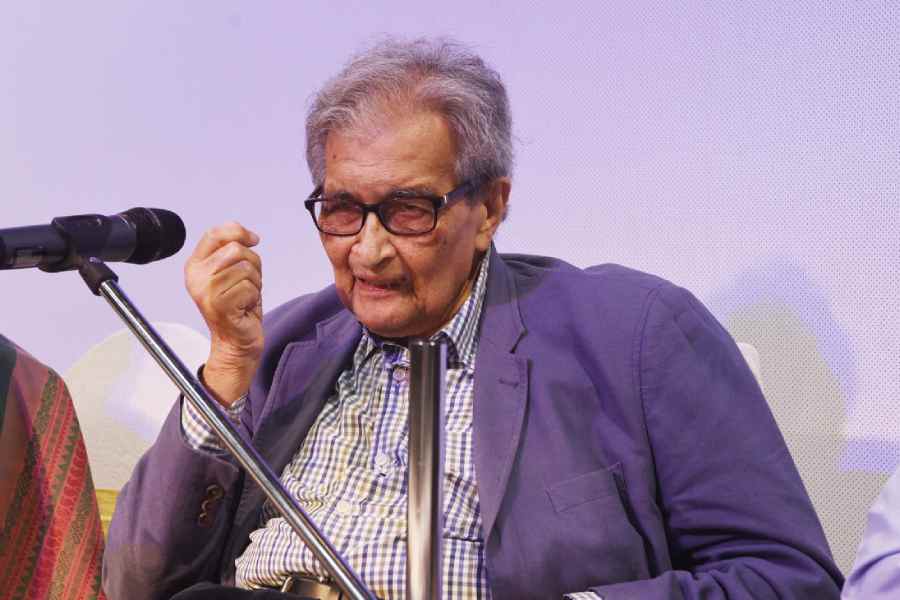
The Election Commission’s rushed deadlines – even Nobel laureate Amartya Sen has flagged the “undue haste” – and the ever-changing guidelines for the SIR process in Bengal are not beyond reproach.
“When the first suicidal death [in Bengal] was linked to the SIR exercise why didn’t the commission sent a representative to the victim’s house,” asked Subhankar Sarkar, the Bengal Congress president.
“Why didn’t they try to allay the fears the voters already had or were being instilled by a particular section? No confidence-building measure was taken. None of the stakeholders, the political parties were consulted,” Sarkar told The Telegraph Online.
Is the ruling Trinamool channeling the Bengali’s tendency to object and using it to fuel the demonstrations against the SIR process?
Partha Bhowmick, Trinamool MP from Barrackpore, who has been meeting the poll panel officials on behalf of his party, strongly disagreed.
“We are not using anyone. The people themselves are protesting. We are with the people at the grassroots level,” Bhowmick told The Telegraph Online.
“The people’s anger against the SIR is completely justified. When the elections are held, on polling day the poll officials visit the homes for the elderly to vote. And now they are being called to the hearing centre and stand in queue to prove they are voters? This is harassment.
“Why is logical discrepancy not applicable in other states? For minor differences in a name’s spelling people are being hauled over. This was unnecessary.
“Yes, Bengalis have the courage to oppose, to protest, to fight,” Bhowmick added. “It is something that they have earned over the years. The EC is trying to browbeat the Bengali people. It is not going to work.”
The fate of around 1.10 crore voters filed under “logical discrepancy” still hangs in the balance. Around 3.5 lakh voters have not turned up for the SIR hearings. Their names appeared in the draft rolls because the BLOs entrusted with the task had helped fill and upload the data.
As the extended deadline for the SIR inches closer in the state, so does the poll season. Whether over a crore voters will be allowed to remain in the voter list or not, the protests will not cease.
“I don’t know about other states,” fumed a corporate employee in Kolkata. “I just got a call from my mother’s area’s BLO that I must give my mother’s Aadhaar card immediately because there is logical discrepancy. The BLO already visited my mother’s home before and checked all these documents. I am at work, so is my husband. My daughter is in school. Now I have to drop everything and rush for my mother who is in her 80s.
“If this is not harassment, what is? Is this not guilty until proven innocent? If the EC thinks a voter is illegitimate, who should have the onus of proving it? The accuser or the accused?”
One more reason for the protests against the voter-list clean-up, said a political scientist who requested anonymity, is that “probably nowhere else does politics matter so much. For instance, if you live in Mumbai you will not even notice when the elections come and go. The situation in Bengal is dramatically different.”
The bottom line? Bengal will continue to protest.