Summary
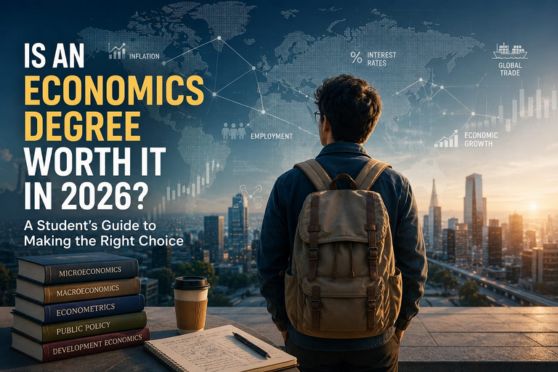
Economics does not just train you for a career, It rewires the way you read the world.
The career landscape that follows an economics degree is vast.
"Economics is everywhere, and understanding economics can help you make better decisions and lead a happier life," once said Tyler Cowen, an American economist. A coffee farmer in Colombia watches global prices collapse despite a record harvest. A salaried professional in Sydney wonders why her pay has stagnated while her rent has not. A retiree in London calculates whether his pension is keeping pace with inflation or quietly losing ground. A tech worker in Singapore watches housing prices climb while interest rates refuse to budge. None of them would call themselves economists. Each one of them is wrestling with an economic problem.
The question worth asking, for anyone and anywhere, is whether they have the tools to understand it.
The Discipline That Explains Everything Else
Economics gives people the vocabulary to understand their own lives. It turns up everywhere: in the price of energy before an election, in the interest rate your bank quietly lowered, in the reason your city has more gig workers than factory employees. At its core, the discipline asks one persistent question: how do individuals, firms, and governments allocate scarce resources, and what happens when they get it right or wrong? That question, pursued with rigor, produces insights no other field replicates. Economics does not just train you for a career. It rewires the way you read the world.
The World Is Running Short of Economic Thinkers
The problems facing the global economy today are more interconnected and more consequential than at perhaps any point in modern history. Europe is navigating a painful energy transition while trying to preserve industrial competitiveness. The United States is grappling with ageing demographics and ballooning debt. Emerging economies across Asia and Africa are racing to create hundreds of millions of formal jobs before their demographic window closes. Gulf states are reinventing entire economies away from oil dependence. India alone sees a million new workers enter the job market every month; formal employment is not keeping up. From Indonesia to Nigeria to Brazil, the story rhymes. Add the regulation of fintech and AI, the reshaping of global trade under geopolitical pressure, and the challenge of financing a green transition without deepening inequality, and you have a world that is, quite genuinely, running short of trained economic minds. These problems do not yield to good intentions. They yield to good analysis.
The Discipline AI Cannot Replace
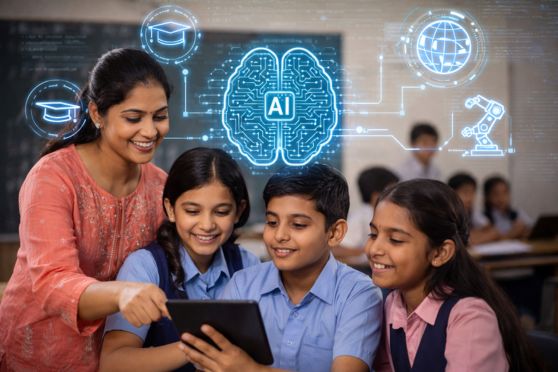
AI can calculate what happens to inflation if a central bank raises rates. It cannot decide whether that is the right call when the people most hurt by inflation are also the ones who will lose jobs if growth slows. It can model a carbon tax. It cannot navigate the politics of implementing one in Jakarta or Berlin. The work economists do at the level that matters—weighing trade-offs, reading institutions, and understanding what people will and will not accept—requires human judgement. Which is perhaps why AI companies are now, quietly, hiring economists in large numbers to help govern what they have built.
Where It Leads and Why Geography Matters
The career landscape that follows an economics degree is vast: central banks and regulatory bodies in government; investment banking, consulting, and equity research in the private sector; data policy, platform economics, and AI governance in technology; climate finance and development work at multilateral institutions. What connects these roles is not any single technical skill but the ability to reason clearly about complex systems under uncertainty.
But here is something traditional economics programs often miss: economics is not lived in a single country. A trade decision in Washington reshapes factory floors in Vietnam. A monetary tightening cycle in Frankfurt sends tremors through African debt markets. Understanding economics from one vantage point often leaves graduates with a partial view. This is why programs built around cross-border immersion are increasingly valuable. It is one thing to read about emerging markets in a lecture hall. It is another to have studied in Mumbai and Sydney, and to have seen, first-hand, how the same economic forces play out very differently across different institutional landscapes.
The Bottom Line
Nearly a century ago, J.M. Keynes observed that the ideas of economists are "more powerful than is commonly understood." He was right then. He is more right now. The farmer watching prices collapse, the professional whose savings are quietly eroded by inflation, the policymaker wrestling with a monsoon that no longer behaves as it once did—all of them are living inside questions that economics was built to answer. The discipline does not promise easy solutions. It promises something rarer and more durable: the clarity to understand what the questions actually are. In a world of growing complexity, that may be the most valuable education of all.
About the author
Dr Charu Bhurat is Associate Professor and Deputy Director of the Bachelor of Economics (BEC) programme at SP Jain School of Global Management. An expert in economics and FinTech, she focuses on connecting academic theory with real-world applications, helping students develop practical insights into contemporary economic and financial challenges.
Last updated on 30 May 2026