Most teenagers know that baseless conspiracy theories, partisan propaganda and artificially generated deepfakes lurk on social media. Well, Valerie Ziegler’s students know how to spot them.
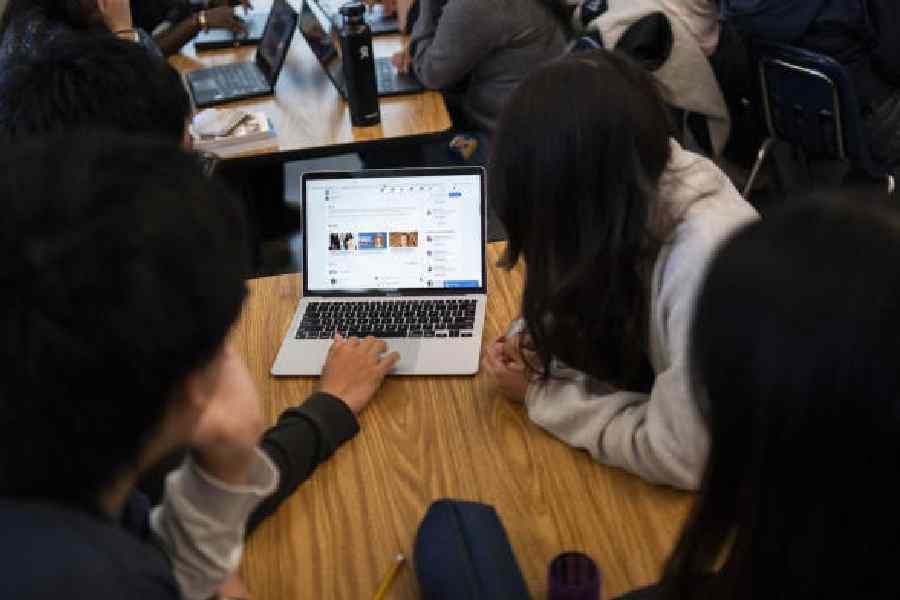
At Abraham Lincoln High School in San Francisco, US, she trains her students to consult a variety of sources, recognise rage-baiting content and consider influencers’ motivations. They brainstorm ways to distinguish deepfakes from real footage.
Ziegler, 50, is part of a vanguard of California educators racing to prepare students in a rapidly changing online world. Content moderation policies have withered at many social media platforms, making it easier to lie and harder to trust. Artificial intelligence is evolving so quickly and generating such persuasive content that even professionals who specialise in detecting its presence are being stumped.
So Ziegler and a growing group of her peers are cobbling together lesson plans from nonprofit groups and updating older coursework to address new technologies, such as the artificial intelligence that powers video apps like Sora. Their methods are hands-on, including classroom exercises that fact-check posts about history on TikTok and explore how badges that appear to signal verification on social media can often be bought rather than earned.
Ziegler’s efforts showcase the difficulties of keeping pace with new social media platforms, apps and advances in AI.
“We’re sending these kids out into the world, and we’re supposed to have provided them skills,” said Ziegler, a former California teacher of the year. “The tricky part is that we adults are learning this skill at the same time the kids are.”
Social media literacy is a tough subject for schools to try to teach, especially now. AI is becoming pervasive in the educational system, available to younger and younger children, even as its dangers to students and educators become increasingly clear.
Ziegler teaches the self-described “screenagers” in her classes that their social media feeds are populated using highly responsive algorithms, and that large followings do not make accounts trustworthy. In one case, the students learned to distinguish between a reputable historians group on Instagram and a historical satire account with a similar name. Now, they default to double-checking information that interests them online.
Ziegler first tried to teach AI literacy last year by testing out a new module from the Digital Inquiry Group, a nonprofit literacy organisation. She relies heavily on collaborations.
Ziegler and her peers across the US are scrambling to make sense of AI. The San Diego Unified School District held AI expos for its teachers over the past two summers, with each drawing more than 150 educators. At the Elk Grove Unified School District in Sacramento County, teachers have turned to Code.org, MIT Media Lab and others for resources focussed on AI.
Educators are grappling with AI literacy even beyond high school. Augsburg University in Minneapolis, US, offered a class this year called Defence Against the Dark Arts, focussed on how “disinformation, alternate facts, propaganda, deepfakes” and more saturate social media and daily life. Adam Berinsky, a political science professor at Massachusetts Institute of Technology, US, has taught a class about misinformation on social media since 2019 but added lessons on the challenges and benefits of AI in the spring.
Ziegler’s students are a savvy bunch, though the volume of junk online can feel overwhelming.
In November, her classes chatted about the flood of social media content featuring Zohran Mamdani, the first Muslim to be elected New York City’s mayor. During the election, authority figures once considered trustworthy sources — including a sitting member of Congress and the former governor of New York running against Mamdani — shared artificially generated content showing the Statue of Liberty wearing a burqa and Mamdani being praised by criminals. (The latter included a small, brief disclosure that it was generated by AI.) Posts spreading disinformation about his policy plans received hundreds of thousands of views, dwarfing those of fact-check posts.
At one point in the discussion, a student piped up with a common refrain: “Don’t trust anything you see.”
That sentiment worries Ziegler. Fact-checkers and disinformation analysts have cautioned for years about a creeping sense of nihilism toward reality.
“There’s almost this mindset now with young people that everything’s fake,” she said. “They have heard so much about things being fake online, but they don’t know how to necessarily tell.”
NYTNS
Last updated on 06 Jan 2026