Q What is the most important lesson one learns from the game of chess?
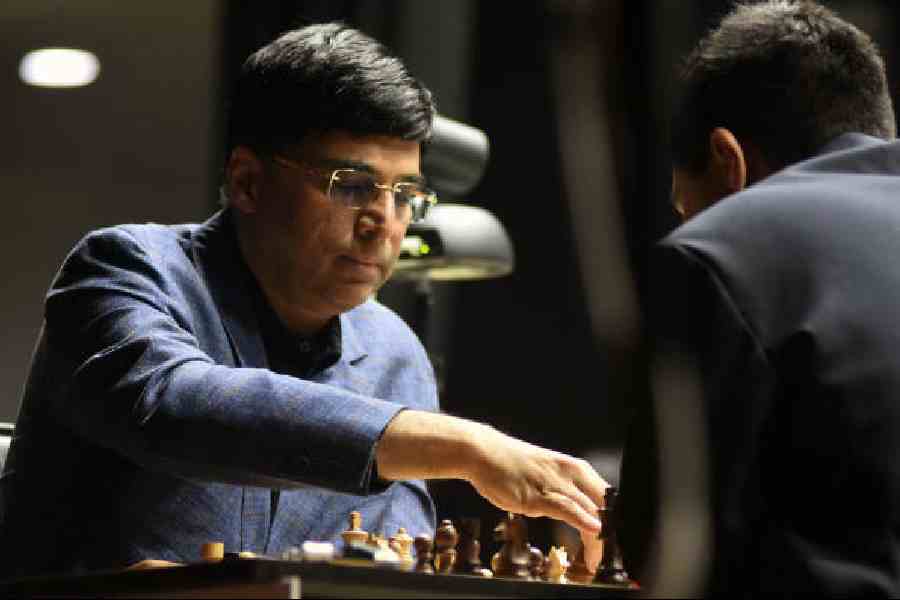
Chess teaches you that once you make a decision, it cannot be taken back. You have to consider the consequences carefully before you take a decision. In other words, life often forces you to deal with unpleasant options but you have to learn to evaluate the pros and cons. Even if you feel apprehensive — when the odds are stacked against you — you have to make a choice. Don’t be in two minds. Own your decision and give it your best shot. Or don’t do it. But never be indecisive. In 1997, I had to face an imperfect decision to play Anatoly Karpov, the reigning world champion at Lausanne in Switzerland. I could have opted out, but I decided to play the game even though the odds were against me. It was a tough fight and I was able to tie the score 3-3. Eventually, I lost in the tie-breaker. The loss hurt but it was my own decision. What I learnt from the loss was immensely valuable.
Q You mean you learnt a lot from that failure.
Yes. Just like any failure, it stung. It felt like the world was looking on disappointedly. For a brief moment, it brought panic and self-doubt. The hardest part was admitting that I had failed. I had my mother, my coaches and close friends to lean on. My mother was my first coach and biggest inspiration to become a chess player. She had taught me to write down my impressions after a game, especially when it was a defeat. Initially, I was not keen to do it because everyone wants to forget a loss. But slowly, I realised the importance of this routine. Writing things down immediately after a loss, when I was still upset, helped me spot the errors and look at the big picture. It helped me not to make the same mistakes again.
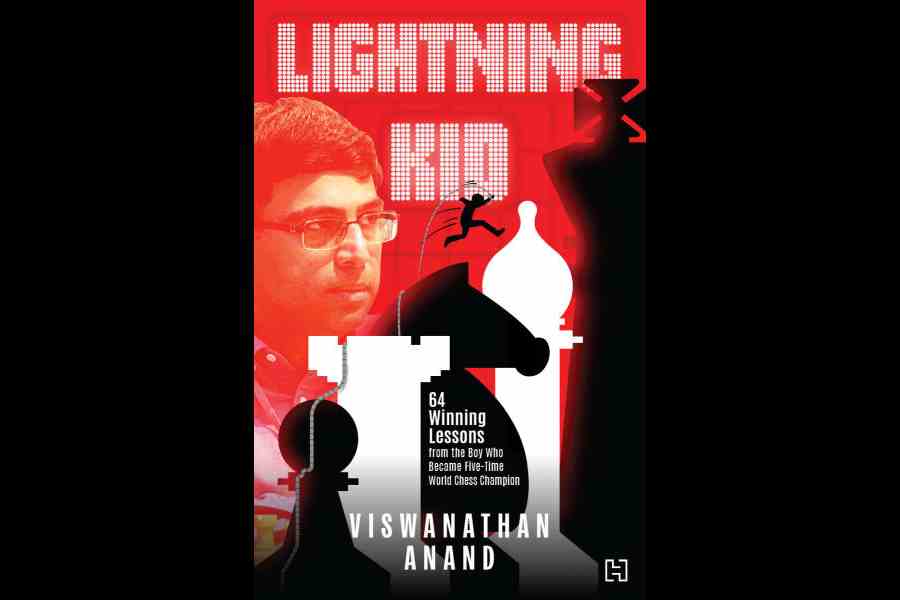
the cover of his book Lightning Kid
Q Your mother played a big role in your career. Your father also was a strong support.
My parents were my first guides. My mother was my first coach and also my loudest cheerleader. But neither of my parents browbeat me to pick up chess as a profession. They left it to me to divide my time between my studies and chess. Their attitude never put me under any kind of pressure. When I became a player and started winning, they kept me grounded and made sure I didn’t become overconfident.
Q If you hadn’t been a chess player, what would you have been? A mathematician or an astronomer?
While it is true that I have a keen interest in both mathematics and astronomy, I would have most probably ended up being an engineer. My father was a mechanical engineer with the Indian Railways and my elder brother is an electrical engineer. So, I might have had to follow in their footsteps. But I started playing so early in my life that I never got to the point when I would have had to think about this. I was just six.
Q It was quite difficult to become a professional chess player in India in those days. There was no computer or Internet. And not even a single Indian grandmaster.
Yes. The world was not so well-connected those days. At that time, if you wanted information on chess, books were the only way. And you would have to wait for friends or relatives who lived abroad or visited foreign countries to get those books.
Also, since most chess champions were Russians, the best books were printed in the Russian language. I had to learn the Russian alphabet to be able to understand those books.
Q You had to pick up so many foreign languages...
I can read and write English, Spanish and German. I cannot speak or read Russian, I just
know the alphabet. Most chess players those days knew multiple languages. After all, it is a tough international game and you have to closely watch players from other countries.
Q Nowadays, chess players have software, online opponents they can play against
and AI.
Yes. Everyone has these advantages now. But the basics to succeed in academics, competitive exams or chess are the same. You need a structured routine: what you do, when you do it and how consistently you do it. It sounds boring but it’s your
secret weapon — it keeps your mind clear and your focus sharp. While a solid routine is your base, in chess — as in life — you have to use your skills, adapt to surprises and take calculated risks to become successful.
Last updated on 03 Feb 2026