Summary
Author on why B-schools must embrace AI and recalibrate
Artificial intelligence has changed the way we live and work. AI is helping firms do things faster, cheaper and more effectively. It is delivering knowledge and expertise at scale, enabling organisations to reimagine business models and growth. When business changes this much, the role of managers must also change. And so must management education.
Human touch
As AI is altering every aspect of business, there is a need to reflect on the future of work. I envision a landscape characterised by four categories of work.
First, some of the work will be delivered solely by AI. AI can independently handle work that is repetitive, rule-based, data-heavy, high-volume and easy to verify. For example, it can handle tasks such as report generation, fraud alerts, sentiment analysis and inventory reordering.
A significant portion of our future work will require collaboration between humans and AI — a partnership that will enhance productivity and innovation. Humans will provide insight, contextual understanding and judgement, while AI will offer computational power and data analysis capabilities.
In recruitment, for instance, AI can assist throughout the process — from writing job descriptions to shortlisting CVs to scheduling interviews and conducting initial assessments.
Yet the manager will continue to decide who the organisation is willing to trust and back, and the manager will remain accountable for hiring. Taking that decision depends on understanding context, culture, team fit, fairness, trade-offs and potential.
AI is not only improving existing processes — it is also opening new possibilities by making knowledge and expertise more widely available. This means managers and leaders can use AI to innovate products, services, processes and business models.
Certain roles, however, are likely to remain the exclusive domain of humans. These positions require emotional intelligence, judgement, creativity and complex decision-making that AI cannot replicate.
Examples include building trust-based relationships, leading people through uncertainty, defining purpose, value and culture and taking ethical accountability.
Finally, as AI evolves, it will create entirely new professions. Roles focused on AI ethics and explainable AI systems will emerge, challenging us to think critically about the implications of technology and ensure our advancements align with ethical standards.
Future ready
Going forward, organisations will need managers most in areas wherein work requires understanding what matters, asking the right questions, exercising sound judgment, ensuring ethical accountability and driving innovation. Two capabilities are critical — judgement and creativity. Judgement is the ability to evaluate choices, weigh trade-offs, understand context and decide what the right thing to do is. Creativity is the ability to imagine new business models and solve new problems.
Interestingly, in the book The Revised Bloom’s Taxonomy, evaluation (judgement) and creativity represent the highest levels of learning. Students cannot reach these levels without mastering the fundamentals.
Management education must therefore continue teaching business knowledge and analytical skills, while supporting the journey from knowing and analysing to evaluating and creating.
Building judgment and creativity requires building curiosity, problem-solving, critical thinking, data and AI fluency, resilience, adaptability, communication, and collaboration skills.
Students must learn to question answers, work with data, understand context and commit to continuous learning.
Critical capabilities
The classroom must evolve from a space where students receive content to one where they discuss, question, interpret, connect, test and defend ideas. Learning should have an understanding spanning disciplines, and students should be able to make connections between real world and the classroom.
The assessment process also needs to change. Students should be rewarded for critical thinking and problem-solving abilities. They should be able to explain how they arrived at answers, articulate underlying assumptions and identify potential limitations, leading to more presentations, simulations and discussion-based evaluations rather than conventional tests.
AI first
Management institutions must embrace change and be committed to preparing students for leadership in an AI-driven world. They should transform into AI-first schools where AI integrates throughout the curriculum rather than existing as a separate subject.
Faculty must evolve from content deliverers to mentors who guide students in working intelligently and responsibly with AI.
Students need to understand which tools to use, when and how to deploy them, and the associated risks including bias, privacy concerns, and ethical implications. While they may outsource certain tasks to AI, they cannot outsource their thinking or responsibility.
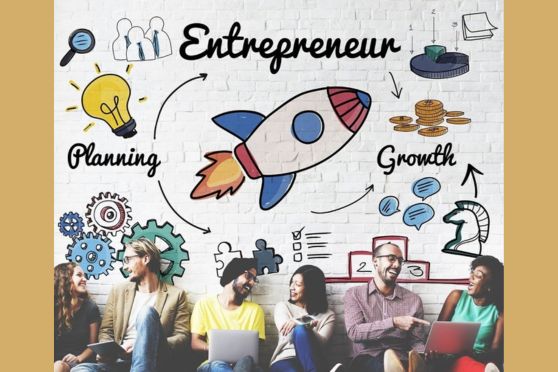
Industry partnerships, entrepreneurship, and innovation training must become central to management education, preparing students to leverage AI’s power to navigate, lead and create businesses.
Ultimately, management education must cultivate better thinkers and better learners — building judgment alongside knowledge and creativity alongside competence. This prepares managers to work wisely and lead effectively in an AI-integrated world.
The writer is the founder of Praxis Business School in Calcutta
Last updated on 24 Mar 2026