The trend is to get some kind of specialisation alongside traditional BCom and BBA programmes, says Sonali Saha, who is an assistant professor at Calcutta’s St Xavier’s College.
“Some students appear for the national level chartered accountancy (CA) foundation exam right after their Class XII boards,” says Abhijit Roy, assistant professor at Dr BNDS College in Burdwan. “Then they prepare for CA alongside their undergraduate degree,” he adds.
“The most dedicated and competitive opt for chartered accountancy,” says Saha. “Others opt for industrial training and niche certification while they pursue a BCom or BBA.”
Anisha Jha, 20, says, “I chose to do a BCom because I wanted to acquire professional qualifications while I was pursuing graduation. It helps that the curriculum for BCom is similar to many of those certification courses.”
Roy points out that the syllabi for BBA and BCom are more or less the same. But only a handful of private colleges offer BBA. “BCom is more commonly offered and is also more popular among students who want to find their niche later on,” he adds.
“Other than CA, chartered financial analyst (CFA), actuarial science and data science courses are some of the more popular options now,” says Saha. “But some students find these too difficult to crack. So they opt for other preparatory courses.”
Nitya Agarwal, 20, says, “I wasn’t sure about taking up arts or science. So, I went with commerce. It felt like a safe option.”
Roy says that certain universities have tie-ups with many international certification bodies. For example, the certified public accountant (CPA) course and certified management accountant (CMA) course are offered by US-based institutions. These help students land jobs in US or UK-based firms that operate out of India. Some students also opt for licensing courses for stock-market analysis. “But one can get those licenses after joining the industry as well,” says Roy.
Saha says, “BBA is more popular among students who want to go into their family business. They take up courses in GST certification, tax filing and other professional training.”
Asit Majumder, 21, who is a student at Ashoka University in Sonipat, says, “I wanted to get the benefit and the exposure that come with interdisciplinary courses. That’s why I took up a course that offers a combination of economics, finance, business, analytics and data science.”
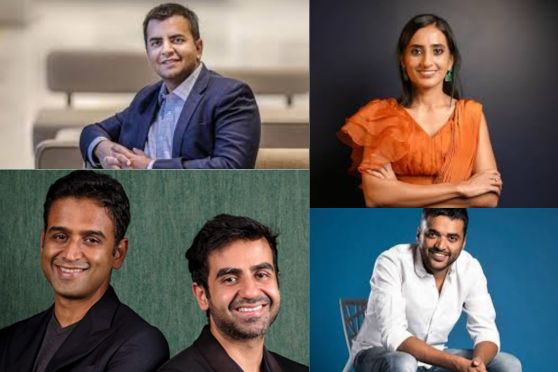
Nitya says, “Many of my peers are now integrating AI and computer science courses into their commerce programmes. This kind of a combination will give them a head start should they want to become start-up founders.”
After a BBA or BCom, students get internship opportunities. Says Roy, “Then they apply for jobs or get into MBA programmes. Under NEP, those who are interested in a career in academia opt for a research-based fourth year, followed by a one-year master’s degree. It allows them to apply for a PhD directly.” The National Education Policy 2020 or NEP is a set of guidelines introduced by the Centre.
Roy points out that not all government colleges in India have a well-rounded BCom curriculum or supportive infrastructure. “While choosing your college, check if they have that additional support and ecosystem for you to get the maximum benefit out of a BCom or BBA course.”
Sonali Saha, however, points out that much of that is supposed to have already changed under NEP. She says, “It made internships a mandatory part of your undergraduate degrees. It demands that students get adequate industrial training before they graduate.”
With inputs from Naysha Kasat (TT intern)
Last updated on 02 Jun 2026