Summary
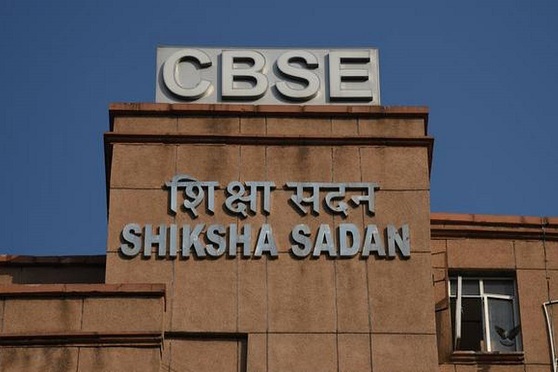
The Central Information Commission (CIC) has recommended that the Central Board of Secondary Education (CBSE) establish a Standard Operating Procedure (SOP) outlining clear timelines for providing marks, answer sheets.
If implemented, a formal SOP could provide greater clarity for students seeking information about their evaluations.
The Central Information Commission (CIC) has recommended that the Central Board of Secondary Education (CBSE) establish a Standard Operating Procedure (SOP) outlining clear timelines for providing marks, answer sheets and other assessment-related records requested by students. The recommendation was made while adjudicating an appeal filed by a Class 12 student who sought access to the assessment records used to prepare her board examination result in 2021, a year when the Class 12 examinations were cancelled due to the COVID-19 pandemic and results were awarded through an alternative assessment mechanism.
The case was brought before the commission by a student who requested details of the evaluation process that formed the basis of her Class 12 result. According to the appeal, the student alleged that errors in the assessment process had adversely affected her academic outcome and caused significant emotional distress, leading her to seek professional therapy. She argued that she had a legitimate right to know how her marks were calculated under the special assessment policy implemented by CBSE following the cancellation of board examinations during the pandemic.
While delivering its decision, Information Commissioner Sudha Rani Relangi observed that there is an urgent need for a structured mechanism governing the disclosure of marks and answer sheets to students. The commission emphasised that a clearly defined procedure with specified timelines would help prevent situations that could create hardship for students and negatively impact their mental well-being. Invoking its powers under Section 25(5) of the Right to Information (RTI) Act, the CIC strongly recommended that CBSE formulate a comprehensive SOP and make the policy publicly available through its official website so that students and parents are aware of the process for obtaining such information.
The commission also directed that a copy of its order be forwarded to the CBSE Secretary for appropriate action. In addition, the First Appellate Authority concerned has been instructed to submit a compliance report within four weeks regarding the implementation of the directions issued by the commission.
Addressing the specific grievance raised by the appellant, the CIC observed that denying a student access to her own assessment records was inconsistent with the objectives and spirit of the RTI Act, 2005. The commission noted that although the student's challenge to her assessment remains pending before a high court, the Central Public Information Officer (CPIO) should have responded to the request by providing information related to the student's own evaluation. The commission clarified that while information concerning other candidates may be exempt from disclosure under the RTI Act, the applicant's personal assessment details could have been shared after appropriately redacting any protected information.
Consequently, the CIC directed the CPIO of CBSE to furnish the appellant with a revised response free of cost. The response is to include all permissible information sought in the RTI application, particularly the student's assessment marks in the tabular format specified in her request. The commission stressed that such information pertains directly to the applicant and should be made available within the framework of the law.
The dispute stems from the special assessment policy adopted by CBSE in 2021 after the nationwide cancellation of the Class 12 board examinations due to the COVID-19 pandemic. Under that policy, results were prepared using alternative evaluation criteria instead of written examinations. The student had sought the tabulation sheets relating to five subjects and maintained during the hearing that she was entitled to understand the methodology used in determining her final scores. She further argued that no provision under the RTI Act prohibited the disclosure of her own assessment records.
If implemented, a formal SOP could provide greater clarity for students seeking information about their evaluations while ensuring that educational authorities follow a uniform and time-bound process for responding to such requests.
Last updated on 01 Jul 2026