Summary
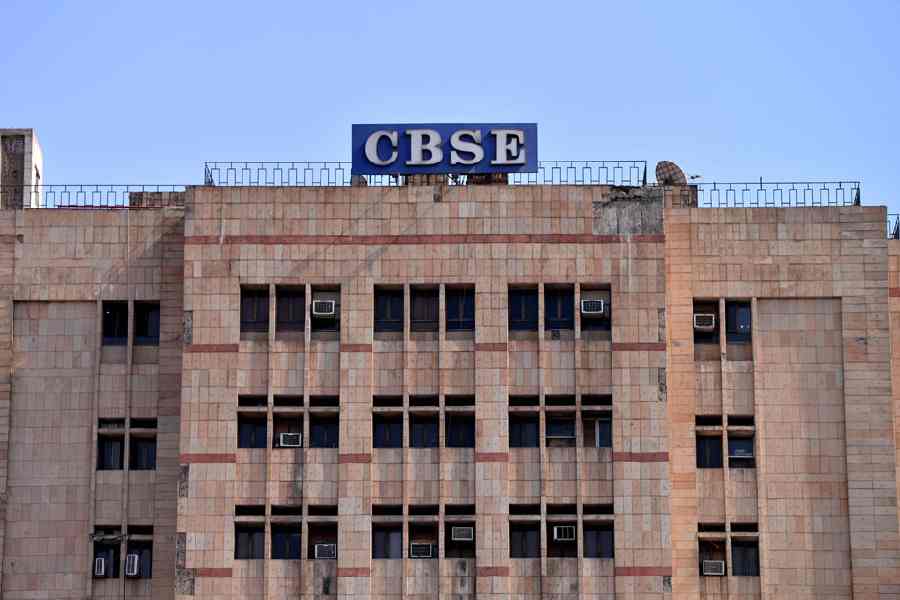
The Central Board of Secondary Education (CBSE) has made the study of three languages compulsory for Class 9 students from July 1, 2026.
According to a circular issued by the board, students will now be required to study three languages, with at least two of them being native Indian languages.
The Central Board of Secondary Education (CBSE) has made the study of three languages compulsory for Class 9 students from July 1, 2026, as part of its efforts to align the school curriculum with the National Education Policy 2020 and the National Curriculum Framework for School Education (NCF-SE) 2023. According to a circular issued by the board, students will now be required to study three languages, with at least two of them being native Indian languages.
The revised language policy will come into effect for students entering Class 9 from the 2026-27 academic session. The board stated that the move is intended to strengthen multilingual competencies at the secondary level while promoting Indian languages and regional literature.
As per the circular dated May 15, the three compulsory languages have been referred to as R1, R2, and R3. The board clarified that students wishing to study a foreign language may choose it only as the third language after completing two native Indian languages, or alternatively as an additional fourth language.
CBSE has further stated that dedicated R3 textbooks for Class 9 are currently under preparation. Until those books become available, schools and students will use the Class 6 R3 textbooks of the selected language for the academic session 2026-27.
To ensure students develop the required competencies at the secondary stage, the board has directed schools to supplement the textbooks with suitable local or state literary material. These may include short stories, poems, essays, or non-fiction works selected by schools. CBSE said detailed guidelines regarding the selection and classroom use of supplementary literary material will be issued by June 15.
The board has also clarified that no Class 10 board examination will be conducted for the R3 language. Instead, all assessments for the third language will remain entirely school-based and internal. Students’ performance in the language, however, will be reflected in the CBSE certificate.
CBSE emphasised that no student will be prevented from appearing in the Class 10 board examinations due to the R3 language requirement. The board added that sample question papers and rubrics for internal assessments will be shared with schools shortly to ensure smooth implementation of the revised policy.
Schools affiliated with CBSE have been instructed to update their R3 language offerings for Classes 6 to 9 on the OASIS portal by June 30. According to the board, Class 6 R3 textbooks in 19 scheduled Indian languages will be made available before July 1. For other native Indian languages, schools may use teaching-learning resources developed by State Councils of Educational Research and Training (SCERTs) and other state-level educational bodies.
Addressing concerns related to teacher availability, CBSE said schools facing shortages of qualified native language teachers may adopt interim arrangements. These may include assigning existing teachers who possess functional proficiency in the language, engaging retired language educators, using suitably qualified postgraduates, or implementing inter-school resource sharing through Sahodaya school clusters. The board also allowed the use of virtual and hybrid teaching methods to support language instruction.
The circular additionally stated that relaxations would be provided for Children With Special Needs (CwSN) in accordance with the Rights of Persons with Disabilities Act, 2016. Foreign students returning to India may also receive exemptions on a case-by-case basis from the requirement of studying two native Indian languages.
Earlier in April, CBSE had announced the phased implementation of the three-language formula from Class 6 onwards along with significant curriculum reforms for secondary classes. The board had also introduced a two-level system for Mathematics and Science for Class 9 students from the 2026-27 academic session.
Under the proposed structure, Mathematics and Science will have two levels — a mandatory standard course and an optional advanced course. While all students will take a common 80-mark examination, those seeking higher proficiency will have the option to appear for an advanced-level paper designed to assess deeper conceptual understanding and higher-order thinking skills.
The board had earlier confirmed that the first Class 10 board examinations under the new standard and advanced system for Mathematics and Science will be conducted in 2028 for students entering Class 9 in the 2026-27 academic session.
Last updated on 19 May 2026