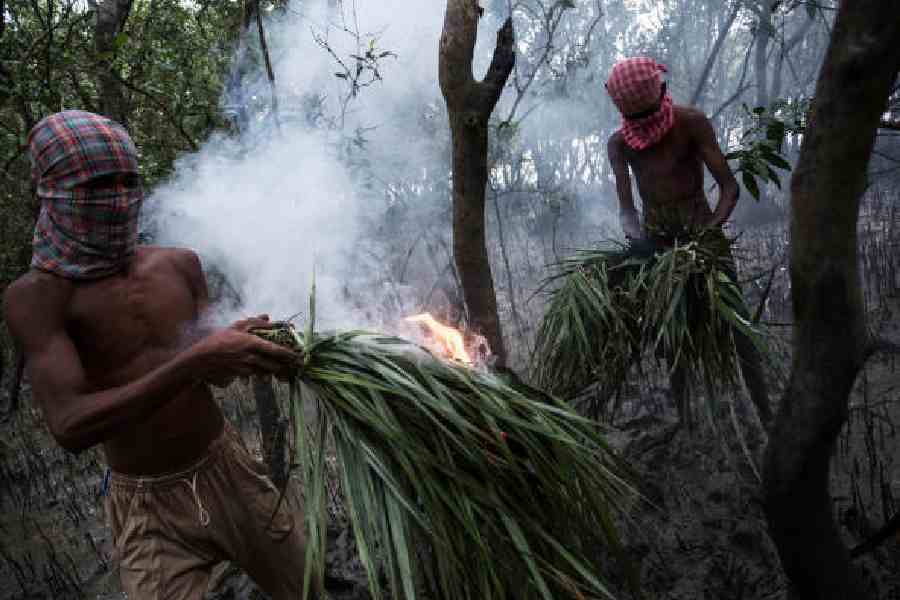
Aliah University’s department of geography, in collaboration with Purbasha Eco Helpline Society from the Sundarbans, recently organised a seminar, Sundarban Environment: Issues in Sustainability.
The event brought together academics, scientists, geographers, engineers, researchers, social workers and representatives from the Sundarbans.
Discussions highlighted the major challenges the region faces, including sea-level rise, embankment breaching, mangrove degradation, saline water intrusion in agricultural lands, loss of settlements and livelihood insecurity. Speakers presented scientific and community-based approaches to address these issues.
Key topics included mangrove restoration, environment-friendly modern embankment construction techniques, alternative livelihood options such as catching fish and crab and bee-keeping enterprises, biodiversity conservation, and strategies for improving the socio-economic conditions of Sundarbans residents.
The book Caught by the Tiger, Eaten by the Tiger by Debaroti Das and “mangrove man” Umashankar Mandal was released at the event. The book is about tiger widows and their struggle.
According to the book, in the last three decades, at least 3,000 men have fallen prey to tigers. Since 2011, around 250 men have lost their lives in tiger attacks in Lahiripur gram panchayat area of Gosaba alone. None of their wives received any sort of compensation.
The government offers ₹5 lakh compensation in such cases but only under certain conditions — the death must not have occurred in the core area and the victim must have had written permission to enter the forest. However, very few people have a licence to enter the forest — for one it is much too expensive. Also, many of the deaths occur within the core area. There is no clear division between the buffer zone and the core area, so fishermen and honey collectors often wander into the core area unknowingly. Also, tiger widows often do not have the requisite documents needed to claim compensation.
Unfortunately, Arjun Mondal of the Sunderban Grameen Unnanyan Samiti who worked to improve the lot of tiger widows was himself killed in a tiger attack some years ago.
Sanara Khatun,
Department of geography,
Aliah University, Calcutta
Last updated on 30 Jun 2026