Summary
Poll duty pulls teachers out of classrooms, hits lessons in government schools
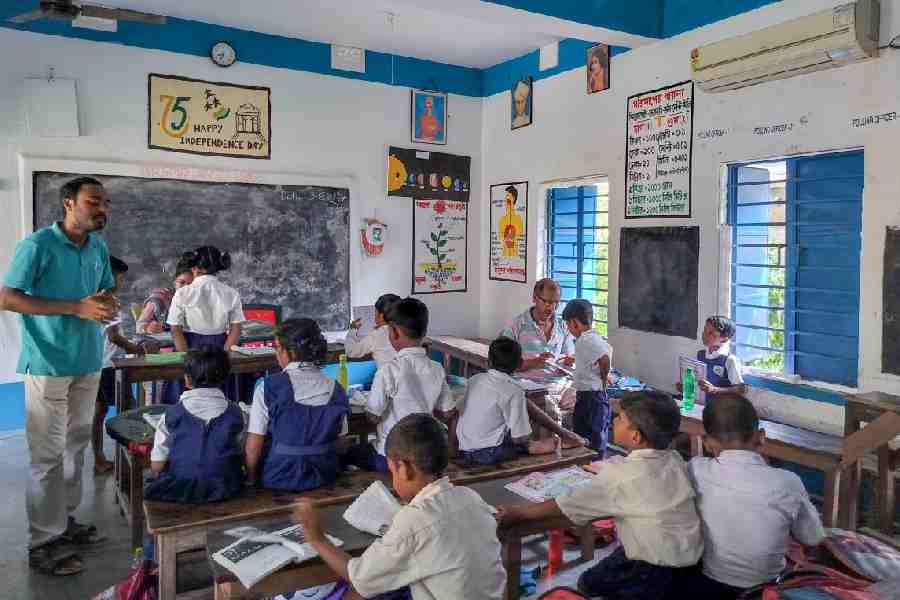
A female Primary teacher (not wanting to be named) of a government-aided girls’ school in Dhakuria has been given poll duty this year, first time in 16 years. All 22 female teachers from the Primary section are now undergoing training. The result, over 600 students are losing out on their classes.
While most government teachers have no choice but to join poll duty, private teachers are happy to be left out. According to them, there would be anarchy if private schools were involved in poll work, given the number of classes (offline and online) and activities that schools involve their students in.
“Private teachers have a far greater workload. Besides, we don’t know the government rules. If private teachers were involved in poll duty, it would take a longer time to train them. We are also involved in a lot of after-school clubs and co-curricular activities. Everything would collapse as a result,” said Debjyoti Dolui, a history teacher and coordinator at Stratford Day School.
Classes are collapsing in government schools, too. According to a male teacher (who also did not want to be identified) at a school in Santragachi, classes have not been held for days because most teachers are on training. “In some schools, members of the Central Reserve Police Force (CRPF) have already started staying. So again, no classes. These classes are never made up, and our students are the worst sufferers,” said the teacher, who has been doing poll duty since 2004. Most private sector educators feel that teachers should be left out of poll duty altogether.
“Teachers are meant to serve the students. They should be spared from election duties that involve training and travelling to remote places sometimes, causing loss of work days. We need to finish the syllabus and provide holistic grooming to our children. Students should be our priority,” said Sharmistha Sen, principal of Young
Horizons School.
Private schools also have to deal with enormous parental expectations. “We are answerable to the parents at every step. We have to complete the syllabus; new sessions involve a variety of activities for children. We cannot rock the boat,” added Vijaylaxmi Kumar, principal G.D. Goenka Public School, Dakshineswar.
While poll duty is a civic service, private teachers feel teaching comes first. “Not all schools have the infrastructure to take part in poll duty. The service should be voluntary, if at all. Students don’t just study in schools. They are taught multiple other skills. Classes need to go on,” said Sangeeta Banerjee, senior section English teacher of Heritage Academy High School in Howrah.
Does being part of poll duty mean a complete breakdown of the education system? The answer was a resounding yes from educators, both government and private.
“We had to reschedule our examinations, because all the teachers were on poll training,” said the Santragachi school teacher.
Private schools are expensive. Parents often spend a fortune to enrol their children in these premier institutions. Loss of class time will create chaos here, say educators.
“We cannot afford such a breakdown. Even when our teachers are on board exam duty, we face staff shortage, but we have to make up for it. We are answerable to parents, and they will not be happy if their children lose out on class time because of elections. No teacher should be forced into poll duty unless they opt for it,” said Amrita Das, English teacher at Indus Valley World School.
Last updated on 09 Apr 2026