Summary
Economic uncertainty, automation, AI-driven transformation, and organisational restructuring have all contributed to a pervasive feeling of vulnerability in many industries.
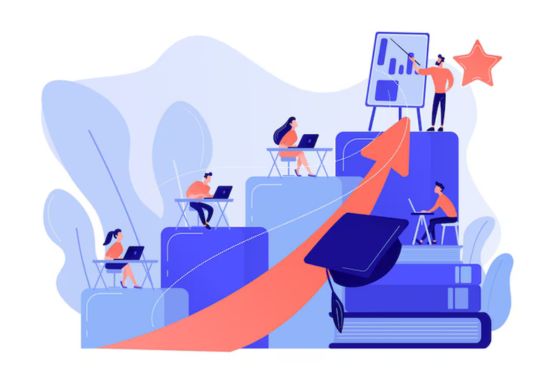
Yet amid this disruption lies an emerging story: a large cohort of young professionals, just out of various academic fields, seizing the moment to upskill, pivot, and leapfrog into more resilient roles.
As AI continues to grow in leaps and bounds, it is dramatically changing the employment landscape. Unfortunately, the spectre of layoffs looms large even for experienced professionals. Economic uncertainty, automation, AI-driven transformation, and organisational restructuring have all contributed to a pervasive feeling of vulnerability in many industries. Yet amid this disruption lies an emerging story: a large cohort of young professionals, just out of various academic fields, seizing the moment to upskill, pivot, and leapfrog into more resilient roles.
The layoff wave and emerging skills gaps
Recent research indicates that while the jobs themselves are not disappearing, many roles are being redefined, and some skill sets are rendered obsolete. For example, a survey by McKinsey & Company found that among U.S. workers willing to change occupations, the top barrier was lack of relevant skills, credentials, or experience. Meanwhile, other reporting shows rising levels of job-cut anxiety and deepening pressure on professionals to display adaptability. What this signals is a shift in the employability equation. Tenure and title are no longer sufficient. What matters increasingly is agility, updated capability, and the capacity to move into adjacent or emerging roles.
Turning uncertainty into a strategic reset
For students turned professionals facing uncertainty, the first key move is reframing how they think about their career narratives. A layoff, or even the mere prospect of one, can become a pivot point rather than a dead end. Instead of merely asking “How do I keep my job?”, the more productive question is: “What skills will make me indispensable in my next role (or the one after)?”
Practical steps include identifying high-demand skills (for example, in digital fluency, AI adoption, and cross-functional collaboration) and mapping a realistic plan for upskilling. In one analysis, it was noted that workers willing to switch occupations were much more likely to have pursued or intended to pursue new skills. Professionals can treat this moment not as a retreat but as a strategic reset: updating their portfolio, adding credibility through certifications or real-world projects, and aligning their trajectory with where demand is heading (rather than where it was).
Practical upskilling at scale
Just attending a course will not necessarily translate into upskilling. It is about embedding new capability into your professional identity and making future-proof contributions. The following are some guiding principles one can follow:
● Select skills with traction. Employees who had the willingness to change occupations still cited skills and credentials as the top barrier. That means picking relevant, visible skills—for instance, digital automation literacy, data fluency, or adaptable domain expertise.
● Use blended modalities. Whether through online courses, peer communities, hackathons, or employer-sponsored programmes, mixing formats increases ownership and retention. Research shows cost and time remain major barriers to upskilling.
● Translate learning into impact. The value of a certification grows exponentially when it is paired with real-world application—side projects, open-source contributions, or solving problems outside one’s comfort zone.
Building career resilience and growth beyond change
The last piece of the puzzle is mindset and ecosystem. Upskilling on its own is necessary but not sufficient: resilience, network, and growth orientation matter too. Professionals who combine new skills with strong networks, continuous feedback loops, and a willingness to take on stretch assignments are more likely to leapfrog. Companies that support learning and flexible deployment reduce the individual burden of time and cost. For young individuals, this means keeping a learning habit alive, updating the professional brand, and being open to lateral or adjacent moves that may ultimately elevate the trajectory rather than simply maintain the status quo.
In the contemporary career journey, one no longer follows a steady climb up a known ladder. Instead, it looks more like a sequence of leaps: pivoting when needed, learning new domains, and aligning oneself with where the work is going rather than where it has been. For young professionals facing job uncertainty, the path forward is clear: lean into upskilling, treat disruption as an opportunity, and build a future-ready profile rather than just defending the present. The difference between doing more of the same and leapfrogging ahead is nothing but deliberate preparation.
About the Author:
Anant Bengani is the Director & Co-Founder of Zell Education. A Chartered Accountant with a background in Financial Markets, he co-founded Zell in 2015 and was recognized in the 30 Under 30 Young Entrepreneur list in 2021. Passionate about mentoring students and professionals, he actively guides them in navigating career opportunities.
Last updated on 01 Dec 2025