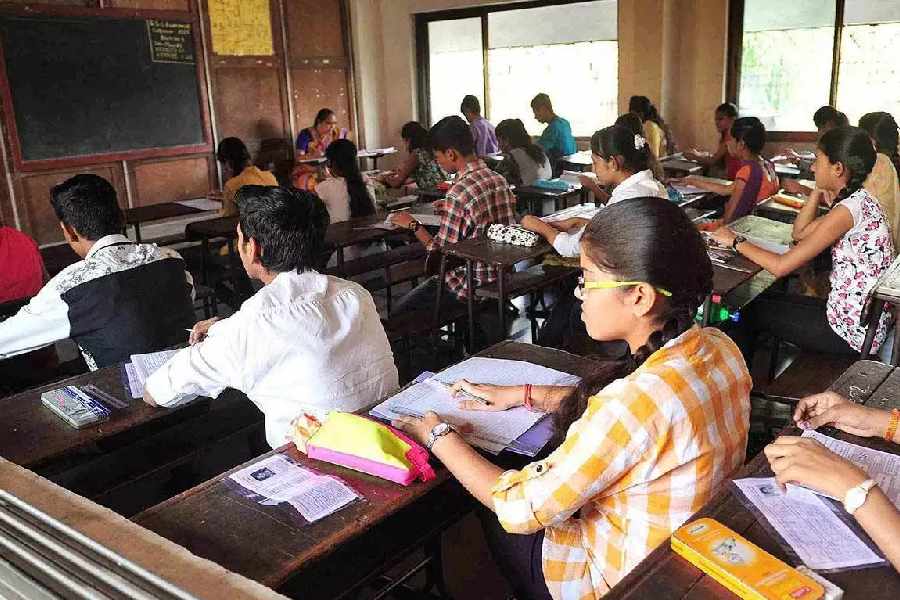
International students used to crowd the hallways of Lewis University, surrounding school president David Livingston when he would stride through. The campus near Chicago, US, is quieter now, months into the Trump administration’s campaign to curb the number of international students at US schools. Few places have been as shaken as Lewis, a Catholic university of about 7,000.
Zheng Zhou, among the professors Lewis hired as enrolments from abroad surged, has seen some colleagues’ jobs vanish. The international students’ lounge has become emptier. Campus officials are answering more anxious questions than usual from the students who remain.
In the fall of 2024, when Trump was elected, Lewis had 1,397 international students who accounted for nearly one-fifth of the university’s total enrolment. A year later, that number was down to 870. By this fall, it may drop below 500.
“We didn’t anticipate this rapid of a change, or this severe of a change,” said the provost, Christopher Sindt. Despite plenty of interest from abroad, Sindt said, US officials were not issuing enough visas to match the demand.
The US government’s issuances of the predominant visa for international students dropped about 36 per cent just before the fall 2025 semester. Some countries were hit harder than others. India had a decline of roughly two-thirds from 2024 to 2025. Visas for Iranians dropped 99 per cent, from 1,118 to just 13. And Nigeria saw a decline of 57 per cent.
Lewis spent much of the last decade building an apparatus for international students. It has spent much of the last year cutting it down. With fewer students in need of instruction and support services, and a sudden budget hole of about $9 million, Lewis trimmed its workforce.
“If we thought it was going to be a one-year thing, we’d absorb the losses,” said Livingston, who oversees an endowment worth about $135 million, far smaller than the multibillion-dollar funds some Illinois universities control. “We don’t think it’s going to be one year.”
Until Trump returned to power, universities historically saw international students as boons. Many paid full tuition, easing budget strains, and enriched campus cultures as they earned degrees in fields propelling academic research. Roughly 30 years ago, the US had about 3,44,000 international students. Except for a period around the pandemic, it has had more than 1 million since the 2015-16 academic year, according to the Institute of International Education, though the explosive growth softened during Trump’s first term.
Some American schools that are among the leading destinations for international students, such as Columbia and the University of California, have been top targets for Trump administration scrutiny. But international students also enrol at schools that attract little attention from Washington — places such as Lewis and public universities such as Wright State and Central Missouri.
Soon after Livingston became Lewis’ president in 2016, officials developed a strategy to entice students from around the world. The university then had an international enrolment of 162.
Sindt said international students had not taken slots that would have otherwise gone to Americans because Lewis, which typically admits more than 70 per cent of applicants, expanded the number of seats.
Lewis officials had foreseen hazards like currency swings. They had not foreseen a far-reaching effort by Washington to cut international enrolments drastically. So they poured in resources, deploying recruiters around the world.
They found people like Mark Tabasan, a graduate student from the Philippines, who said he first learned about Lewis at a university fair in the Manila area and felt drawn to its Catholic roots and its proximity to Chicago. Leanne Peter, who is from India and like Tabasan works in the university’s international students operation, said Lewis’ “homely feel” had attracted her as she scouted places for an American master’s degree.
“Their values kind of aligned with mine,” Peter said, adding that the university had been deeply welcoming once she arrived. That was, in part, because of a hiring spree to accommodate Lewis’ 604 per cent rise in international enrolment between 2016 and 2022.
For the students still at Lewis, worries have replaced peers. Angie Rodriguez, the university’s director of international student and global scholar services, said her office heard from nervous students far more frequently. “They’re afraid that things can change at any moment,” said Rodriguez, who has worked with international students for two decades. She added, “In my entire career, it’s been pretty stable in terms of what students can expect when they’re here, and now with so much rapid change, they’re anxious.”
Peter said she wondered if the federal government would shift policies again and what that might mean for her future.
Still, Livingston said he had no regrets about how much Lewis had done to bring students to America, even if, for now, officials expect more than usual to study in Britain and Australia. Lewis is looking ahead, considering where recruiters could make inroads for the future, betting that the US will eventually prove more open.
“We don’t control the gateway,” Livingston said, “but I think our belief is, over time, it’s such a good thing for the globe to have people that interact with each other, understand each other, learn in each other’s cultures.”
NYTNS
Last updated on 21 Apr 2026