1
5
Soumyajit Dey
As the city of Kolkata expands with time, people, houses, roads and transport expand too. But some residents of the city do not expand, rather, they do, but do not move from their birthplace.
While Kolkata is not as old as Delhi, it still has a history of almost 350 years. With this history comes trees. “If there are 100 trees in the city right now, almost half of them are not native species,” said Debjit Mukherjee, an IIT Kharagpur graduate and tree spotter from Kolkata.
Here’s a list of five trees in Kolkata that do not belong to this soil. These trees come from all over the world, and have adapted to the hot, humid and wet climate of Kolkata. Some of these trees have been featured in the seminal book, Trees of Calcutta and its Neighbourhood, published in 1946 by A. P. Benthall.
Baobab tree at Alipore zoo
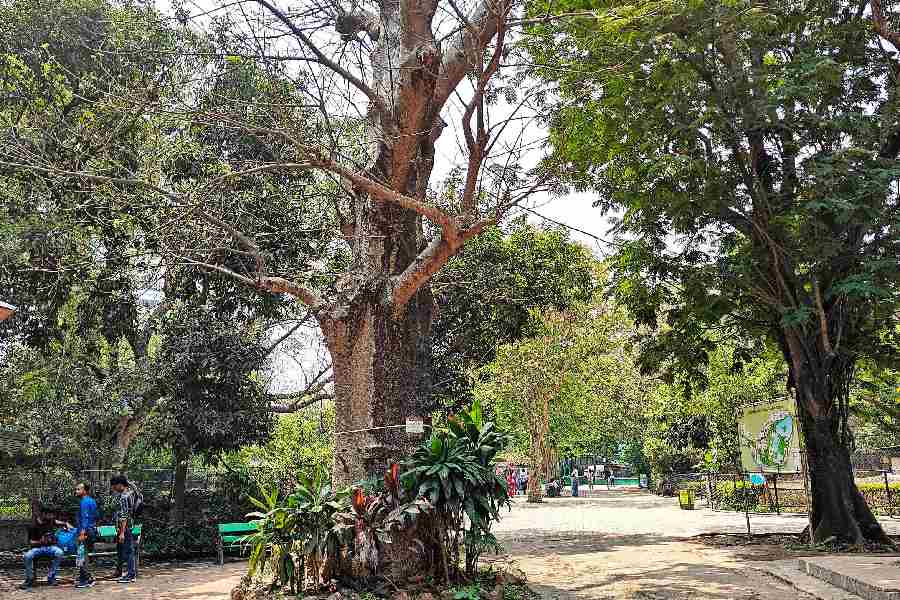
Just opposite to the spotted deer enclosure in the Alipore Zoological Garden, is a Baobab tree (Adansonia digitata). Native to Africa, this tree is called the ‘tree of life’. They help keep soil conditions humid, aid nutrient recycling, and slow soil erosion with their massive root systems. In an arid climate, baobabs symbolise life in a landscape where little else can thrive.
It is very difficult to know who planted this tree at the Kolkata zoo, but it has thrived in this climate. Baobab trees can also grow for hundreds of years. So, the tree planted around the 1940s is still relatively young.
Cannon ball tree at Rabindra Sarobar
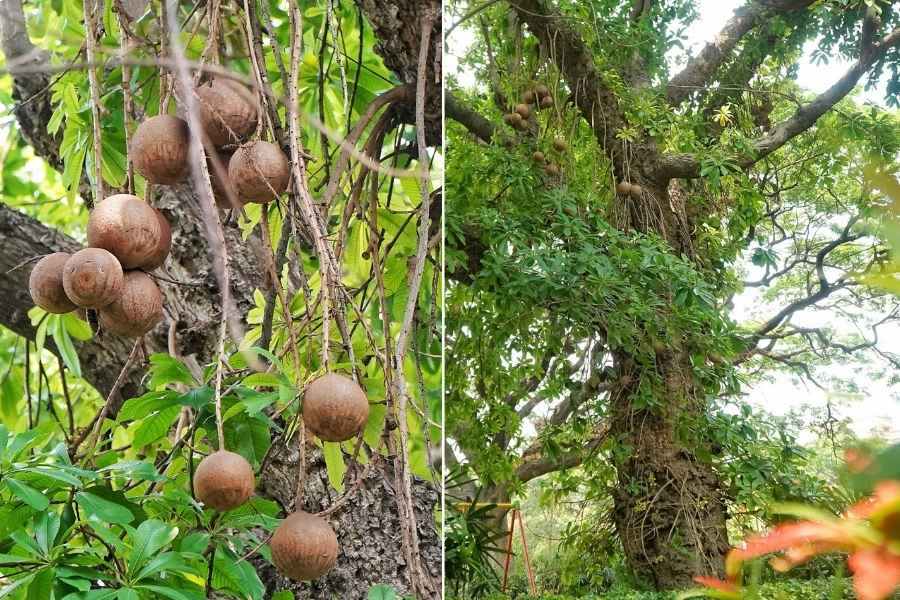
Native to lowland tropical rainforests of Central and South America, this large, somewhat strange tree can be identified most of the time by its cannonball-like fruits that dangle from branches or the trunk itself. One mature tree is inside the children's garden in the western-most part of Rabindra Sarobar.
This species (Couroupita guianensis) was introduced to Kolkata in the late 20th century. The flowers of this tree have a sweet smell, so sweet that it can be nauseous for some. Despite the mythological local name Nagalingam, and the appearance of a snake hood protecting Shiva, this flower is not used in Hindu puja rituals. This might indicate the tree is not native to the Indian cultural landscape.
Mexican Calabash at Victoria Memorial
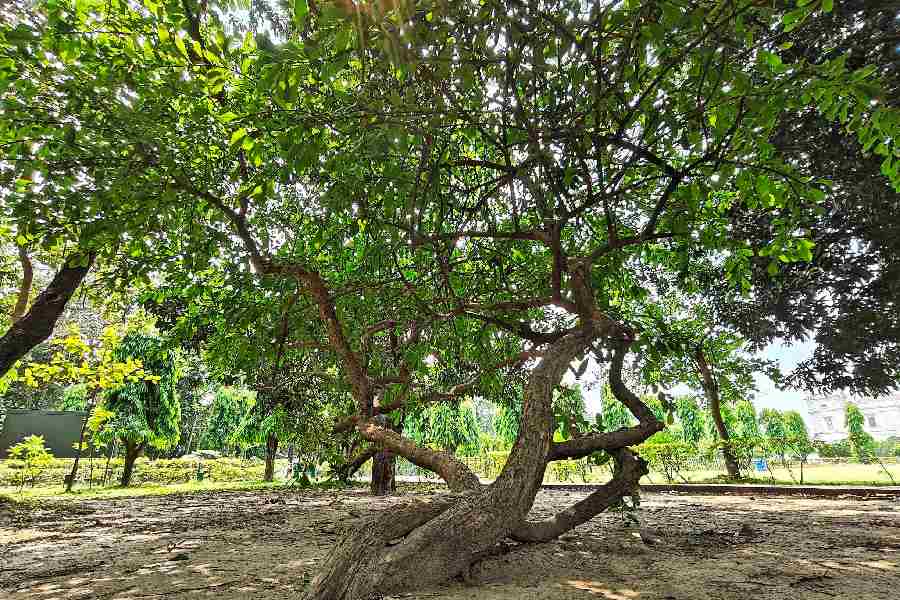
A small but very unusual tree with a hard gourd-like fruit, dingy greenish yellow flowers that grow straight out of the trunk can be found on the compound of Victoria Memorial. The leaves are trifoliate and the leaf stalk is ‘winged’ and acts as the fourth leaflet, making the leaf look like a cross.
Native to dry forests of Mexico and Guatemala, this tree was introduced to Kolkata in the late 19th to early 20th century.
Ironwood tree at the zoo
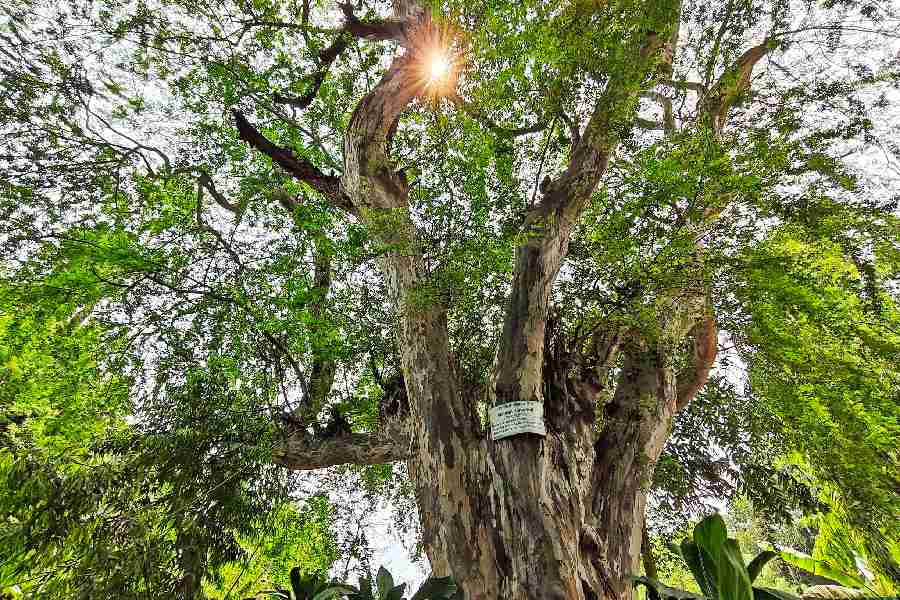
This tree from eastern Brazil, with long drooping branches, twice-feathered leaves, and a smooth curious collage of dark and light bark is located between the chimpanzee and zebra enclosures at Alipore zoo. The tree was probably planted around the 1990s.
In the Amazon region, Libidibia ferrea has extensive use in popular medicine, known mainly as ‘jucá’, used to treat several health conditions, in the form of teas and infusions to treat bronchopulmonary conditions, diabetes, rheumatism, cancer, disorders gastrointestinal and diarrhoea.
Mahua tree at Topsia
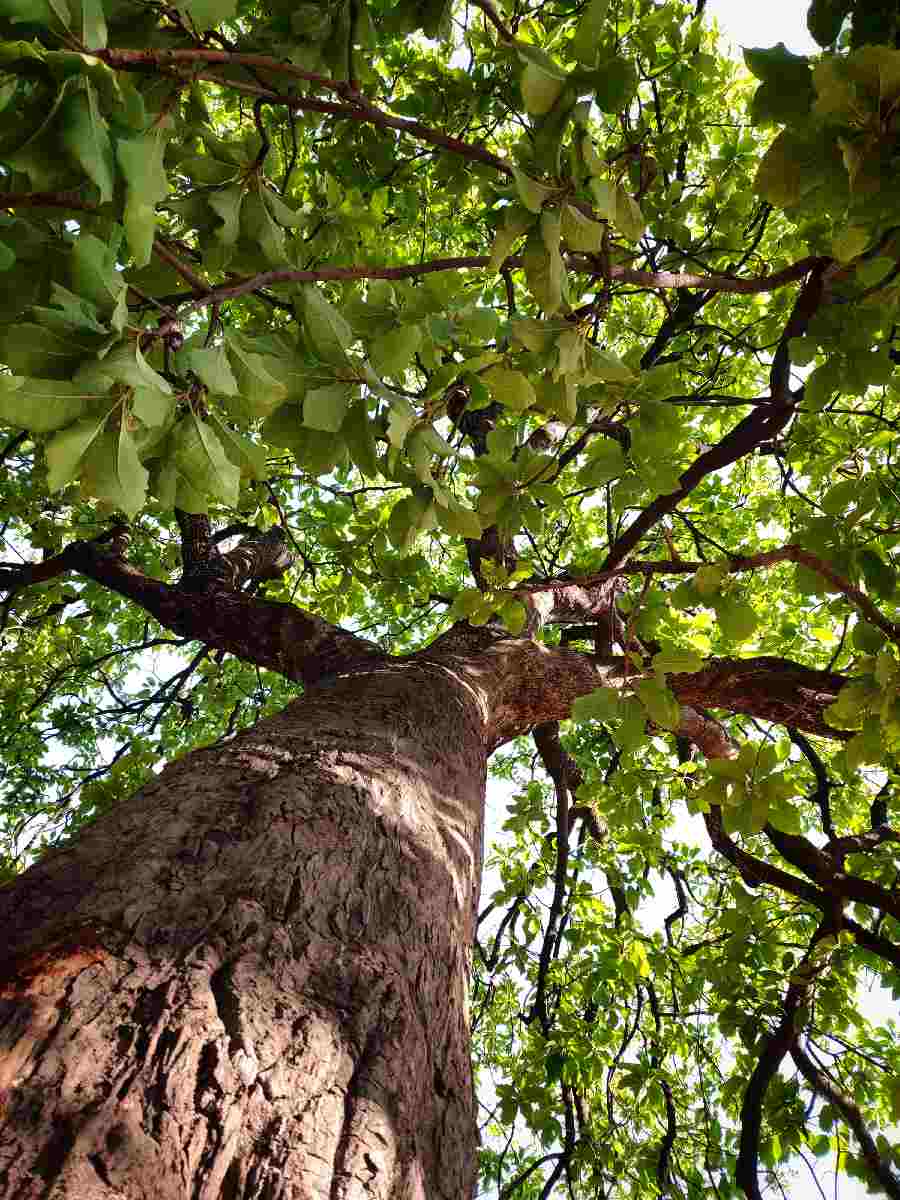
Representational Image
ShutterstockAnyone who has visited Purulia, Bankura, or Birbhum has seen or smelt the sweet aroma of a Mahua tree (Madhuca longifolia). It is said by the local residents there that elephants and bears get drunk on the sweet fruits of the tree. But finding such a tree is rare in the city. There is one such tree near Baishali crossing, Topsia.
During the months of February to April, the sweet smell can be noticed even in moving cars and buses. It is relatively harder to know when or who planted this tree in this area.