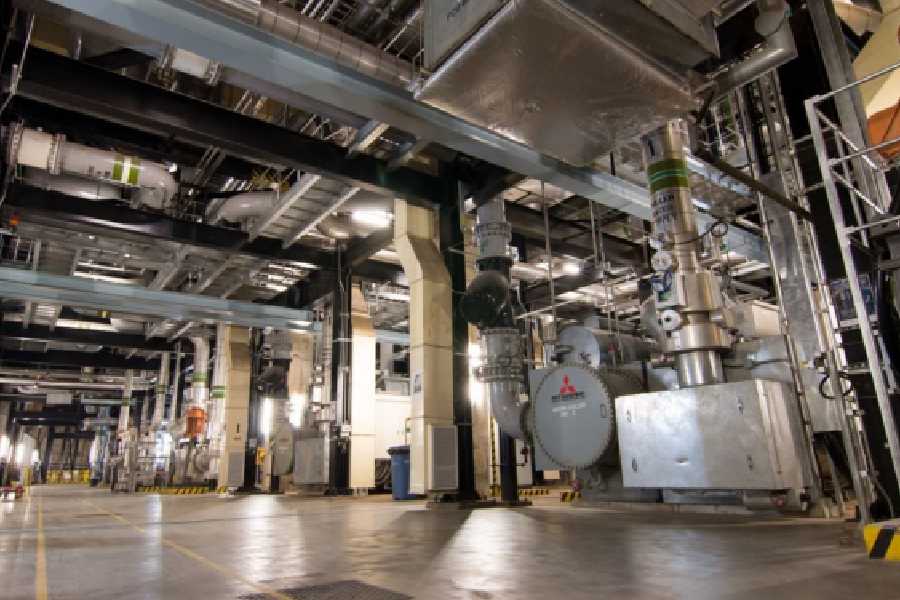
Singapore has resurrected a 19th century system, made of underground pipes that supply chilled water to buildings, to tackle one of the city-nation’s biggest climate challenges: rising heat.
Beneath the streets of Punggol is a 5 km network that comprises massive cooling plants connected by underground pipes. Located about 25 metres below ground, Singapore's Marina Bay district cooling system is among the largest in the world.
Chilled water travels through a web of pipes to 27 connected buildings, including offices, hotels and shopping malls. In Marina Bay, 18 chillers do the work for 27 establishments, cutting energy consumption by at least 20 per cent, according to a report.
"There is a 30 per cent to 50 per cent efficiency gain on the electricity side because of the scale" of district cooling systems compared with conventional air conditioners, Brian Vad Mathiesen, a professor specialising in energy systems at Aalborg University in Denmark, told Bloomberg.
At night, when electricity demand is lower, the plants freeze tonnes of ice for use the following day. The facilities can generate up to 60,000 refrigerated tonnes of cooling power, allowing a single centralised plant to replace hundreds of air-conditioning units.
Each plant is equipped with a control room where sensors monitor every pipe and pump. State-owned utility SP Group has operated the system for more than two decades, having launched the Marina Bay network in 2006.
The Marina Bay network is set to expand further, with more buildings slated to connect to the system and additional district cooling projects being developed across Singapore by companies such as Keppel EaaS, Bloomberg reports.
The push comes as energy security climbs the policy agenda in countries grappling with supply disruptions linked to the US-Iran conflict and preparing for extreme heat driven by a forecast Super El Niño and global warming.
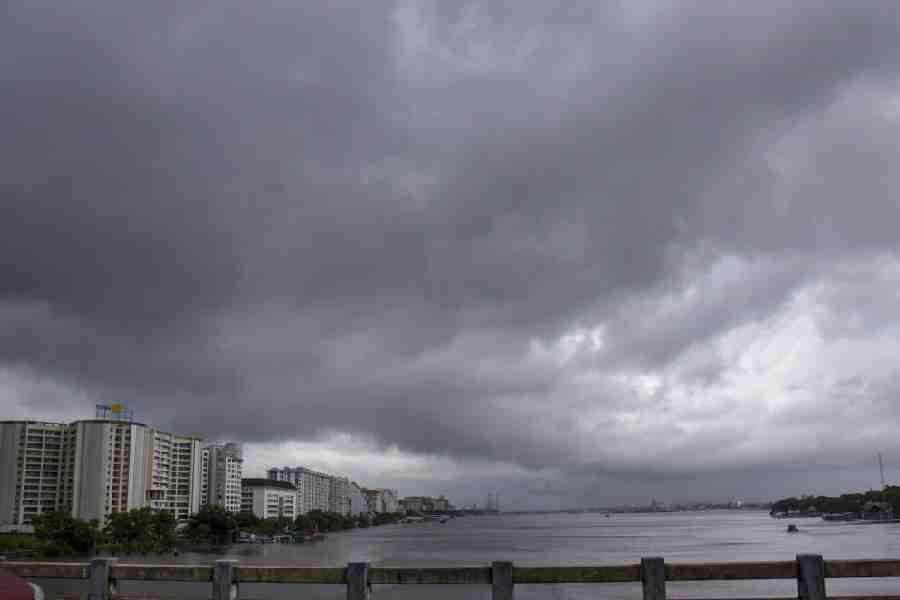
Singapore's success is helping drive interest in district cooling globally, particularly in the Middle East, and the sector is projected to become a US $60 billion industry by 2034, according to market estimates reported by Bloomberg.
Singapore ranks among the region's biggest users of air-conditioning per-capita. Seeking to break that pattern, the government has committed US$77 billion to long-term climate adaptation measures, including protection against extreme heat and rising sea levels. Expanding district cooling infrastructure forms a key part of that strategy.
Singapore's expansion in advanced manufacturing, technology and vehicle electrification is expected to accelerate power demand growth over the next decade, according to Reuters.
Electricity consumption is projected to grow between 2 per cent and 5 per cent annually through 2035, Energy Market Authority CEO Puah Kok Keong told Reuters, compared with an average annual growth rate of 1.9 per cent over the decade ending in 2024, according to data from energy think tank Ember.
21st century woe, 19th century solution
District cooling traces its roots to the late 19th century, when engineers began experimenting with centralised refrigeration systems capable of supplying cooling to multiple buildings from a single source. One of the earliest known installations was built in Denver, Colorado, in 1889, using ammonia or brine solutions to distribute cooling.
Chilled water—now the industry standard—emerged in the 1960s in parts of the eastern United States and Europe. While the concept lost ground during the post-war boom in individual air-conditioning units, it regained momentum from the 1970s onwards as concerns about energy efficiency grew and advances in chillers, pumps and insulated piping made large-scale networks more viable.
Today, district cooling systems operate in Toronto and Stockholm to Dubai, Doha along with Singapore.
The technology is not without challenges. The systems could face competition for water resources. Rapid expansion of water-intensive data centres strains supplies in many regions. Technical issues have also emerged.

Singapore's first centralised cooling system for public housing drew complaints over water leaks and inconsistent cooling after its launch in 2023. To address such problems, engineers monitor the Punggol network in real time, tracking temperatures, pump performance and maintenance requirements to ensure efficiency and reliability.