|
| The deity flanked by security guards at Debibati. Picture by Main Uddin Chisti |
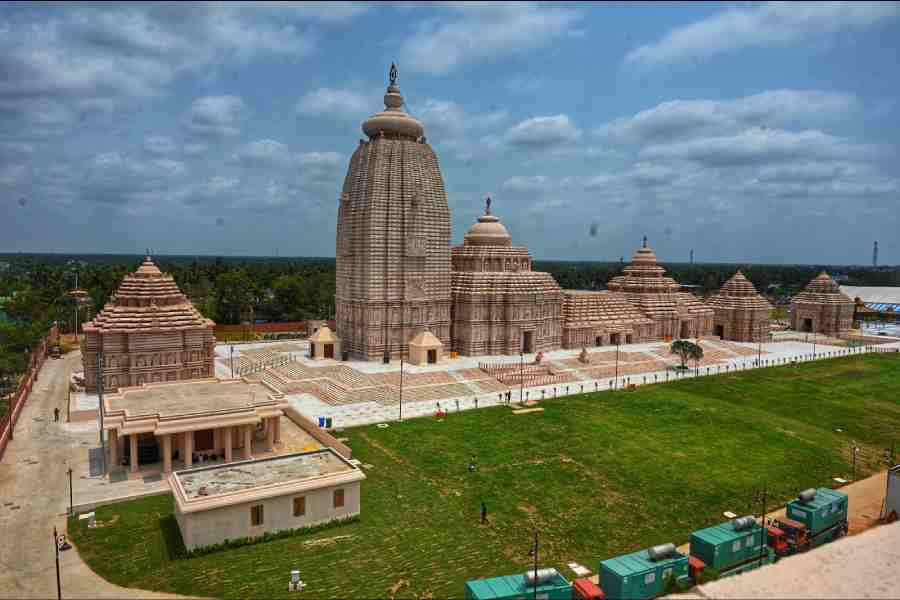
Cooch Behar, Sept. 24: With a history of 500 years, the Durga Puja at Debibati might have lost much of its royal grandeur, but not the enthusiasm it still invokes.
Amid tight security arrangements, the puja got underway today with all the royal rituals, adapted to modern age, being followed to the hilt. Sacrifices were made too, only this time, pigeons had replaced human beings.
Not that Barodevi, as the goddess is known here, will go without human blood altogether.
Though the practice of human sacrifice has long been abolished, human blood is still required on the night of Astami, albeit in a symbolic gesture. This year Siben Roy of Kaljani village will cut his finger to offer blood to the devi in a “secret puja” (as it is called) on that day. The Roy family has been following this practice since the time the maharajas ruled Cooch Behar.
On that day, pigs will also be sacrificed to the goddess. The deities at the other temples under the maharajas will not be deprived either. Buffaloes will be offered at Madan Mohan temple, Kathamia temple and Gosanimari temple on Astami and Dasami.
The tourism department supervises the arrangements of the puja every year. According to trust board secretary Naresh Sarkar, the department has sanctioned Rs 1.45 lakh for the occasion.
The idol was built within the temple premises behind the district magistrate’s bungalow. It took 10 days for Probhat Chitrakar, the artisan, to complete it.
Chitrakar said the board had supplied him all the material needed to make the idol and he had charged Rs 3,000 for his labour.
The Durga image of the royal family is quite different from the others. Kartik, Ganesh, Lakshmi and Saraswati do not accompany the goddess here. Instead, she is flanked by Jaya and Vijaya. Decorated in valuable ornaments, the deity wears a dazzling look.
Maharaja Biswa Singha had founded the puja in a makeshift temple. The ostentatious parade of pomp and grandeur began during the regime of Maharaja Jitendra Narayan in the early 20th century. The permanent temple was also built at that time, trust board sources said.