|
|
| Monica Vitti in Antonioni’s La Notte |

The Man of Feeling By Javier Marías, Harvill, £9
This is a story of three faces. They are first glimpsed by the narrator on a train from Paris to Madrid, when their curious histories get intertwined with his own solitary life for the next four years. These four, privately momentous years come back to him one morning, telescoped in a single dream. He wakes up from it, and then skips his meals through the day to write it all down in one sitting, his gaze “fixed only millimetres away” from “the black nib scratching across the paper”.
The three faces belong to a Flemish banker and his Spanish wife, Hieronimo and Natalia Manur, and their “professional companion”, Dato, who travels with them everywhere, looks like a Daumier caricature, and is paid by Señor Manur to guard and entertain Natalia. The narrator himself is a rising operatic tenor, whose stage name, León de Nápoles, is all we are given. His life consists largely of rehearsing, singing and recording in Madrid, Venice, Milan, London, Edinburgh — “sad and solitary sojourns in the great capitals of the world”. León meets and gets elaborately involved with this odd, menacing and thus alluring trio, through Dato’s Pandarus-like machinations, on their way to, and then in, Madrid, where León will be singing Cassio in Verdi’s Otello at the Teatro de la Zarzuela.
This novel — one of nine by Javier Marías, a distinguished contemporary Spanish writer, translator and essayist — positively bristles, as Henry James would have said, with the exquisite spoils of Old Europe. As fiction aspiring to the condition of opera, it is haunted principally by the ghosts of Verdi and Shakespeare, but also by Calderón, Cervantes, Velásquez and the Spanish Mannerists; by the great erotic dream-writers and phantasmagorists like De Quincey, Poe, Coleridge and Hazlitt (who provides the epigraph: “I think myself into love, and dream myself out of it”); and inevitably, by Sterne, whom Marías has translated into Spanish, and by Proust. León writes “out of the particular form of timelessness — the place of my eternity — that has chosen me”, and it is “memory and distant time and confusion” that he “most detest[s]”. What drives his writing forward compulsively is a fervent and fastidious struggle to salvage Natalia Manur, his Desdemona-Dulcinea, from the “great mound of my forgettings”.
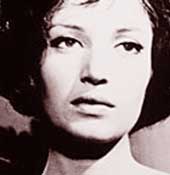
If Hieronimo Manur is “a tycoon, a man of ambition, a politician, an exploiter”, his eyes the colour of cognac, then Natalia, enslaved (but only upto a point) to his money and his terrifyingly cold passion, is the quintessential “lost soul”, first seen by León in the train, “deep in tormented sleep”. Expensively beautiful, metaphysically bored, chronically vanishing from the lives of besotted men, and with absolutely nothing to look forward to, she could have been played to perfection by Monica Vitti in her early-Antonioni phase, or by the middle-period Deneuve. But this modern heroine with her “African smile” is also a “character of love”, and therefore part of a sweet, grave, eternal music that transfigures her potentially tragic evanescence into something still, beautiful and strange. In the self- consciously lugubrious bel canto of León/ Marías’s prose — flawlessly translated into English by Margaret Jull Costa — Natalia is “afflicted by — how did I put it? — a form of melancholy dissolution”. And in the weary, but self-regarding, relish of that “how did I put it?” lies the key to the novel’s “manner”, and also perhaps in its original Spanish title, El hombre sentimental.
León — like Shakespeare’s and Verdi’s Cassio — is an incorrigible romantic, capable of fervent adoration, but who, even in a moment of ardent elevation, is aware of himself as a “banal man”. It is his banality of stature that sets him apart from the High Couple (Othello-Desdemona/Hieronimo-Natalia) and the High Tragedy of their doomed marriage. There is a peculiarly ambivalent moment in Verdi, which León relives in writing, when Cassio sings to Iago a vaulting aria, “Miracolo vago [enchanting miracle]…”, about his bewitchment by the handkerchief he has picked up in his house, not knowing yet whom it belongs to. But León also takes over the drunken Cassio’s words in Verdi’s opening act: “Non temo, non temo il ver [I do not fear, I do not fear the truth].” This hard truth, resistant to the witcheries and the mañera of art, is the other object of desire in León/Marías’s writing: “In these pages that I have been filling (without yet having had breakfast) I recognise a cold, invulnerable voice, the voice of the pessimist, who, just as he sees no reason to live, likewise sees no reason to kill himself or to die, no reason to feel afraid, no reason to wait, no reason to think; and yet he does nothing but those last three things: feel afraid, wait and think, endlessly think.”
León’s ability to doggedly wait and watch and think makes him record sinister details and nuances of gesture and action, which give to the operatic swell of the novel an unexpected vividness and particularity. Señor Manur’s threateningly raised fore-finger as he greets León for the first time, or Dato quickly taking the change returned to Natalia by a waiter becomes “the emblematic form in which the most secret and unmentionable relationships need, now and then, to be rewarded for their stealth and to be made manifest”.
León’s cold pessimism in the midst of dread and a sense of election, his instinct to survive, somehow, the great doom of love — if only to write about it truthfully, and at the risk of appearing banal and less-than-tragic — bring Marías’s narrator in line with some of Evelyn Waugh’s (in Brideshead and The Loved One, for instance), although the latter’s spare, English sharpness is of a very different flavour from the former’s baroque elaborations. If Othello/Hieronimo’s moment of transcendence comes when he performs his own ending, then Cassio/León is most himself when he resists the re-enactment of that ending, and says to Natalia, in a dark hotel room, “I don’t want to die like a fool.” Yet he is capable of recreating in his imagination Hieronimo’s final “desire to destroy himself”.
But Marías’s own vanity as a writer gets the better of his narrator’s saving banality. Marías attaches an epilogue to his novella, called “Something unfulfilled”, which anxiously discloses the origins of his tale in life and in art, the stimuli which caused its “initial shiver”. Then follows elegant literary criticism of his own work, placing it in the great tradition of European romantic literature. It finishes with a piece of self-quotation, profound in its original context, but sanctimonious in recall: “For, as I well know, the most effective and lasting of subjugations are based on pretence or, indeed, on something that has never existed.” This vain and unfortunate little coda suddenly gives to the entire novel a preciousness that belies the latter’s considerable emotional truth, and truth to the incomparable works of art it seeks to claim as its own. Shakespeare would have made brilliant fun of it, Verdi drowned it in sublime music, and Cervantes tossed it into that last great bonfire of the vanities.