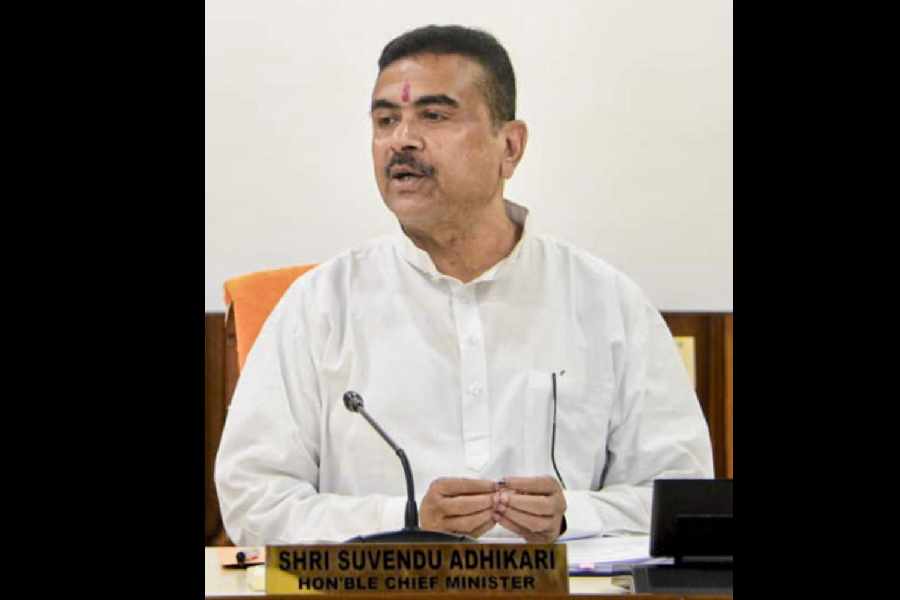
When asked to pick the best orator from among the four chief ministers who took oath this month, Google Gemini does not rank them as first, second or third. Instead, it creates film award-style categories with icons to match. Best for Cinematic Appeal & Youth Connect: C.J. Vijay; icon: clapper. Best for Historic Impact & Ideological Triumph: Suvendu Adhikari; icon: thunderbolt, etc., etc.
“The main purpose of a public political speech is to connect with a large body of people,” says journalist and writer Ajoy Bose. He adds, “Ahead of the 1977 elections, Atal Bihari Vajpayee was at his flowery best. Shaking his finger and making a point. But George Fernandes was incandescent.”
In Tamil Nadu, people cannot stop raving about how Vijay had his audience roaring with approval every time he addressed them. M.R. Venkatesh, who has covered state politics for many years, puts things in context. He says, “In the founding days of the DMK, its top leaders from C.N. Annadurai to M. Karunanidhi, V.R. Nedunchezhiyan to E.V.K. Sampath and K. Anbazhagan were versatile speakers with a scholarly and literary flourish, blending classical and modern Tamil with ease in their public speeches. M.G. Ramachandran settled for a prosaic style. His songs, both before and after his meetings, did most of the talking. Jayalalithaa’s speeches were mostly read from prepared texts.” He adds, “Vijay’s style appealed to GenZ because it was fresh. He doubles down with vigour.”
Vijay emphasises that he is one of the people. Bose points out that till the 1990s, speeches were based on issues. Monobina Gupta, who has written a biography on Mamata Banerjee, says, “Now they are about name-calling.”
Bengali writer and activist Kapil Krishna Thakur says, “Good political speeches can be delivered only if the leaders are learned and educated. There was a time when after Nehru had addressed Parliament, the Speaker would invite the CPI’s Hiren Mukherjee to comment. He was that good.”
Nearly everyone The Telegraph interviewed said people’s reactions to public speeches were often a measure of party performance. Bose remembers the time Indira Gandhi was giving a speech in New Delhi immediately after the Emergency. He says, “Within minutes the crowd started thinning. It was a sure sign that she would lose the election.”
He continues, “After the Janata Party’s win in 1977, H.N. Bahuguna gave a speech at the Jama Masjid about how Hindus and Muslims came together and taught the Emergency regime a lesson. People went crazy; the followers of the Shahi Imam of Jama Masjid and RSS workers danced hand in hand.”
Rajya Sabha MP Manoj Jha talks about the powerful oratory of Sushma Swaraj and once again Vajpayee’s name comes up. Jha says, “Vajpayee’s speeches were always in context. They were never wrongly worded. And the intention was always right. I haven’t heard him say anything that he didn’t believe to be true.”
Gupta says, “The speeches today appeal more to people’s polarising instincts. The focus on substantive issues is less.” She says, “When Mamata was struggling to come to power, her speeches were mostly emotional. She excelled in performative politics. Old timers will recall how she knotted her shawl like a noose at a rally and threatened to hang herself.”
On the subject of performance, Bose talks about the time Indira Gandhi rode an elephant when she was visiting a Dalit village in Bihar. And how Babu Jagjivan Ram made grand entries, even rode on people’s shoulders to a public meeting. N.T. Rama Rao rode in a caravan in the beating sun, poured water all over himself, and then proceeded to address crowds.
Jha adds, “Even Mr Modi’s speeches, 50-60 per cent of them are in the right direction but he makes them sensational because that is the way the electronic media and social media are going to play or replay those speeches.”
Google Gemini continues to list politicians by oratory, regionally, nationally, globally. All of it delivered with an Intelligent caveat — “Best speech is entirely subjective and depends on what qualities a listener values most.”