Q Most Indians would not know that the Kurds are the world’s largest stateless people. Can you elaborate on the recent history and the geographical span of the Kurdish people?
More than 50 million Kurds live in the four parts of Kurdistan in Turkey, Syria, Iran and Iraq. In addition, there is our diaspora of around 5 million Kurds in Europe, the US, Russia, Japan and Australia. Hundreds of thousands of Kurds also live in other West Asian countries such as Israel, Egypt and Lebanon. The historical origins of the Kurds date back to the Neolithic Revolution in Mesopotamia some 14,000 years ago. We are thus one of the oldest peoples in the region, alongside Arabs, Jews, Assyrians and Persians. The more recent history of the Kurds, however, has been shaped by a policy of denial and assimilation on the part of regional powers such as Turkey. This has been ongoing since the end of the World War I. So too has the Kurds’ resistance.
Q You are a member of the Kurdistan National Congress (KNK). Will you please elaborate on it and its objectives?
Since its foundation in 1999, the KNK has developed into a key platform for the Kurdish people. Our headquarters is in Brussels but we also have offices in Erbil (Kurdistan Region of Iraq), Qamishli (Syria) and Washington DC. Over 70 political parties and civil society organisations from all four parts of Kurdistan and the diaspora are members of our Congress. The KNK pursues two key objectives. First, it strengthens the national unity of the Kurds. This fosters exchange amongst Kurds and enables the formulation of a unified policy. Second, the KNK has succeeded in representing the Kurds internationally with a united voice. The KNK advocates a political solution to the so-called “Kurdish question” in Turkey, Syria, Iraq and Iran. The basis for this is a democratic order in these four countries.
Q Can you tell us a bit about the cultural resilience of the Kurdish people?
The Kurds are deeply conscious of their history and culture… This awareness and this sense of belonging have prevented the assimilation policies pursued for the past 100 years — particularly by Turkey — from succeeding. Kurdish women, in particular, play a vital role in preserving our culture. And not only that, Kurdish women have become the leading transformative force in our society. They not only pass on our language and values to the next generation but have also fostered a democratic culture within our families, tribes and society as a whole.
Q The Iran War has brought the Kurds in Iran back into the spotlight. What is the position of the Iranian Kurds on the crisis?
We Kurds are very aware that the war against Iran was not started by the peoples of Iran, and that there is a risk it will not end in their best interests. The country’s six largest Kurdish parties are acting in unison within the framework of the Alliance of Political Forces of Iranian Kurdistan, which they founded in February. This alliance is crucial to protecting our people in Iran from the grave dangers of war and to ensuring that the Kurdish calls for the democratisation of Iran are heard. The Kurds do not advocate external military intervention. At the same time, they criticise the policies of the Iranian regime, which bears responsibility for this war. Iran needs an inclusive, democratic system that does justice to its social diversity.
Q Why have Kurdish aspirations not been met by the international community?
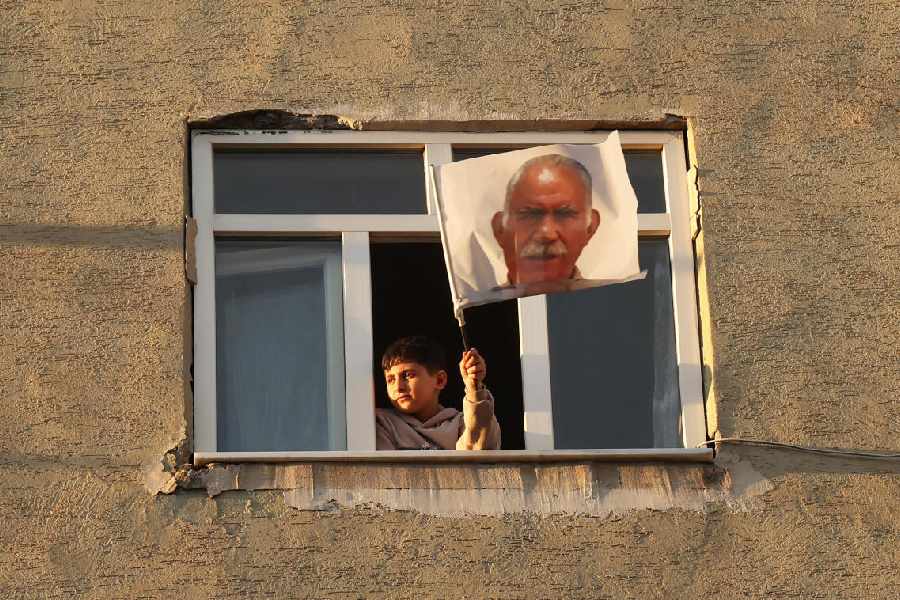
Worldwide, the Kurds are today recognised as a key player in promoting democracy, peace and stability in West Asia. This has been particularly true since we defeated the Islamic State (ISIS) in Syria and Iraq in 2014-15. Our diaspora, particularly in Europe, Russia and the US, has also raised broad support at both the political and civil society levels in many countries. West Asia is undergoing a period of fundamental reordering. In this context, the Kurds will find their well-deserved place as part of the region’s political and cultural mosaic. Current integration processes in Turkey and Syria point in this direction. Particularly significant in this regard are the negotiations between the Kurdish people’s leader Abdullah Öcalan and Turkish state and government representatives, which have been ongoing for more than 18 months.
Q And what is the future that young Kurdish women and men want for themselves?
We have realised that altering existing borders only leads to further bloodshed. We, therefore, do not seek our own nation-state but rather “democratic integration”. This means that we find our place as equal citizens in democratically organised countries such as Turkey, Syria, Iraq and Iran. This requires democratic constitutions and legal guarantees. Kurdish culture and language need to be officially recognised in the education system and all other official institutions. We have lived side by side with Persians, Arabs, Armenians, Assyrians and Turks for thousands of years. Democratisation is the fundamental prerequisite for us to build a future of peace and prosperity together. Political decentralisation, the appreciation of diversity and the equal participation of women in all areas of life are crucial to this.