Showers. Jacuzzi. Bathtubs. At the very least, taps with hot and cold water. Sorry. Most Jharkhand urban dwellers consider themselves lucky if water trickles from taps and their buckets are somewhat full. Will the situation improve in 2017?
Team Telegraph tests the waters

BOUNTY TOWN
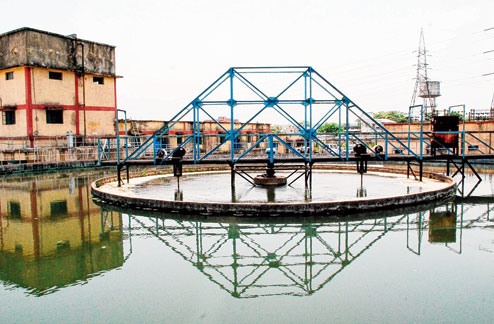
Since 2004, Jusco, a wholly-owned subsidiary of Tata Steel, carved out of its town services division, caters water to a population of 6.5 lakh with over 60,000 connections so far in different areas under Tata command. The daily per capita water consumption in Jusco areas is 230 litres against the Indian standard of 135 litres. It makes visitors from everywhere, Delhi, Mumbai, Bangalore and most of all capital Ranchi go green with envy. Jusco supplies water through pumping stations at seven locations and 21 water tanks.


DRY CONTRAST
The drinking water problem exists in Mango, Bagbera, Jugsalai, Birsanagar, Govindpur and Parsudih, which falls outside the Tata command area. Mango, nestling across Subernarekha, and home to a sizeable middle-class and affluent population, suffers keenly. The drinking water and sanitation department through Mango Notified Area Committee (MNAC) supplies piped drinking water to areas under its command, but supply is erratic and quality of water below par. Flats and apartments are dependent on bore wells, which make availability uncertain.

RESOLUTIONS 2017
By March 2017, Jusco plans to provide a total of 4,000 connections to the bagan (semi-urban) and slum areas. Jusco is also awaiting an approval from Tata Steel for the proposal of a new water treatment plant which will help betting water supply
Rajesh Rajan, spokesperson, Jusco
---------------------------------------------
The drinking water project at Mango, the first phase of which has been completed, will ensure quality drinking water to residents in 2017. Pipelines have been laid in the first phase. A private agency which has bagged the tender from drinking water and sanitation department (DW&SD) has set the target to complete the second phase of work in another year or so
Jagadish Yadav, special officer, Mango Notified Area Committee
---------------------------------------------
The Rs 28-crore Moharda drinking water project, the pet project of chief minister Raghubar Das falling under his Jamshedpur East constituency, will become fully operational in 2017 to benefit nearly 2.75 lakh people in Birsanagar, Baridih, Bagunnagar, Bagunhatu and Luabasa. The Moharda project has seven water towers, a filtration-cum-treatment plant and an intake well from Subernarekha with a capacity to provide 5.5 million litres a day
Deepak Sahay, special officer, Jamshedpur Notified Area Committee
---------------------------------------------
Work on Bagbera and Chhota Govindpur drinking water projects, which started 2016, will make greater headway in 2017. Worth Rs 237-crore, the projects are funded by World Bank
Surendra Prasad, special officer, Jugsalai Municipality
EXPERT VIEW
We follow global best practises of distributing water in our command areas, including norms laid down by World Health Organisation (WHO) and Bureau of Indian Standards (BIS). Quality-wise, Jusco water is one of India’s best. We are now giving priority to DMA (district metered area) creation which helps monitoring water pressure, maintaining quality and preventing wastage. We are adopting smart water meters, which come with sensors for quick readings and billings, at a few locations. Also, all our installations including offices, schools and other institutions have rainwater harvesting facility
R.K Singh, Jusco water management expert
Compiled by Pinaki Majumdar; pictures by Bhola Prasad
CAPITAL PIPE DREAM

DOUBLE TROUBLE?
Around 15 lakh people of Ranchi get water from Rukka, Hatia and Kanke dams. But, the pipe network has always been badly maintained. Residents with deep boring facility or wells at home face depleting groundwater reserves everyday, which worsens in summers. So, two huge problems, ill-maintained pipes and a shrinking water table, equals a city forever anxious about water. It’s sadder in a city that even now prides itself on its gardens and kitchen gardens.

DRY PARTS
Residents of Harmu Housing Colony, Kishoreganj, Hindpiri, Pathalkudwa, Kanta Toli, Madhukam, Pahari Tola, Indrapuri and Kanke, among others, face more water problems.
BLAME GAME
In a crisis, the Ranchi Municipal Corporation (RMC), responsible to supply water from tanks to homes, and drinking water and sanitation department (DW&SD), which supplies water from dams to the water tank, pass the buck and say their roles are limited. They point fingers at water resource department, which looks after dams from where water is supplied to the tanks. Water resource department, however, rues the lack of a comprehensive conservation and distribution plan. Countless seminars and workshops on strategies to trap rainwater, stop pilferage from supply lines and construct water tanks happen, but ground reality stays the same

CAPITAL PROBLEM ZONES
RMC has provided around 250 mini HYDT (hydro tools) and 4,000 tube wells across 55 wards in the capital. DW&SD, which has laid pipelines in many parts of the city, repairs them when a problem grows acute. But, gaffes abound. In Hatma and Vidyapati Nagar, water pipe lines were laid but no resident got connections as the road construction department built an artery over the pipe line. At Harmu Housing Colony, a dispute over laying pipes continues among Jharkhand State Housing Board, RMC and DW&SD
RESOLUTIONS 2017
2017 will be a better year for water supply as rainfall in 2016 ensured full dams. We will start a special drive for water harvesting from January. We are laying a 50km pipe to connect those areas where dam water supply hasn’t reached, the work of which will be over in January
Bidyanand Sharma Pankaj, RMC additional municipal commissioner
---------------------------------------------
Let me reassure you that people in Ranchi won’t face drinking water problems in the coming summer. Adequate water is available at Rukka Dam and other dams and interlinking of water supply pipelines has nearly been competed
Chandra Prakash Choudhary, minister, DW&SD and water resource departments
EXPERT VIEW
It’s a crisis situation, so Ranchiites must store rainwater. People should dig ponds and embrace initiatives like rooftop water harvesting and rainwater harvesting. In case homeowners and builders are reluctant to do so, they should be fined. Misuse of water should be declared a criminal offence. Also, many affluent people with large homes cover their grounds with concrete and marble flooring. This should immediately stop as soil helps rainwater percolate
Zia Ur Rahman, architect
Compiled by Raj Kumar; pictures by Hardeep Singh
LIFELINE HOPE

DHANBAD: Water, water everywhere, but not a drop to drink. Despite Damodar river, lakes like Maithon, Panchet and Topchanchi in the vicinity, areas of Dhanbad such as Katras, Nirsa, Govindpur, Tundi, Topchanchi, Baliapur, Baghmara, Wasseypur, Nirsa, Govindur and Chirkunda suffer from drinking water shortage

BOKARO: The steel town gets water supply from Tenughat Dam (above) through a 34km canal that has been breached countless times. Sometimes, the canal genuinely needs repairs. Sometimes, it is deliberately broken into by displaced people seeking attention. Either way, masses suffer. Since November 3, Bokaro has been getting water supply for an hour every 48 hours.

HAZARIBAGH: The town, divided into 32 wards, gets water supply from Charwa Dam (above). But many residents are left out of the loop. Small wonder, as Charwa Dam, constructed in 1952, was supposed to cater to 30,000 people. Now, Hazaribagh’s population is 6 lakh.
RESOLUTIONS 2017
Improper planning mainly causes poor water supply. We are planning to arrange supply of Damodar water to major parts of Jharia, Katras and Dhanbad under the Dhanbad Water Supply Scheme worth Rs 365 by laying distribution pipelines. We will engage a consultant for a comprehensive water supply plan. We have also demanded over Rs 200 crore from district mining funds to lay pipelines and develop infrastructure for uninterrupted water supply
Chandrashekhar Agarwal, Dhanbad mayor
---------------------------------------------
On the behest of Union steel secretary Aruna Sharma, the Tenughat Canal Monitoring Committee has been formed, which includes top names of three stakeholders, Bokaro Steel, state water resource department and district administration. I think 2017 will see a positive turn for the Tenughat canal and water supply in Bokaro
R.M. Ray, Bokaro deputy commissioner
---------------------------------------------
As Charwa Dam logically can’t meet present water demands, we selected Konar Dam, 45kms from the town in Vishnugarh block, for the purpose. In 2017, we will see positive action in the project, including land acquisition for a water treatment plant. Once the Konar project becomes a reality, I believe we can meet water demands of the entire town for next 30 years
Anjali Kumari, Hazaribagh Municipal Corporation chairperson
Compiled by Praduman Choubey, Shashank Shekhar & Vishvendu Jaipuriar;
pictures by Gautam Dey, Pankaj Singh & Vishvendu Jaipuriar