|
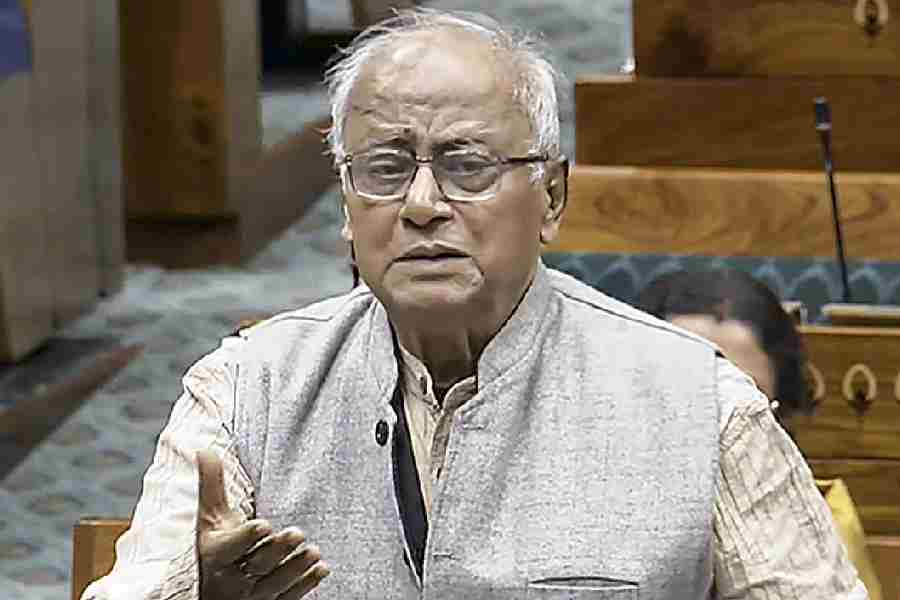
| Robert De Niro in Taxi Driver |
“You talkin’ to me? You talkin’ to me? You talkin’ to me? Then who the hell else are you talking... you talking to me? Well I’m the only one here. Who the f*** do you think you’re talking to? Oh yeah? OK.”
Lines that no movie lover can ever forget. Lines mouthed by Robert De Niro’s Travis Bickle. Lines from Martin Scorsese’s Taxi Driver. Lines written by Paul Schrader.
The man, who also wrote other Scorsese gems like Raging Bull and The Last Temptation of Christ and went on to direct films like American Gigolo and Adam Resurrected, is in Mumbai for the 11th Mumbai Film Festival. He is not only on the jury but there’s also a retrospective of his films at the festival.
“If you stick around long enough, like I have, they eventually start giving you retrospectives,” says the 63-year-old screenwriting legend. “I have been in this phase of my career for the last 10 years now. But I am particularly happy to be here in Mumbai because I have a lot of other interests here.”
The ‘interest’ is quite a huge one, with Schrader writing a screenplay set in Mumbai that he plans to direct in the near future. “I have just finished the script (tentatively titled Xtreme City) I have been writing with Mushtaq Sheikh (Om Shanti Om) for a year-and-a-half. It will have an American star and an Indian star and we should start casting soon. The film will have a mixed language — when the American star is talking he is speaking in English, when the Indian star is talking he is speaking in Hindi.”
 |
| Paul Schrader (centre) with Robert De Niro and Martin Scorsese |
BULLISH ON BOLLY
To acclimatise himself with Mumbai and its movies, Schrader started watching Hindi films a couple of years back. “I have been watching about three Bollywood films a week,” he says. “I have been studying the whole history of the industry from the 50s, 60s and 70s right down till the 80s and 90s. I am actually sort of knowledgeable about Bollywood. I began my career as a film critic and so it was fun to go back into that mode and study the history of Indian cinema.”
And all that studying has made Schrader bullish about Bollywood. “You are in an absolutely unique situation. You are probably the only national cinema that has successfully resisted colonialisation of Hollywood films. And most of the money that is spent here on movies is spent on domestic films, which, I think, is quite extraordinary. Bollywood is changing. It keeps changing... the image 20 years ago is different from the one 10 years ago which is again different from what it is now.”
In the last five years, feels the man of words, Bollywood has entered an “NRI phase where films are being shot in Miami, Toronto and UK” but is still in no danger of becoming a Hollywood clone. “I don’t think that’s going to happen,” he asserts. “The rules here are so strong. The film scene in India now sure is a little weaker than it was a while back. But then that’s happening all over the world. It’s not the best time in the world for films anyway.”
But Indian cinema is more than just Bollywood and all the crores and stars seem to have brushed the parallel film movement under the carpet. “True, Bollywood has a huge profile,” Schrader agrees. “But that doesn’t mean that the alternative cinema is dead. Shyam Benegal has a new movie (Well Done Abba) at the Mumbai Film Festival. I just saw a film by Nandita Das, Firaaq. So it’s there, even if it’s in the background.”
Yet another foreigner writing and making a film set in Mumbai brings us back to a certain Slumdog Millionaire. Having seen the multiple Oscar-winning film and having done extensive research about the city and about Indian cinema, what does Schrader feel about the movie that has been criticised as “poverty porn” and “Bollywood rehashed”?
“I don’t think Slumdog Millionaire is a Bollywood film,” pat comes the reply from Schrader. “It feels like a British film to me. It feels like a Danny Boyle film. It’s a very good film. I think the people who are being upset over the film here are being silly. Moviemakers love to make movies about extreme behaviour whether it’s criminals or sexual perverts or the poor. It’s not just in India that they make movies about people in the slums. We make movies about the slums in every country.”
Having written his first script way back in 1975 (The Yakuza, directed by Sydney Pollack), has Paul Schrader the writer changed in the last three decades? “I would like to think I have gotten better. The approach hasn’t changed. But the more you write, the more you learn to write less.”Now, that’s a master tip from the master himself!