The state authorities are unable to undertake further excavations at the ancient Telhara University because the Archaeological Survey of India (ASI) has not yet issued a fresh licence.
Though the archaeological directorate submitted a detailed report seeking excavation licence, ASI has sought a fresh report from it according to the recommendation of a recently formed committee.

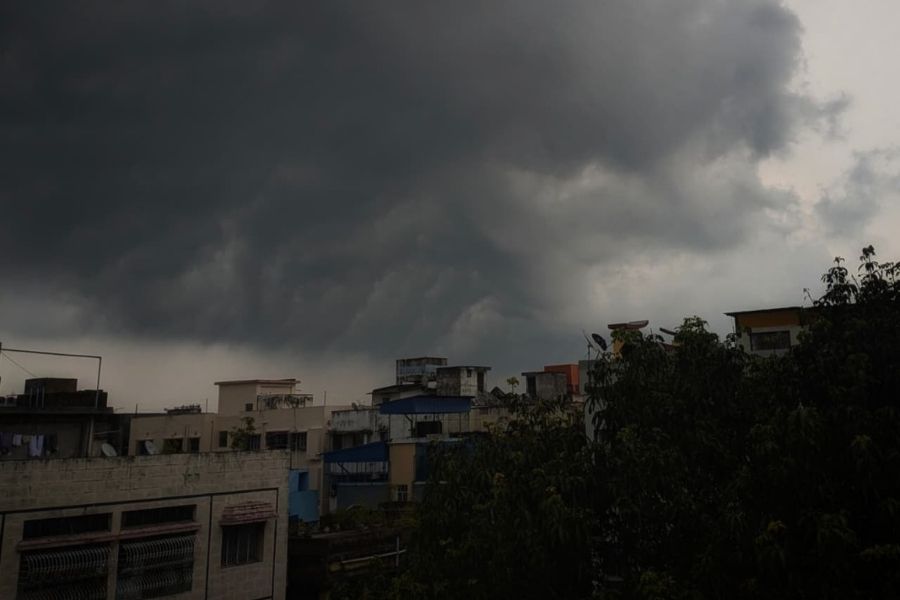
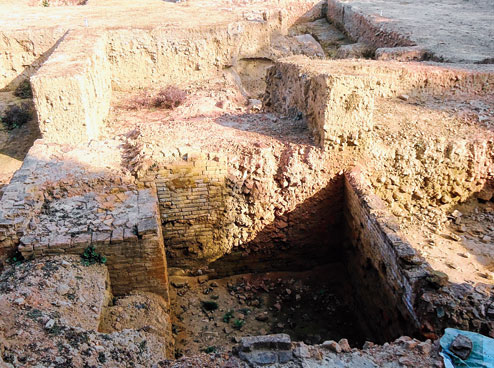
of Nalanda district. Picture by Piyush Kumar Tripathi
"The ASI gives the annual licence for carrying out exploration and excavation at an archaeological site. We had applied to it for resuming excavations around the remains of Telhara University in November last year. Though we submitted a 55-page report along with the application, they recently asked for a fresh report according to the recommendations of the Wheeler Committee of 1965. They have not given any guidelines for the same and we are in a fix on how to prepare the fresh report," said Atul Kumar Verma, the director at the state archaeological directorate, who has been heading the excavations at Telhara.
The notified site for the ancient university at Telhara is located around 33km south of Nalanda University in Nalanda district. The excavation site is 1sqkm, which makes up only 20 per cent of the entire university and has been excavated for the past five years. Excavations have been carried out till 30ft under the ground.
"Over the past five years, we have been able to excavate around two acres of the total expanse of the university. We estimate that the remains of the university are buried underneath seven mounds of which only three are visible," said Verma.
The archaeology director claimed that the buried remains of the ancient university have been found to be extending further east from the already excavated area. "Our next phase of excavation would thus be carried out towards east of the unearthed remains," said Verma.
Senior ASI officials, including additional director-general B.R. Mani, was unavailable for comment.
Concerned over the possibility of damage to the already excavated part of the ancient university, the archaeology directorate is contemplating to go ahead with its conservation works from April.
In one of the latest findings, archaeologists in the state archaeological directorate, which is looking after the excavations at Telhara, have discovered the name of the university - Shri Prathamshivpur Mahaviriyaye Bhikshu Sangha.
"We have found evidence that the remains excavated at Telhara till now belong to three periods, namely Kushan (1st century-3rd century AD), Gupta (4th-5 th century AD) and Pal (8 th-12 th century AD) periods," said Verma.
The discovery of archaeological remains from the Kushan period has made Telhara the second oldest university in the world.
Takshila University (in Rawalpindi district of Punjab province in Pakistan) is considered to be the oldest seat of learning, dating back to BC 2nd century, while Nalanda University dates back to 4th century AD.
Various streams of Buddhist Mahayana studies, including medicine and Tantrism, were taught at the ancient university at Telhara. Sources claimed that the fall of this university started after Tantrism was introduced. Following misuse of Tantrism, locals called for Bakhtiyar Khilji, who destroyed this university as well as Nalanda and Vikramshila universities and another one at Odantapuri.
"Telhara was completely devastated by Khilji. We had found a layer of ash up to one foot deep on the excavated structures, which proves that this university was burnt down badly," said Verma.
The art, culture and youth affairs department is contemplating to landscape the site and develop a museum at the excavated remains at Telhara.