1
7
Authentic Nolen Gur has a strong, caramelised and slightly smoky aroma that is noticeable
All images by Amit Datta
Authentic Nolen Gur has a strong, caramelised and slightly smoky aroma that is noticeable
All images by Amit DattaWinter in Bengal is incomplete without nolen gur, the aromatic, melt-in-your-mouth, caramelly jaggery that has now made it to kitchens and restaurants even beyond Asia. But the growing popularity of this Bengali winter staple comes with its cons — adulteration.
From fragrance and flavour to colour and texture, we decode the qualities of pure nolen gur — with hacks approved by experts — to help you find the real deal.

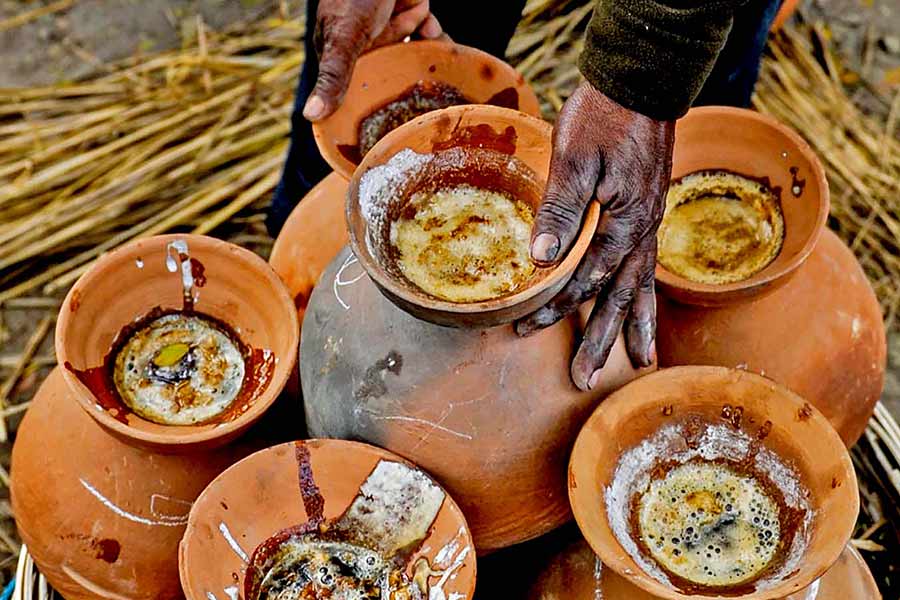
Pure Nolen Gur is made from fresh date palm sap collected before sunrise
Nolen gur is made from fresh date palm sap collected before sunrise. The sap, tapped by shiulis, is boiled down slowly. Nearly seven kilos of sap are needed to make one kilo of real gur. This labour-intensive process is why authentic nolen gur is prized and shortcuts often lead to adulteration.
Check the consistency before buying
Liquid jhola gur should be thick and viscous
According to Rohit Raj Ghosh, fifth-generation owner of Dwarik and Grandsons, the first test is the aroma. “Pure nolen gur releases a distinct fragrance the moment it is poured or the container is opened. The smell should be rich, caramelly and slightly smoky. If the aroma feels flat or overly sugary, something is off.”
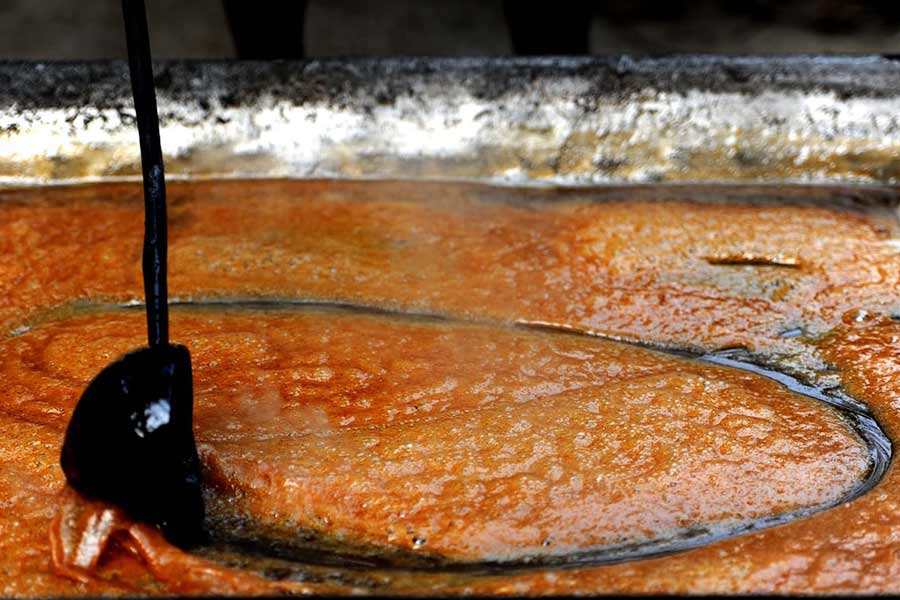
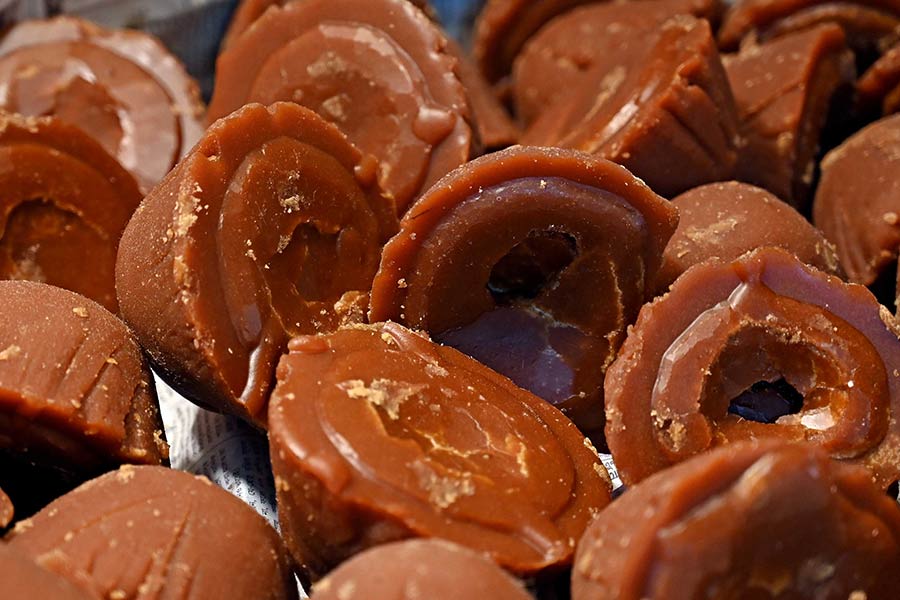
Natural colour ranges from deep golden to dark brown
Texture is the next giveaway. Liquid jhola gur should be thick and viscous. “If it flows too easily or feels watery, it may be diluted or mixed with sugar syrup. Solid patali gur should break easily when tapped. If it is very hard around the edges or difficult to break, it is best avoided,” said Ghosh.
How real nolen gur should taste
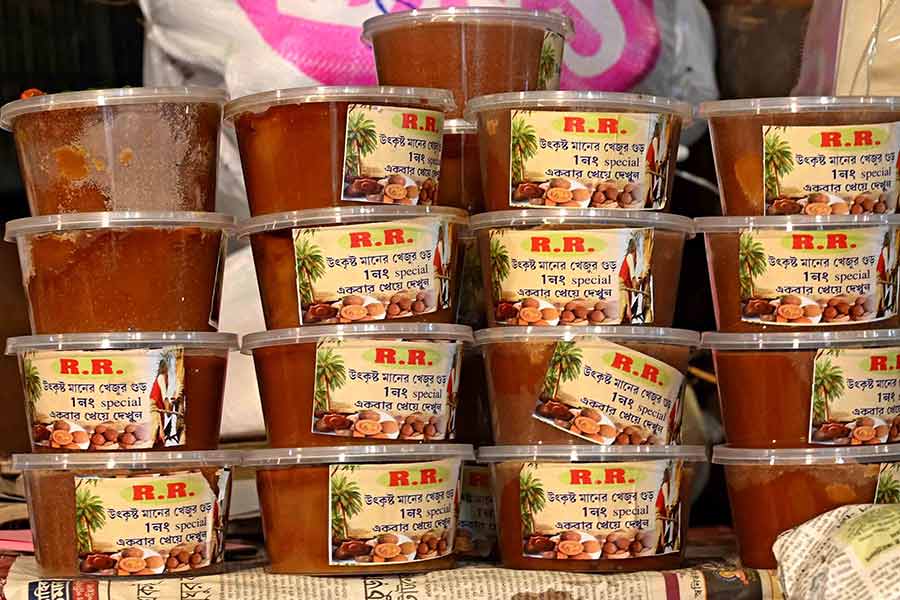
Excessively glossy gur is often a sign of artificial sweeteners or adulteration
Taste seals the deal. Pure nolen gur is not cloyingly sweet. Ghosh explains that it leaves behind a mild bitterness and a caramel-like aftertaste. This complexity is missing in adulterated gur, which tastes sharply sweet and one-dimensional. If the aftertaste does not linger, purity is questionable.
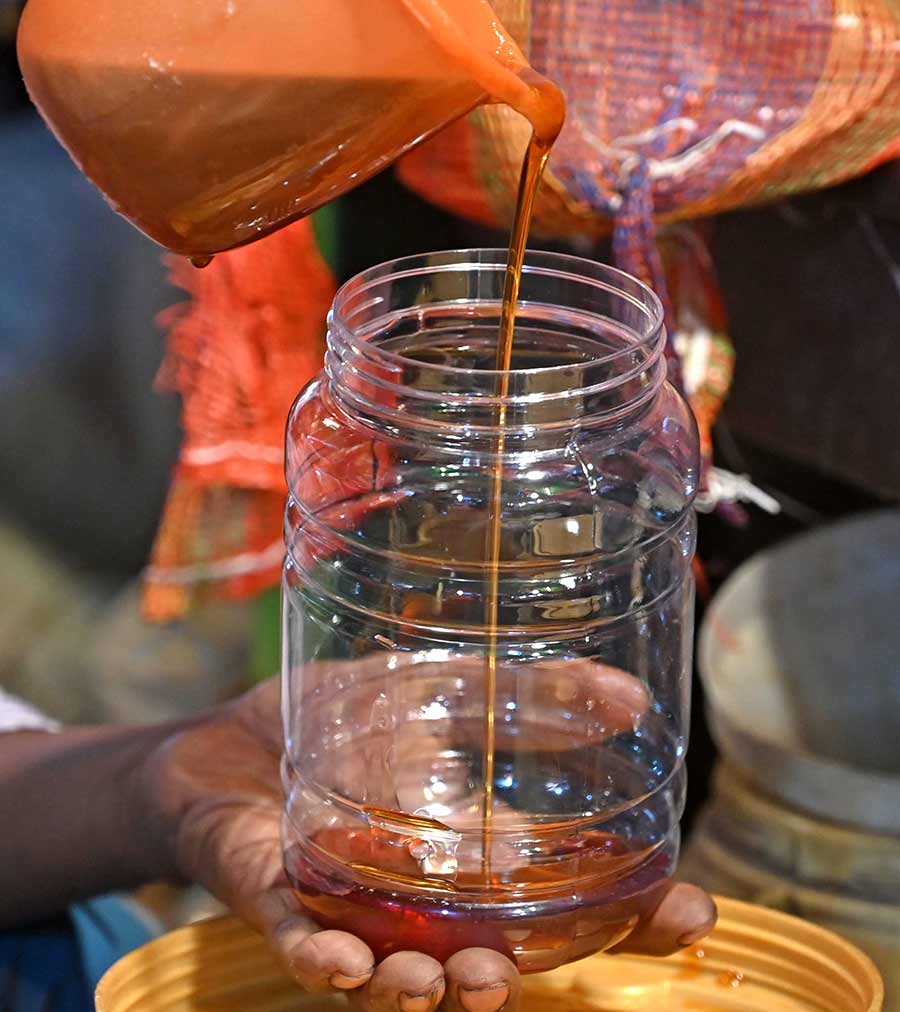
A runny or watery consistency indicates dilution or adulteration
Chef Dyuti Banerjee added, “Good nolen gur should melt softly in the mouth. There should be no grittiness or sugar crystals, which usually indicate artificial sugar or chemicals. Whether liquid or solid, the flavour should have depth rather than just sweetness.”
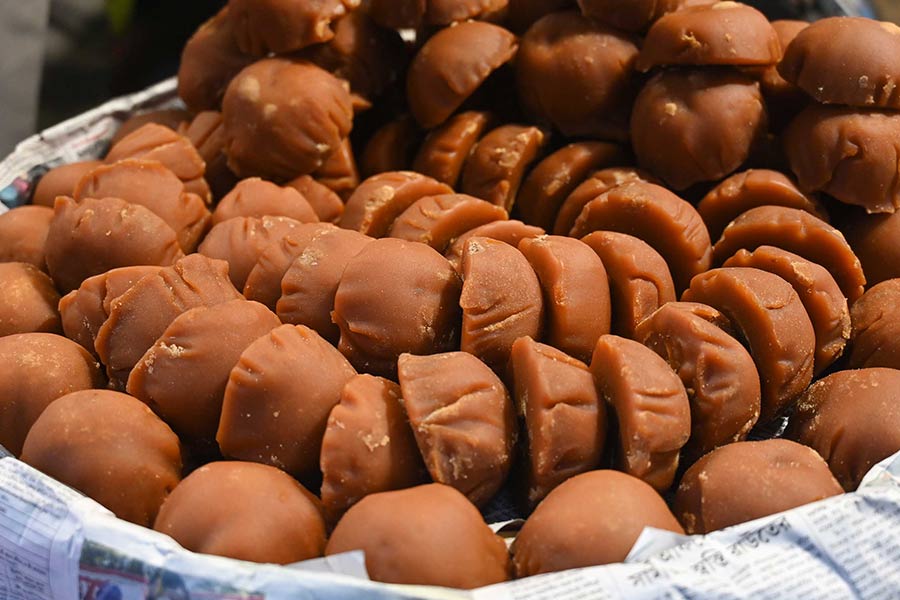
Tasting a small piece before buying is the most reliable way to judge purity
Colour also matters. Authentic nolen gur ranges from deep golden to dark brown, often described as chocolatey. “A very pale or yellowish shade suggests chemical interference. Artificially sweetened gur often looks unusually glossy, another red flag to watch for while buying,” said Banerjee.
When in doubt, taste before you buy. A small nibble can reveal more than labels ever will.