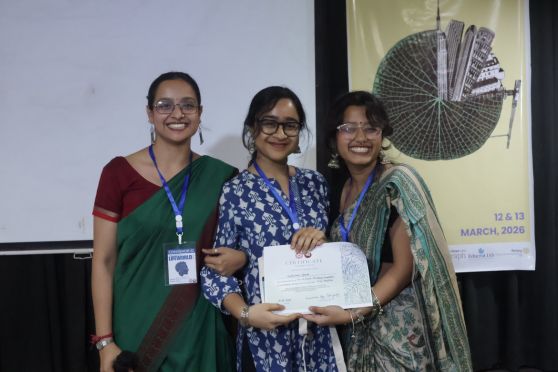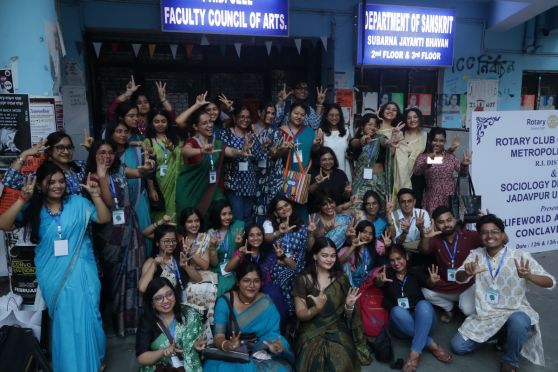
The Department of Sociology at Jadavpur University hosted Lifeworld 2025-26, a two-day academic conclave, under the banner of the Jadavpur University Sociology Consortium. This interdisciplinary event brought together scholars, activists, and students to critically examine the complex and contested idea of development.
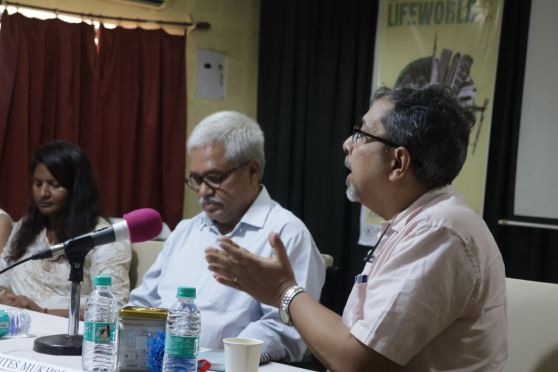
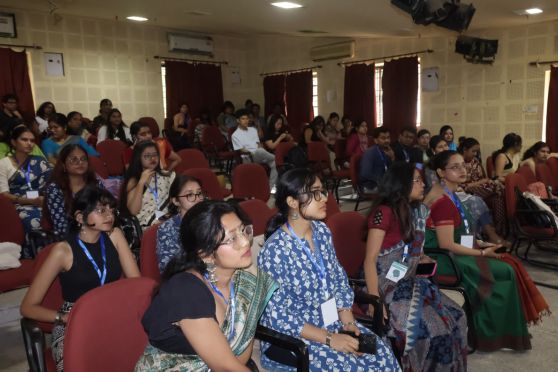
The conclave held on March 12 & 13, 2026, at the university’s main campus, provided a vibrant platform for dialogue, debate, and intellectual exchange, bringing together 100+ participants from different pockets of the country and abroad. At a juncture marked by intensifying ecological crises where the absence of a “Planet B” is no longer rhetorical, such events acquire renewed urgency. They compel us to rethink development beyond human-centric frameworks, pushing us toward a more expansive ethic where the idea of “one plant, one life” transforms into “one plant, many lives,” foregrounding an interconnected, more-than-human world.
In an era of rampant anti-intellectualism, where dissent's arenas face relentless punches, Lifeworld at JU has tried to offer newcomers in academia a vital chance: to think critically, critique boldly, and speak freely.
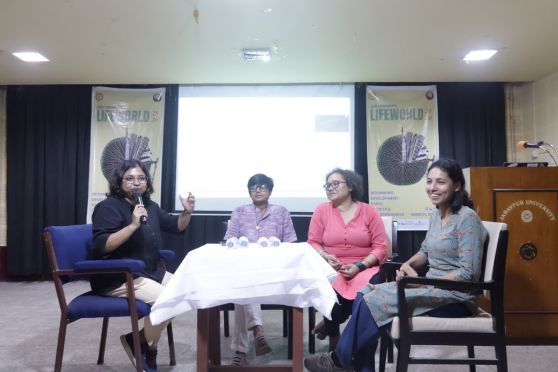
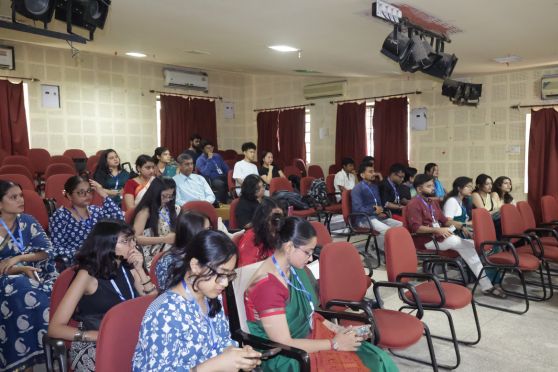
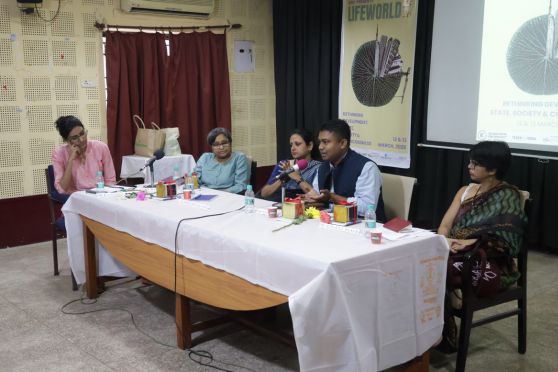
The conclave commenced with an engaging Opening Ceremony, setting the tone for two days of critical discussions. The first Dialogue Deck panel, “Rethinking Development at Large: Critical Perspectives on Normative Paradigms, Ideological Constructs, and Structures of Power – When Does Questioning Become Threatening?”, chaired by Kamalika Banerjee, featured Dr. Supurna Banerjee, Tinku Khanna, Dr. Niloshree Bhattacharya, and Dr. Subhojit Naskar, who shared critical insights into labour, migration, caste, gender, activism, and the role of the state in shaping development discourse.
Parallel sessions on the first day included Perspectives (online paper presentations), moderated by Anuradha Ghosh and Debasmita Ghosh, along with the Turn the Table debate segment, fostering a rich exchange of ideas among participants.
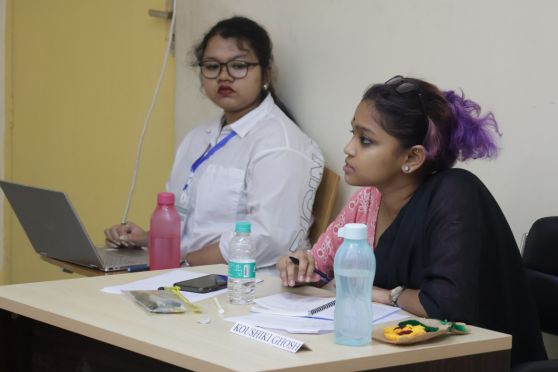
The debate, titled “Progress and its Discontents: Is Development a System of Exploitation?”, moderated by Koushiki Ghosh, with Dr. Rilina Basu, and Anuska Paul as judges, encouraged participants to reflect on competing perspectives, generating thoughtful and nuanced arguments
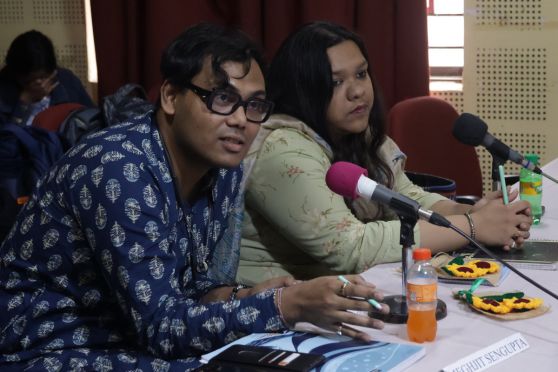
This was followed by Perspectives (Paper Presentation 1) in offline mode, moderated by Anusuya Moitra and Meghjit Sengupta, who guided participants towards more critical modes of engagement and reflective knowledge production.
The second day featured the panel discussion “Contested Pathways to Sustainable Development: Growth, Justice, and Environmental Integrity within India’s Resource Politics and Corporate Domination”, chaired by Spriha Roy. Speakers, including Dr. Amites Mukhopadhyay, Dr. Kumari Vibhuti Nayak, Dr. Saikat Sinha Roy, and Dr. Salini Saha, offered diverse perspectives on ecology, inequality, globalisation, and indigenous experiences, highlighting the tensions between growth and justice.
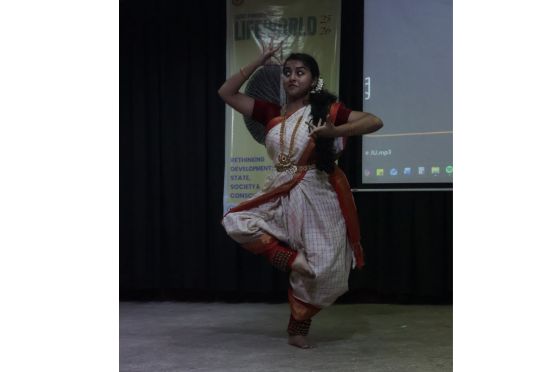
Alongside this, a parallel session of Perspectives (Paper Presentation 2) in offline mode was conducted, moderated by Dr. Sonia Bhattacharya and Sayanti Dutta. Creative engagement was facilitated through Aesthetics, the creative submissions segment moderated by Mohar Saha and Akash Dutta, where participants explored the theme through poetry and dance, opening up forms of expression beyond the rigidities of academic lexicon. The conclave also saw active engagement from partner organisations. The Rotary Club of East Metropolitan Calcutta inaugurated the conclave on both days, while the Kolkata Centre for Creativity, a hub for artistic and cultural engagement, shared their event schedule with participants, particularly their exhibition “পথের দেবতা – God of the Little Road,” centred on Bibhutibhushan Bandyopadhyay, which generated significant enthusiasm.
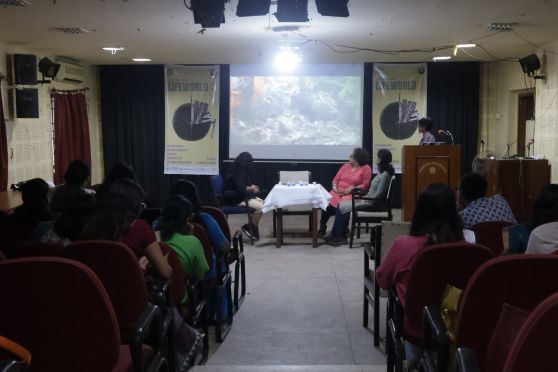
The session, moderated by Dr. Sohini Saha, opened up critical conversations on development, particularly the environmental and ecological costs embedded within dominant developmental frameworks. The screening concluded with the song “Ora Parbe Na Kere Nite Amader Ghar,” and rather than marking a formal closure, it urged attendees to rethink whether state-centric definitions of development are truly inclusive or merely tokenistic. The event would not have been possible without the support of our supporting sponsors, the Rotary Club of East Metropolitan Calcutta and the Kolkata Centre for Creativity.
The organising committee also extends its gratitude to its education partner, Educrat IAS, media partner, The Telegraph Online Edugraph, and social welfare partner, Teach For India. A special mention must be made of Sienna for their thoughtful contribution of handcrafted crochet flowers for guests and speakers. In many ways, Lifeworld 2025-26 emerged as a space where lived experience, consciousness, and meaning-making came to the forefront. Rather than closing debates, the conclave sought to open them—creating a shared ‘lifeworld’ of inquiry, reflection, and critical engagement. Lastly, but absolutely not the least, this event would not have been possible without the unwavering efforts of the organising team and the guidance of our faculty members, who together helped bring LifeWorld to life.