TT Epaper
The Telegraph
 
IN TODAY'S PAPER
WEEKLY FEATURES
CITIES AND REGIONS
ARCHIVES
Since 1st March, 1999
 
THE TELEGRAPH
 
 
CIMA Gallary

Now, climate of change

- State ready with first draft of action plan 5 years after central call

Ranchi, March 17: Jharkhand has finally woken up to the threat of climate change, having prepared a draft action plan to tackle the global phenomenon locally, seeking suggestions on correctives from all stakeholders.

The draft that has been uploaded on the state government website comes five years after the Union ministry of environment and forests (MoEF) framed the National Action Plan on Climate Change in 2008 and asked states to customise specific agendas.

The national action plan had directed states to frame individual blueprints within a year, based on the logic that every region had its unique problems. Jharkhand, marked by major climate changes such as rising mean summer temperatures, frequent drought years, dipping groundwater table and increasing mining hazards, did not bother.

Finally, in 2012, when the state stood 20th among Indian states on the Environment Performance Index (EPI) conducted by Planning Commission, the government was forced to sit up and take notice.

Now, based on inputs by Alka Tiwari, principal secretary, department of forest and environment, and her team, the state’s first draft on its action plan has been uploaded on http://www.jharkhand.gov.in/DEPTDOCUPLOAD/uploads/84/D201384002.pdf.

“We have consulted various departments to come up with the comprehensive, data-packed draft. The biggest challenge was data collection. Unless we know what was in the past, we cannot prepare for the future,” said Tiwari.

From the common man to NGOs and ecological experts, every one is invited to go through the document that targets a holistic approach towards everything from green and renewable energy to rainwater harvesting and water management in mining, rural, urban and industrial sectors.

Jharkhand State Pollution Control Board (JSPCB), which played a major role in drafting the document, is bullish about suggestions from stakeholders, provided they come within 15 days.

“For one fortnight starting today, we welcome grievances and suggestions from people and outfits. JSPCB member secretary S.K. Sinha stated in an advertisement in a vernacular daily. “Persons can write to our headquarters, or mail at hsguptaifs@gmail.com or info@jspcb.org. We want citizens, NGOs and experts to comment before we send the Centre the final draft,” he added.

The 163-page draft is divided into chapters such as agriculture and animal husbandry, water resources, energy, urban sector, transportation, forests and other land uses, health, rainfall patterns, among others. Mineral-rich Jharkhand has also taken mining and industries into consideration. Each chapter talks of the past, present and future with respect to climate change, threats, vulnerability hotspots and solutions.

An official involved in preparation of the report said actual work in this regard began in August last year. “We prepared this plan taking certain components in mind specific to the state. Various independent sub-groups worked on it,” he said.

The official also spelt out why climate change, a global phenomenon, had to be tackled at the local level.

“Each state and each district has its unique threats and needs customised measures. There can be no blanket solution,” he said.

For example, the report mentions that districts of Pakur, Simdega and Latehar, among others, are highly vulnerable to climate change because people of these backward areas lack adaptive capability, knowledge and resources. Districts such as Ranchi, Bokaro and Dhanbad have, in contrast, scored better with respect to adaptive measures.

Health problems arising out of climate change are a major concern in Jharkhand.

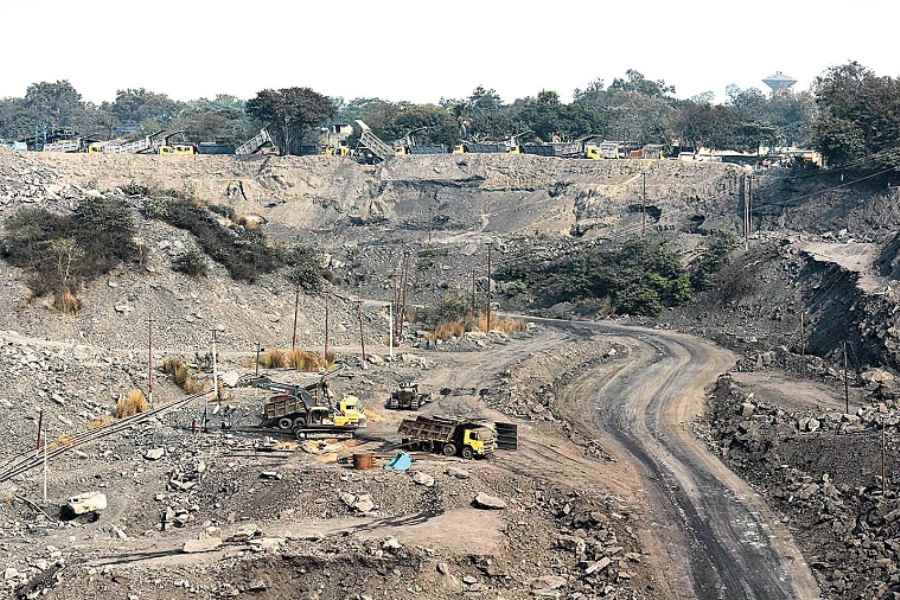
“Coal and mining dust, polluted rivers, among others, give rise to an endemic respiratory problem and diarrhoea. Here, 22 per cent of children below three years of age have acute respiratory infection and an equal number diarrhoea. Climate change, coupled with poor public health delivery mechanisms, is a ticking time bomb,” said the official.

After the Kyoto Protocol in 1997, the concept of carbon credits was introduced to minimise the “carbon footprint” or emissions.

India was slow to react, with the Centre framing the climate change national plan in 2008 where it identified eight concern areas and chalked out a 10-year work plan to reverse the dangers of global warming.

Jharkhand was slower.

But the state, which woke up now, is at least making the right noises.

“Once the state action plan on climate change is ready, it will act as a guidebook for all departments,” said the senior official.