TT Epaper
The Telegraph
You
 
  This website is ACAP-enabled
IN TODAY'S PAPER
WEEKLY FEATURES
CITIES AND REGIONS
ARCHIVES
Since 1st March, 1999
 
THE TELEGRAPH
 
Calcutta Weather
WeatherTemperature
Min : 24.70°C (+2)
Max : 35.20°C (+1)
Rainfall : 0.00 mm
Relative Humidity:
Max : 90.00% Min : 38.00%
Sunrise : 5:46 AM
Sunset : 5:46 PM
Today
Partly cloudy sky. Maximum temperature likely to be around 34°C.
 
CIMA Gallary
Advertisement

India and Italy test waters for compromise

Washington, March 13: India and Italy are discreetly mulling room for compromise to arrest a precipitous deterioration in their bilateral relations, which could, in turn, affect New Delhi’s standing among all the 27 countries of the European Union (EU).

Italy is tied to the EU by an umbilical cord and there is no iota of doubt in South Block about whom the Europeans will choose between India and Italy if Rome seeks the EU’s backing in their current dispute with India.

Officials in South Block have also alerted the domestic political class in formal and informal discussions that the two marines who are at the centre of a year-old stand-off between New Delhi and Rome are members of a North Atlantic Treaty Organisation (Nato) force.

When push comes to shove, all the 28 Nato countries are treaty-bound to protect their personnel in uniform and do their best to insulate them from any prosecution outside Nato jurisdiction.

Several of another 22 non-member countries like Austria, Sweden, even Switzerland, which have an institutionalised “Partnership for Peace” with NATO will be ambivalent towards India if Italy seeks support from the western military alliance for the case that their marines should be protected from any action by a government outside the alliance.

There are no formal talks going on between India and Italy on the way out of the present impasse but diplomatic tracer flares being set off independently by both sides are giving each other ideas of what may be in the offing.

When foreign secretary Ranjan Mathai told Italy’s ambassador Daniele Mancini that the contents of a note conveying Rome’s position on the two marines was not acceptable to the government of India, Mancini did not react at all. He merely promised to convey Mathai’s stand to his headquarters.

That response is being seen by Mathai’s aides as a positive willingness on Italy’s part to negotiate an amicable settlement of the issue. Had Mancini tried to defend Italy’s position when he was summoned to South Block or tried to score points against India’s handling of the marines hitherto, it would have been a signal that Rome was confrontational on the issue.

For another 10 days, India is hamstrung by its inability to declare Mancini persona non grata as demanded by the Opposition, a move also favoured by large sections of opinion in Kerala, judging by popular reactions.

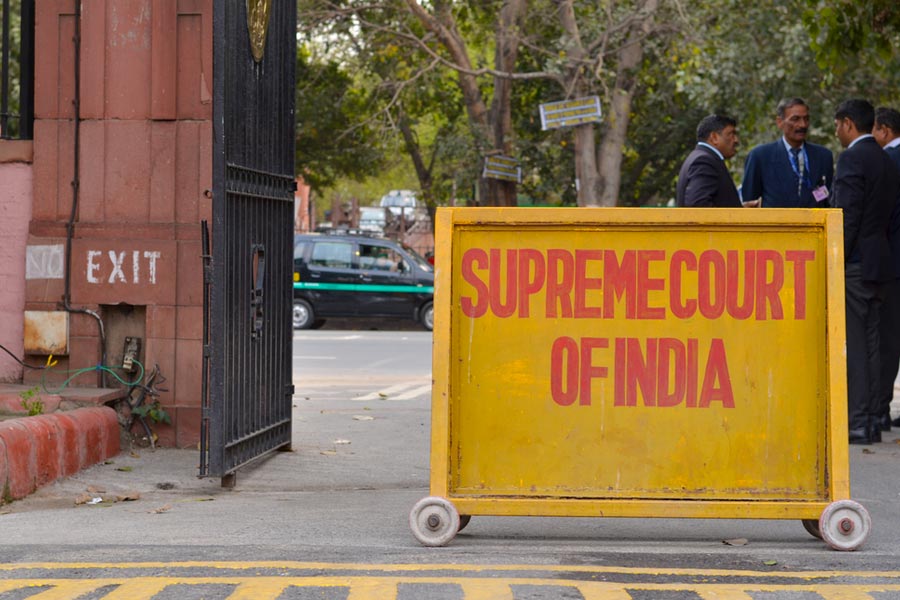
That is because in principle the marines do not have to return to custody in New Delhi until March 22 under the Supreme Court order that allowed them parole.

The Italian ambassador will be in violation of his affidavit to the Supreme Court only on March 23 if he cannot produce the marines in court. Of course, India is at liberty to expel any envoy at any time, but action against Mancini earlier will be seen in other western capitals as high-handed.

Such intemperate actions have never been part of South Block’s style and tradition and officials there are unhappy over attempts by politicians to make them pawns in political games and compromise their professionalism.

Although Indian diplomats have followed the script and kept a stiff upper lip true to their training, privately many of the officials dealing with the issue are angry that the political leadership prevented the foreign secretary from replying to an Italian note verbale on March 6 that was a precursor to Monday’s decision not to return the marines to Indian custody.

In the absence of any political directive on an issue that involves public opinion and political stakes, Mathai was forced into a situation of losing four valuable days before Rome finally decided to keep the marines back in Italy.

Even an ad hoc reply showing nothing more than an understanding of Italian sensitivities in the case may have prevented the catastrophe that India is now staring at.

A senior Indian official said on background that he is puzzled that his political masters who often talk of coalition “compulsions” and coalition “dharma” could not understand Italy’s own coalition compulsions.

His view, expressed privately, is that it was only because Italy has a longer history of coalition experience that Rome delayed any precipitate action so far.

South Block experts who have been in tricky negotiations interpret Monday’s Italian note verbale that has led to the present crisis as not without a tracer flare to locate a way out of the impasse.

If Rome had decided that all avenues for negotiations had been shut and chosen to be stubborn, it would have waited till March 22 to send this note and closed the matter from their point of view.

A 10-day gap before the deadline for returning the marines is a sign, according to these experts, that there is still room for an amicable settlement but it will be a political call. There is worry, however, that ratcheting up emotions and exaggerating issues of national honour are making such settlements hard to reach.

Officials on Raisina Hill who have dealt with similar crises before are extremely worried that unless this issue is carefully handled, delicate relations between South Block and the judiciary may be harmed.

South Block has always been grateful that the judiciary has never come in the way of its diplomacy and judicial activism has so far spared foreign policy. One official referred to the most celebrated case where diplomacy and law intersected: the Indian Airlines plane that was hijacked to Kandahar.

The judiciary readily agreed to the release of three terrorists in exchange for 158 persons held hostage on the aircraft, although it could very well have blocked their release from prison. Similar actions have been taken before in different contexts.

Officials of the external affairs ministry have been seeking information from other wings of the government for two months now about the setting up of a special court to try the marines as directed by the Supreme Court.

Their enquiries acquired urgency a week ago after the highest court expressed its impatience over the delay. A reasonable response to these queries or the setting up of a special court itself would have been a bargaining chip for South Block with the Italians assuaging their concerns about delays in the trial of the marines. Rome was happy with the intentions of the Supreme Court in transferring their case out of Kerala.


" "